
2026 Aluminium Price Crash: Indian MSME Impact
Introduction
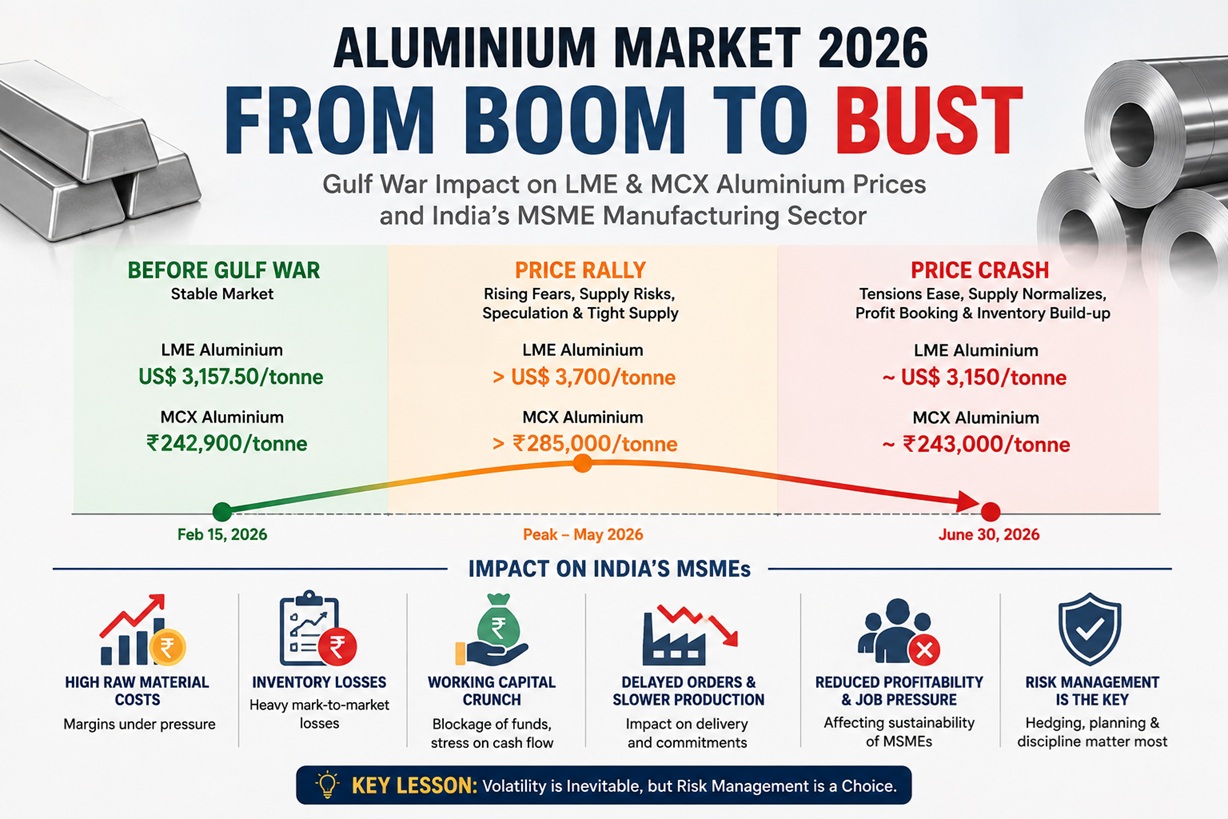
The aluminium industry experienced extraordinary volatility during the first half of 2026, driven by geopolitical conflicts, supply chain disruptions, speculative trading, and rapidly changing market sentiment. The Gulf War triggered widespread fears over aluminium availability because Gulf Cooperation Council (GCC) countries account for a significant share of global primary aluminium production and exports. These concerns pushed aluminium prices on both the London Metal Exchange (LME) and India's Multi Commodity Exchange (MCX) to multi-year highs. Expecting sustained price strength, many Indian manufacturers, traders, and MSMEs accumulated inventory at elevated prices. When geopolitical risks eased and supply concerns diminished, prices corrected sharply, leaving businesses with significant inventory losses, margin pressure, and working capital constraints.
1. Aluminium Market Before the Gulf War
Before geopolitical tensions intensified in the Gulf region, the global aluminium market was relatively balanced, although several structural factors were already supporting higher prices. Demand from the automotive, renewable energy, aerospace, construction, packaging, and electrical sectors remained strong across major economies. China, the world's largest producer and consumer of aluminium, maintained stable production levels while implementing energy-efficiency measures that limited rapid capacity expansion. At the same time, Europe continued to face elevated energy costs, restricting the restart of idled smelters and keeping regional supply tight.
On the supply side, inventories on the London Metal Exchange had been declining steadily, reflecting robust physical demand and limited availability of immediately deliverable metal. Freight costs remained elevated due to disruptions in global shipping routes, and geopolitical uncertainties in the Red Sea had already increased transportation expenses for raw materials and finished aluminium products.
In India, aluminium consumption was supported by strong infrastructure spending, rapid growth in electric vehicle manufacturing, renewable energy projects, transmission and distribution networks, and increasing demand from the construction sector. Primary producers such as NALCO, Hindalco, and Vedanta continued to operate at healthy production levels, while thousands of secondary producers and recyclers depended heavily on imported aluminium scrap and primary metal.
Before the Gulf conflict escalated Prices:
- LME Aluminium: US$3,157.50 per tonne
- MCX Aluminium: ?242,900 per tonne
At these levels, most market participants anticipated a gradual upward trend supported by healthy industrial demand rather than a sudden price spike.
2. Why LME Aluminium Rose from US$3,157/t to Above US$3,700/t
The sharp increase in LME aluminium prices during the Gulf conflict was driven by a combination of geopolitical risks, supply concerns, speculative activity, and tight physical market conditions.
a) Geopolitical Risk Premium
The Gulf region accounts for a substantial share of global primary aluminium production and exports. Major producers in the United Arab Emirates, Bahrain, Oman, Qatar, and Saudi Arabia supply aluminium to customers across Asia, Europe, and North America. As tensions escalated, the market began pricing in the possibility of production disruptions, shipping delays, and reduced export availability.
Although large-scale production shutdowns did not occur, the perceived risk alone was enough to add a significant geopolitical premium to aluminium prices.
b) Strait of Hormuz Shipping Concerns
Nearly one-fifth of global seaborne oil trade passes through the Strait of Hormuz, which is also a critical route for aluminium exports from Gulf smelters. Any disruption to shipping in this corridor could have delayed metal deliveries, increased freight costs, and affected downstream manufacturing worldwide.
Higher insurance premiums for vessels operating in the region further increased logistics costs, reinforcing bullish sentiment in the aluminium market.
c) Declining LME Inventories
LME warehouse stocks had been trending lower for several months before the conflict. With inventories already tight, any potential supply disruption created fears of immediate shortages in the physical market. Lower exchange inventories typically amplify price movements because consumers become more willing to secure material at higher prices.
d) Strong Industrial Demand
Demand from automotive, electric vehicles, renewable energy, aerospace, packaging, and construction remained resilient despite broader macroeconomic uncertainties. These sectors continued consuming large volumes of primary aluminium, supporting prices during the geopolitical crisis.
e) Financial Investment and Speculative Buying
Commodity funds, institutional investors, and algorithmic traders responded rapidly to the escalating geopolitical risks by increasing long positions in aluminium futures. Their buying accelerated the rally beyond what physical supply-demand fundamentals alone would have justified.
f) Expectations of Long-Term Supply Tightness
Many analysts believed that prolonged geopolitical uncertainty, combined with energy constraints in Europe and limited new smelting capacity globally, would keep aluminium prices above US$3,500 per tonne for an extended period. This expectation encouraged manufacturers and traders to purchase additional inventory before prices rose even further.
Consequently, LME aluminium prices surged beyond US$3,700 per tonne, representing an increase of more than 17% from pre-conflict levels.
3. Why MCX Aluminium Rose from ?242,900/t
India's MCX aluminium futures closely mirror movements in the London Metal Exchange because the country imports substantial quantities of primary aluminium, scrap, and raw materials, making domestic prices highly sensitive to global trends and exchange rate movements.
a) Direct Transmission of Global Prices
As LME aluminium prices climbed rapidly, Indian import costs increased almost immediately. Domestic producers, traders, and consumers adjusted their pricing in line with international benchmarks, causing MCX aluminium futures to rise from approximately ?242,900 per tonne to levels consistent with the global rally.
b) Depreciation Pressure on the Indian Rupee
During periods of geopolitical uncertainty, investors often shift toward safe-haven assets, strengthening the US dollar. A relatively weaker Indian rupee increased the landed cost of imported aluminium, further supporting higher MCX prices even when the underlying LME movement was unchanged.
c) Higher Import Costs
Ocean freight charges, marine insurance premiums, and logistics expenses increased due to the heightened risks associated with shipping through or around the Middle East. These additional costs were incorporated into import prices, pushing domestic aluminium prices higher.
d) Inventory Building by Industry
Many Indian manufacturers—including extrusion plants, rolling mills, foundries, cable producers, and die-casting units—anticipated sustained high prices and accelerated purchases to secure raw material availability. This widespread inventory accumulation further tightened the domestic market.
e) Traders' Bullish Expectations
Commodity traders expected aluminium prices to remain above US$3,500 per tonne and positioned themselves accordingly. Increased buying activity in both physical and futures markets amplified the upward momentum in MCX prices.
f) Strong Domestic Demand
Government infrastructure projects, renewable energy expansion, electric vehicle manufacturing, railway modernization, and growth in the construction sector continued to support robust domestic aluminium consumption, reinforcing the price rally.
As a result, MCX aluminium prices reflected not only the international surge but also the additional impact of currency movements, import costs, and strong domestic demand, creating a challenging environment for manufacturers that relied on timely and cost-effective raw material procurement.
4. Supply Disruptions in the Gulf
The Gulf region plays a strategic role in the global aluminium supply chain. Countries such as the United Arab Emirates (UAE), Bahrain, Oman, Qatar, and Saudi Arabia collectively account for nearly 12–15% of global primary aluminium production and a much larger share of internationally traded primary aluminium. Major producers, including Emirates Global Aluminium (EGA), Aluminium Bahrain (Alba), Sohar Aluminium, and Ma'aden Aluminium, export millions of tonnes annually to Asia, Europe, and North America.
When geopolitical tensions escalated in the Gulf during early 2026, the aluminium market immediately reacted to the possibility of supply disruptions rather than actual production losses. The market was primarily concerned about:
• Closure or disruption of the Strait of Hormuz, through which a substantial portion of Gulf exports pass.
• Increased marine insurance premiums due to heightened regional security risks.
• Rising freight costs for vessels transporting aluminium ingots and billets.
• Potential sanctions or trade restrictions affecting regional exports.
• Delays in raw material shipments, particularly alumina and carbon anodes.
• Reduced availability of primary aluminium for downstream manufacturers.
Although most Gulf smelters continued operating normally, the fear of disruption created a significant geopolitical risk premium in aluminium prices. Commodity markets often react to anticipated risks rather than waiting for physical shortages to materialize.
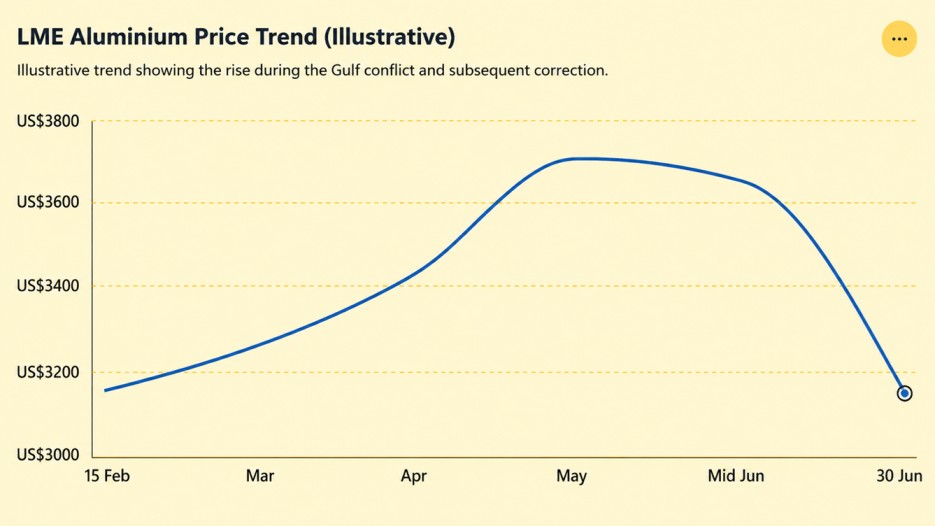
Graph 1: LME Aluminium Price Trend (15 Feb – 30 Jun 2026)
LME Aluminium Price Trend (Illustrative)
Illustrative trend showing the rise during the Gulf conflict and subsequent correction.
Graph 2: MCX Aluminium Price Trend (15 Feb – 30 Jun 2026)
MCX Aluminium Price Trend (Illustrative)
Illustrative trend broadly tracking LME movements in the Indian market.
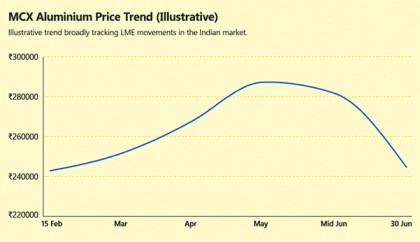 Table 1: Comparison of LME and MCX Aluminium
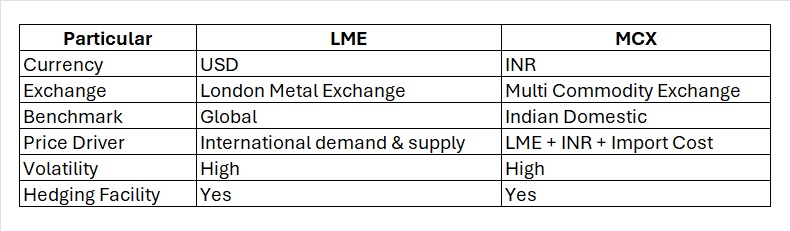 Table 2: Aluminium Price Movement During the Gulf War (H1 2026)
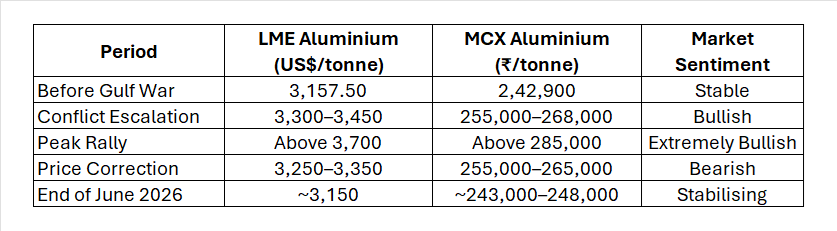 Table 3: Major Reasons Behind Aluminium Price Rally
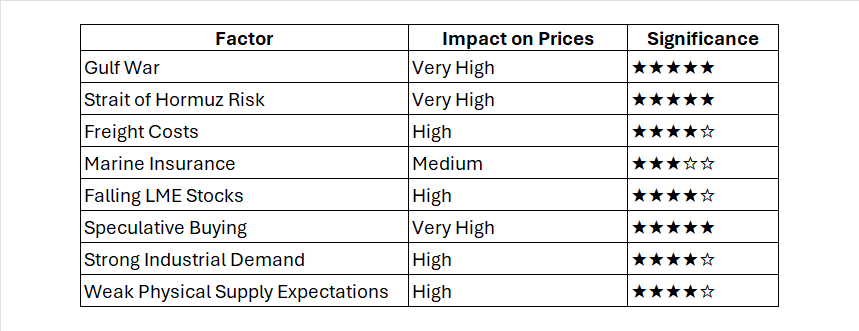 5. Traders' Expectations of US$3,500+ Aluminium
As LME aluminium crossed US$3,500 per tonne, market sentiment became increasingly bullish. Many analysts and traders believed that aluminium prices would remain above this level for several reasons:
Tight Global Supply
LME inventories had been declining steadily, while energy costs continued to limit production in Europe.
Continued Geopolitical Risks
The conflict showed no immediate signs of resolution, leading market participants to assume that supply disruptions could persist for months.
Robust Industrial Demand
Strong demand from electric vehicles, renewable energy, aerospace, packaging, and infrastructure projects supported expectations of sustained high prices.
Investment Fund Participation
Commodity hedge funds and institutional investors significantly increased long positions, reinforcing upward momentum.
Industry Inventory Building
Manufacturers and traders accelerated purchases to avoid future shortages, creating additional demand in the spot market.
As a result, many businesses:
• Purchased aluminium at historically high prices.
• Increased inventory beyond normal operating requirements.
• Delayed selling in anticipation of further price increases.
• Expected LME aluminium to stabilize between US$3,500 and US$3,700 per tonne.
This optimistic outlook encouraged stock accumulation across the supply chain, particularly among Indian MSMEs that feared higher replacement costs.
6. Why Prices Suddenly Crashed Back to Around US$3,150/t
Despite strong bullish sentiment, aluminium prices declined sharply during late June and early July 2026. Several interconnected factors contributed to the correction.
a). Easing Geopolitical Tensions
As immediate fears surrounding the Gulf conflict subsided and shipping routes remained operational, the geopolitical risk premium embedded in aluminium prices began to disappear.
b). Gulf Production Continued
Contrary to market expectations, major Gulf smelters largely maintained production and export operations, preventing the anticipated supply shortages.
c). Profit Booking
After aluminium prices exceeded US$3,700 per tonne, institutional investors and speculative funds began closing profitable long positions, triggering heavy selling.
d). Normalization of Freight Costs
Marine insurance and freight charges started declining as the perceived shipping risks eased.
e). Improved Market Confidence
Consumers realized that physical aluminium availability remained adequate, reducing panic buying.
f). Stronger US Dollar and Macro Factors
Higher US interest rate expectations and a stronger US dollar weighed on industrial metals, including aluminium.
g). Technical Selling
Once key support levels were broken, algorithmic trading systems accelerated the downward move, amplifying the correction.
Consequently, LME aluminium prices fell to approximately US$3,150 ± US$50 per tonne, while MCX aluminium mirrored the decline.
7. Comparison of LME & MCX Price Movements
Table:4
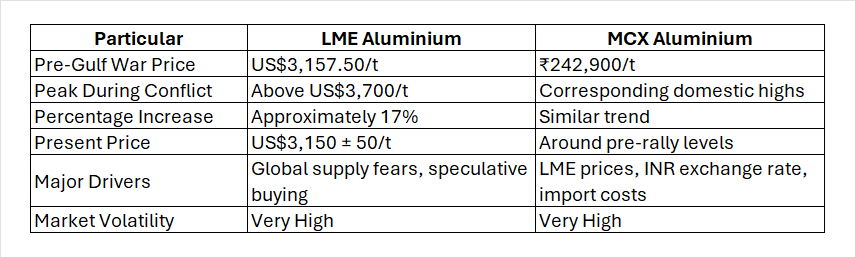 8. Impact on Different Segments of the Aluminium Industry
Table 5: Impact on Different Aluminium Industry Segments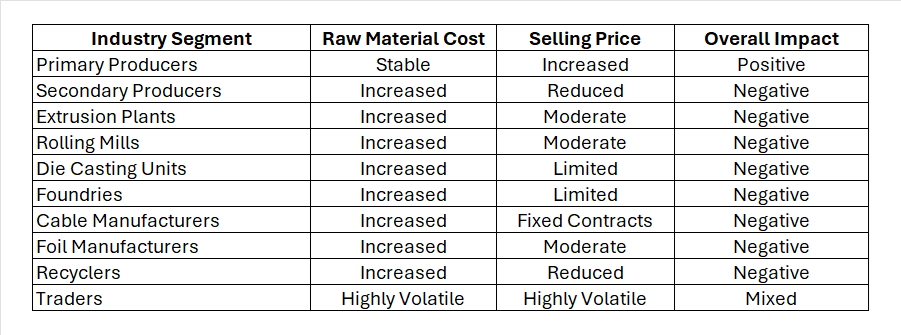 8.1 Primary Aluminium Producers
Primary producers such as NALCO, Hindalco, Vedanta Aluminium, and BALCO benefited significantly during the price rally. Since their production costs remained relatively stable while selling prices increased, profit margins improved considerably during the peak.
However, the subsequent price correction reduced profitability on new sales, although integrated producers were generally better positioned than downstream manufacturers due to their lower production costs and captive raw material sources.
8.2 Secondary Aluminium Producers
Secondary aluminium manufacturers experienced a mixed impact.
They purchased:
• Aluminium scrap
• Primary ingots
• Alloying elements
at elevated prices. When finished product prices declined rapidly, many producers were forced to sell below production cost to maintain cash flow.
Major Challenges
• Shrinking profit margins
• Inventory losses
• Reduced order bookings
• Pressure from customers seeking lower prices
• Working capital shortages
8.3 Aluminium Extrusion Plants
Extrusion manufacturers typically maintain raw material inventories for several weeks. Many purchased billets during the price rally expecting continued increases.
After prices corrected:
• Finished product prices declined.
• Customers demanded immediate price reductions.
• High-cost billet inventories resulted in negative margins.
• Export competitiveness weakened.
8.4 Rolling Mills
Rolling mills supplying sheets, coils, foils, and plates faced:
• High-cost slab inventories.
• Declining selling prices.
• Customer resistance to accepting higher prices.
• Increased working capital requirements.
8.5 Die Casting Units
Automotive and engineering customers generally operate under annual or quarterly contracts.
Die-casting manufacturers could not immediately pass increased raw material costs to customers during the rally. When aluminium prices declined, they faced inventory losses on high-cost metal already purchased.
Table 6: Illustrative Inventory Loss Analysis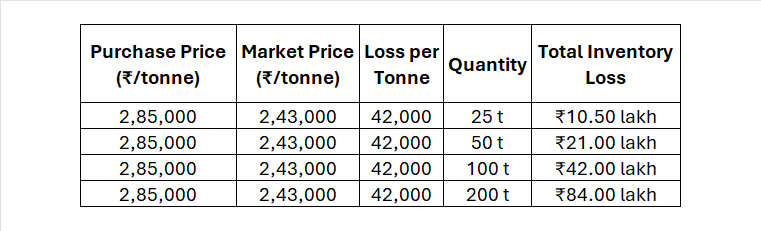 8.6 Foundries
Aluminium foundries supplying castings for automotive, electrical, and industrial applications experienced:
• Higher melting costs.
• Increased raw material expenses.
• Limited ability to revise selling prices.
• Reduced operating margins.
Many MSME foundries absorbed substantial losses on inventory purchased during the peak.
8.7 Cable Manufacturers
Aluminium conductor manufacturers supplying utilities and infrastructure projects often work under fixed-price contracts.
The sudden increase in aluminium prices compressed margins, while the later price decline caused valuation losses on existing inventory.
8.8 Foil Manufacturers
Manufacturers of pharmaceutical, food, and industrial aluminium foil faced:
• Elevated input costs.
• Customer resistance to frequent price revisions.
• Inventory devaluation following the market correction.
Table 7: Estimated Working Capital Requirement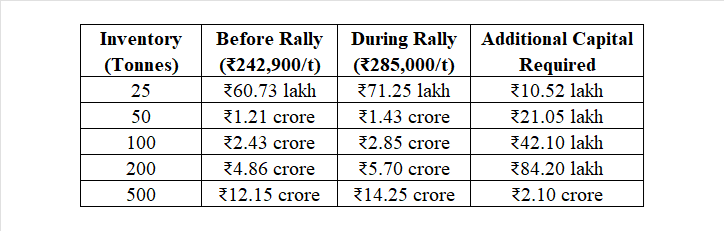 8.9 Aluminium Scrap Recyclers
Recyclers purchased scrap at elevated prices during the rally.
When primary aluminium prices declined:
• Scrap prices also corrected.
• Recyclers incurred losses on accumulated inventory.
• Many delayed fresh purchases, reducing overall market liquidity.
8.10 Traders
Commodity traders experienced the most pronounced effects.
Profitable Traders
• Sold inventory during the price rally.
• Booked profits at peak levels.
• Maintained disciplined inventory control.
Loss-Making Traders
• Purchased aggressively near the market peak.
• Delayed sales expecting further increases.
• Suffered significant inventory devaluation.
8.11 Importers
Importers placing orders during the peak encountered:
• Higher CIF costs.
• Declining domestic selling prices upon cargo arrival.
• Reduced import margins.
• Currency-related risks.
8.12 Exporters
Exporters benefited from earlier high-price sales but faced increasing competition as global aluminium prices normalized. Lower prices also affected the valuation of export contracts negotiated during the rally.
9. MSME Sector Analysis
Micro, Small, and Medium Enterprises (MSMEs) form the backbone of India's downstream aluminium industry, supplying components to sectors such as automotive, electrical equipment, construction, consumer goods, defence, and renewable energy.
Unlike large integrated producers, most MSMEs purchase primary aluminium, billets, or scrap from the open market and therefore have limited control over raw material costs.
Many MSMEs:
• Purchased inventory during the rally.
• Continued production using high-cost metal.
• Faced declining finished-product prices.
• Experienced severe working capital stress.
The impact varied depending on inventory levels, customer contracts, and pricing flexibility, but businesses with large inventories and fixed-price orders were generally the most affected.
Table 8: MSME Sector-wise Estimated Impact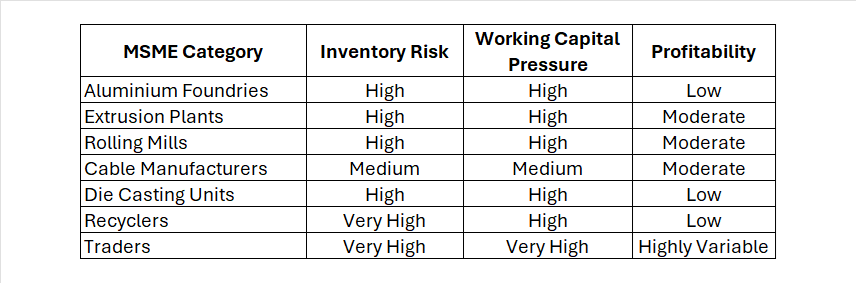 10. Working Capital Crisis
The rapid rise in aluminium prices increased the amount of capital required to maintain the same level of inventory.
Illustrative Example
Table: 9 This increase in inventory value required additional funding through bank credit or internal resources. When prices later declined, businesses not only faced reduced inventory values but also continued to bear financing costs.
11. Inventory Loss Analysis
Consider an MSME purchasing:
• 100 tonnes at ?285,000 per tonne during the peak.
If the market later corrected to ?243,000 per tonne, the unrealized inventory loss would be:
?42,000 per tonne × 100 tonnes = ?42 lakh
Such losses can significantly erode profitability, particularly for businesses operating on thin margins.
12. Case Studies (Illustrative)
Table: 10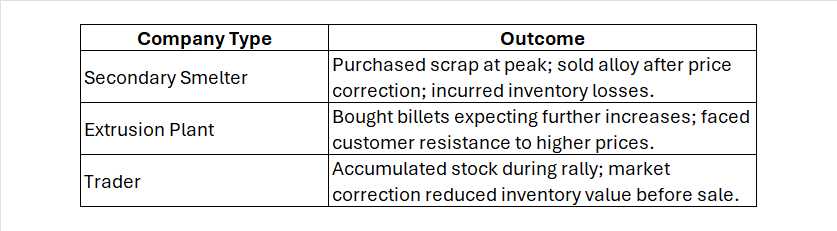 These examples are illustrative and intended to demonstrate common market scenarios rather than represent specific companies.
13. Estimated Profit & Loss Scenarios for MSMEs
Business Type Estimated Impact
- Primary Producers: Generally profitable during the rally due to lower production costs.
- Secondary Producers: Margins compressed; inventory losses after correction.
- Extrusion Plants Moderate to significant losses on high-cost billet inventory.
- Foundries Reduced margins where selling prices lagged raw material costs.
- Traders: Highly dependent on purchase timing and inventory turnover.
- Recyclers: Losses from declining scrap values after the correction.
The magnitude of profit or loss depended on inventory size, procurement timing, contractual pricing, financing costs, and whether businesses had effective risk management practices.
Table 11: Illustrative Profit/Loss Scenario
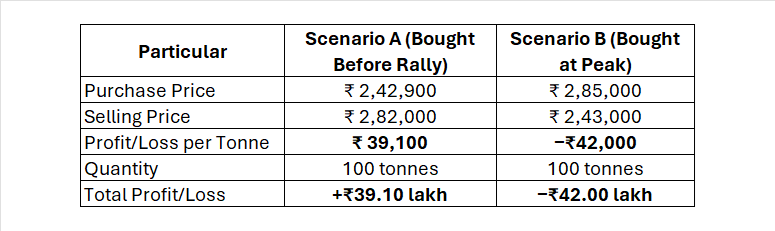 Table 12: Hedging vs Non-Hedging Companies
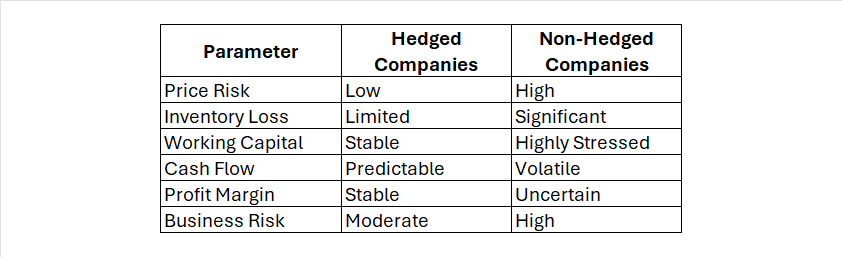 Table 13: Risk Management Matrix
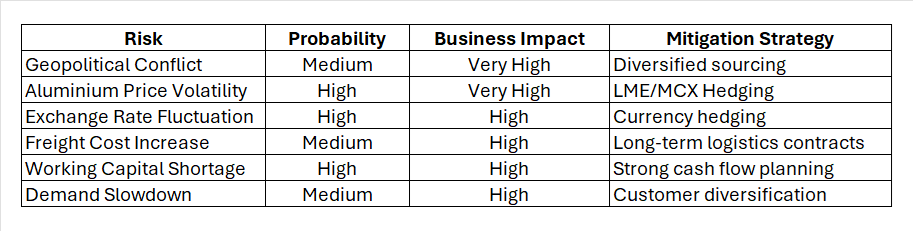
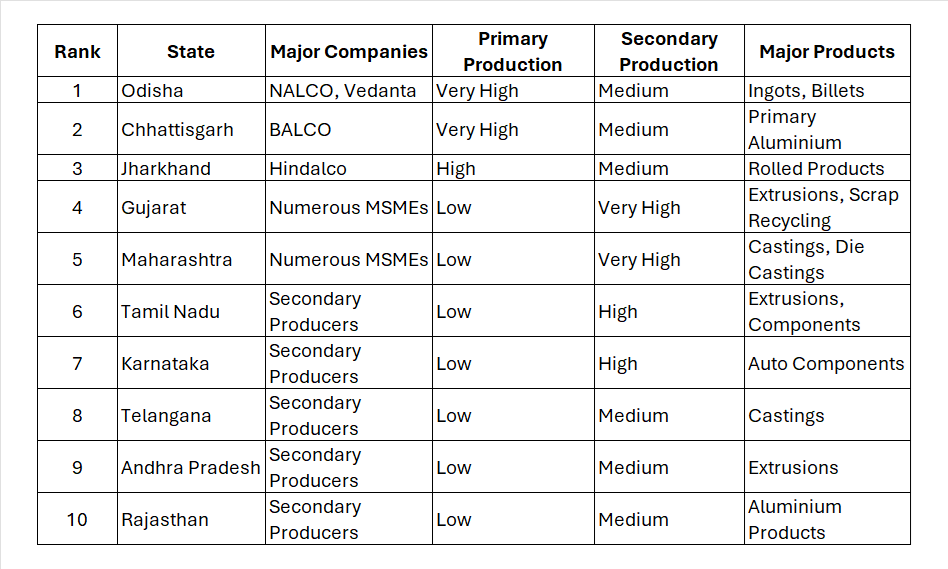
Table 14: Major Aluminium Producing States in India
 14. Hedging vs Non-Hedging Companies
Table: 15
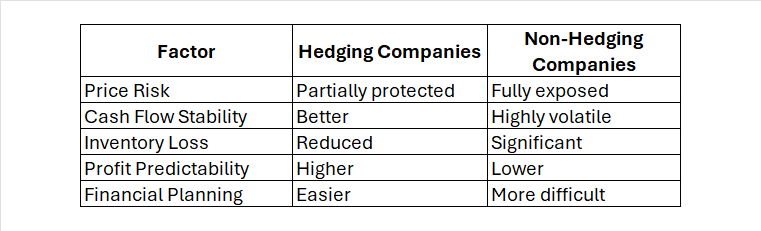
Companies using LME or MCX futures, forward contracts, or customer price-adjustment mechanisms were generally better equipped to manage price volatility than those relying solely on spot-market purchases.
15. Risk Management Strategies
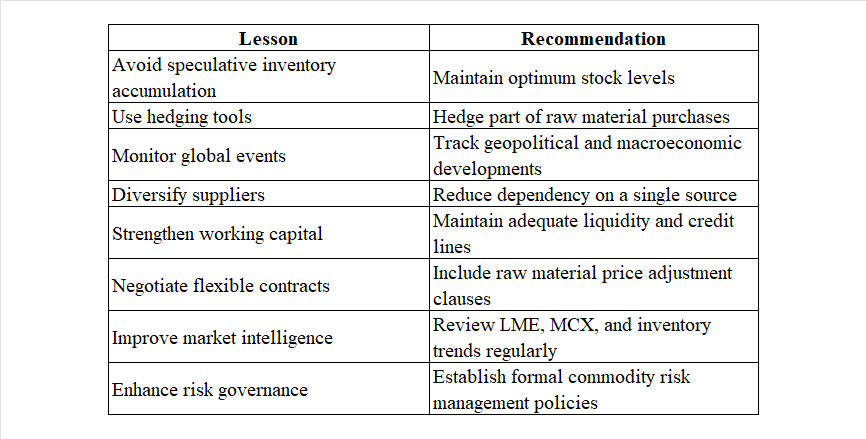
To reduce exposure to future price shocks, aluminium businesses can consider:
- Maintaining optimal inventory rather than speculative stockpiling.
- Using hedging instruments such as LME or MCX futures where appropriate.
- Including price-adjustment clauses in long-term supply contracts.
- Diversifying raw material sources.
- Monitoring geopolitical developments and market indicators.
- Strengthening working capital planning and liquidity management.
- Improving demand forecasting and procurement discipline.
- Increasing the use of recycled aluminium where technically feasible.
- Conducting regular inventory valuation and risk assessments.
- Training procurement teams in commodity risk management.
Table 16: Procurement Lessons from the 2026 Aluminium Price Cycle
16. Future Market Outlook (H2 2026)
Looking ahead to the second half of 2026, aluminium prices are expected to be influenced by several competing factors:
• Continued geopolitical developments in the Middle East.
• Global economic growth and industrial demand.
• Chinese production and export policies.
• Energy prices affecting smelter economics.
• LME inventory trends.
• Interest rate decisions and currency movements.
• Growth in electric vehicles, renewable energy, and infrastructure investment.
If supply remains stable and global demand moderates, aluminium prices may trade within a relatively balanced range. However, any renewed geopolitical disruption, energy shortages, or significant supply interruptions could quickly reintroduce volatility.
17. Role of the LOHAA Digital Platform of Android and iPhone / Portal in Managing Procurement Risk
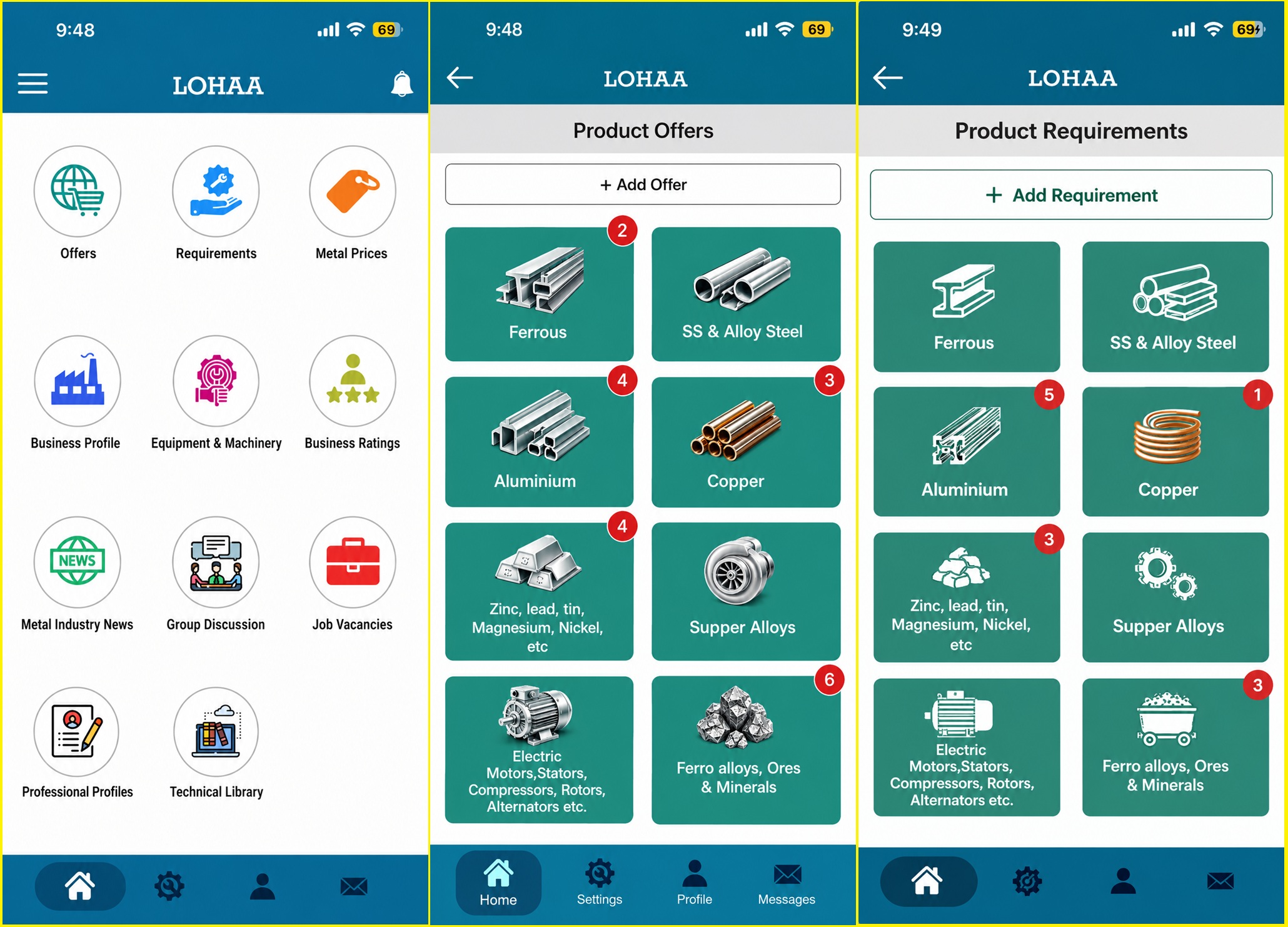
In a volatile commodity environment, access to timely market information and a broad network of verified trading partners can support more informed procurement decisions. Digital B2B platforms can improve market visibility, streamline sourcing, and reduce the time required to identify suppliers or buyers.
How LOHAA Supports the Metal Industry
LOHAA is a digital B2B platform designed for the metal and recycling industry. It connects manufacturers, traders, recyclers, importers, exporters, and stockists, providing a centralized marketplace for buying and selling metals and related products.
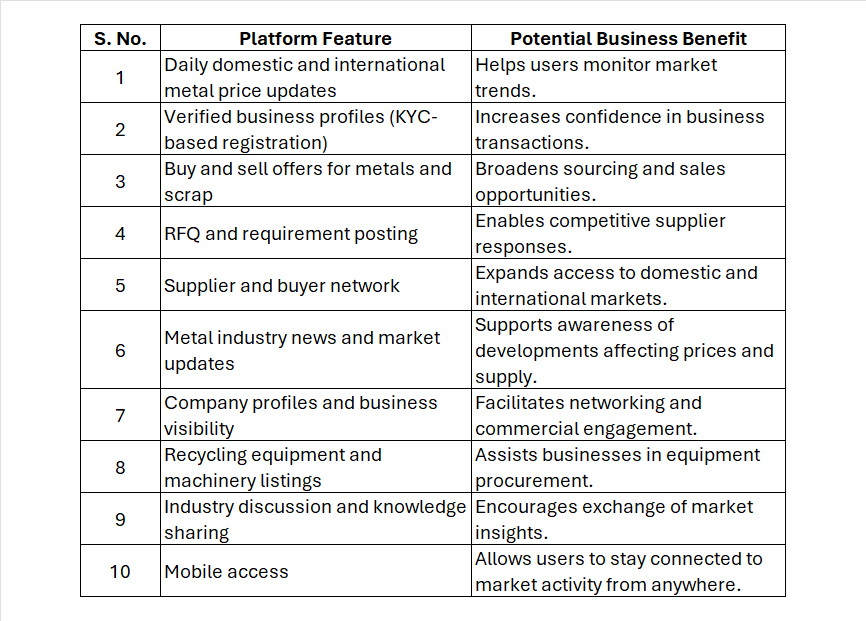
Features That Can Help During Volatile Markets
Table: 17
 Practical Value for MSMEs
While no platform can eliminate commodity-price risk or guarantee favourable prices, timely information and access to a wider network of verified businesses can help MSMEs make more informed purchasing and sales decisions. During periods of heightened market volatility, comparing supplier quotations, tracking price trends, and maintaining regular communication with customers and suppliers can contribute to more effective procurement planning and inventory management
Practical Value for MSMEs
While no platform can eliminate commodity-price risk or guarantee favourable prices, timely information and access to a wider network of verified businesses can help MSMEs make more informed purchasing and sales decisions. During periods of heightened market volatility, comparing supplier quotations, tracking price trends, and maintaining regular communication with customers and suppliers can contribute to more effective procurement planning and inventory management
LOHAA Matket updates
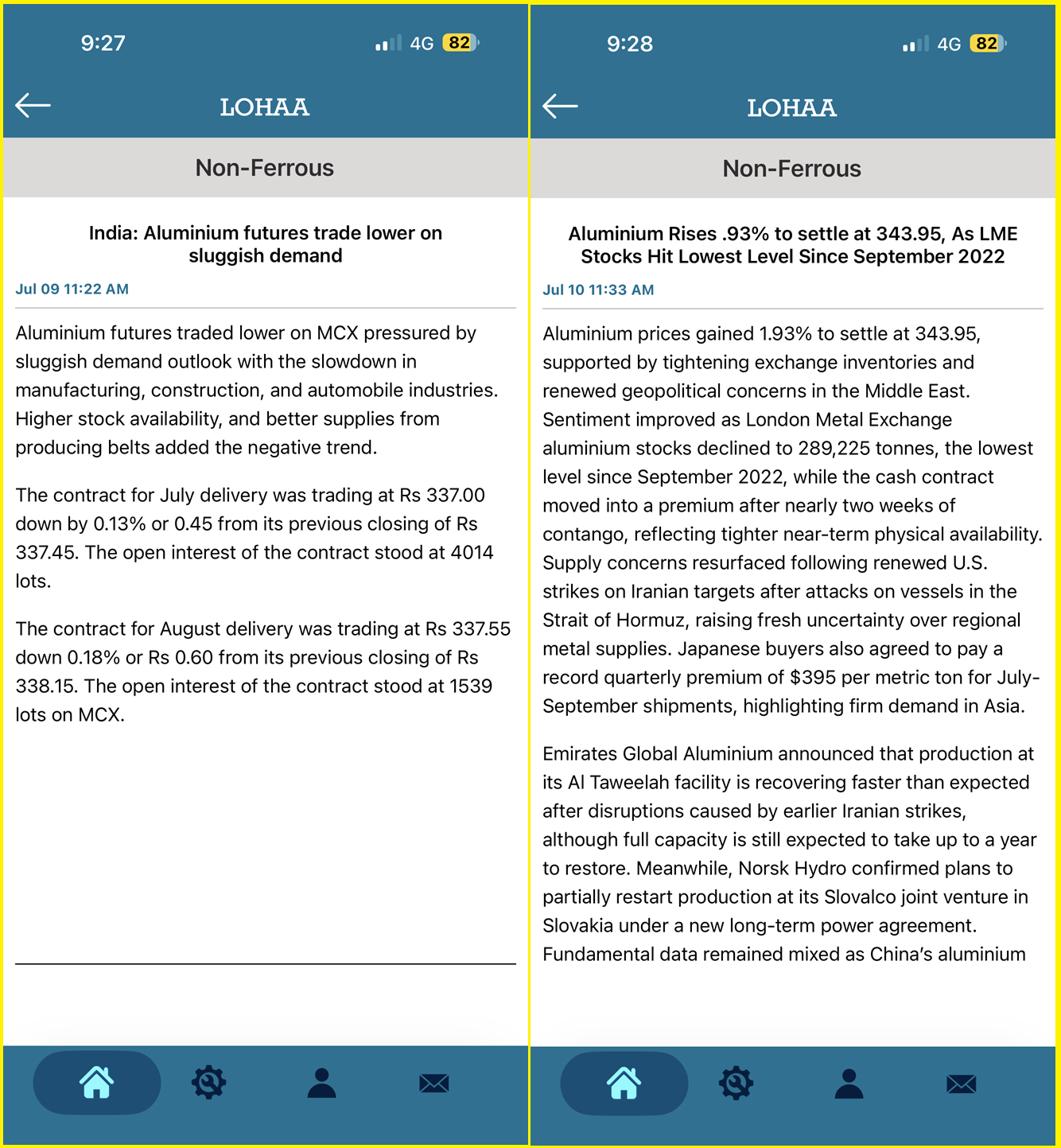
LOHAA News in application / Portal
Looking Ahead
The aluminium market is expected to remain influenced by global economic conditions, energy costs, trade policies, geopolitical developments, and demand from sectors such as automotive, construction, packaging, and renewable energy. MSMEs that combine prudent procurement practices with reliable market intelligence and strong business networks are likely to be better positioned to navigate future periods of volatility.
These two sections fit naturally near the end of your report, after the market analysis and before the conclusion, providing readers with actionable guidance alongside the discussion of the 2026 aluminium price cycle.
Conclusion
The aluminium market in the first half of 2026 demonstrated how geopolitical events can rapidly reshape commodity prices and business profitability. While the Gulf conflict pushed LME aluminium above US$3,700 per tonne and encouraged aggressive inventory accumulation, the subsequent correction to around US$3,150 per tonne exposed many manufacturers, traders, and MSMEs to significant financial losses. Businesses with disciplined inventory management, flexible pricing mechanisms, and effective hedging strategies were generally more resilient than those relying on speculative purchases. Going forward, strengthening procurement practices, managing working capital prudently, and adopting comprehensive price risk management will be essential for navigating future periods of market volatility.
References
1. London Metal Exchange – Official market data, warehouse inventories, and aluminium futures.
2. Multi Commodity Exchange of India – MCX aluminium futures and pricing.
3. International Aluminium Institute – Global production and industry statistics.
4. Ministry of Mines – Indian non-ferrous metals policies and statistics.
5. Ministry of Micro, Small and Medium Enterprises – MSME framework and policy information.
6. Company reports and investor presentations from Hindalco Industries, Vedanta Aluminium, and National Aluminium Company Limited.
7. Industry analyses and commodity market reports published during H1 2026 by major financial institutions and commodity research providers.
By using digital trade platforms like LOHAA Mobile application, you can reach global buyers, source quality material, and strengthen long-term partnerships.
Download the Lohaa Metal Trading App for Android to access live scrap prices and real-time market updates anytime, anywhere.
Download the Lohaa Metal Trading App for iOS to access live scrap prices and real-time market updates anytime, anywhere.
(Notes: market and production volume estimates are synthesized from public market reports and industrial press; exact tonne figures for materials are not centrally published in a single comprehensive public dataset, therefore the numeric projection above is a conservative, documented estimate built from available intelligence and reasonable regional share assumptions.)


