
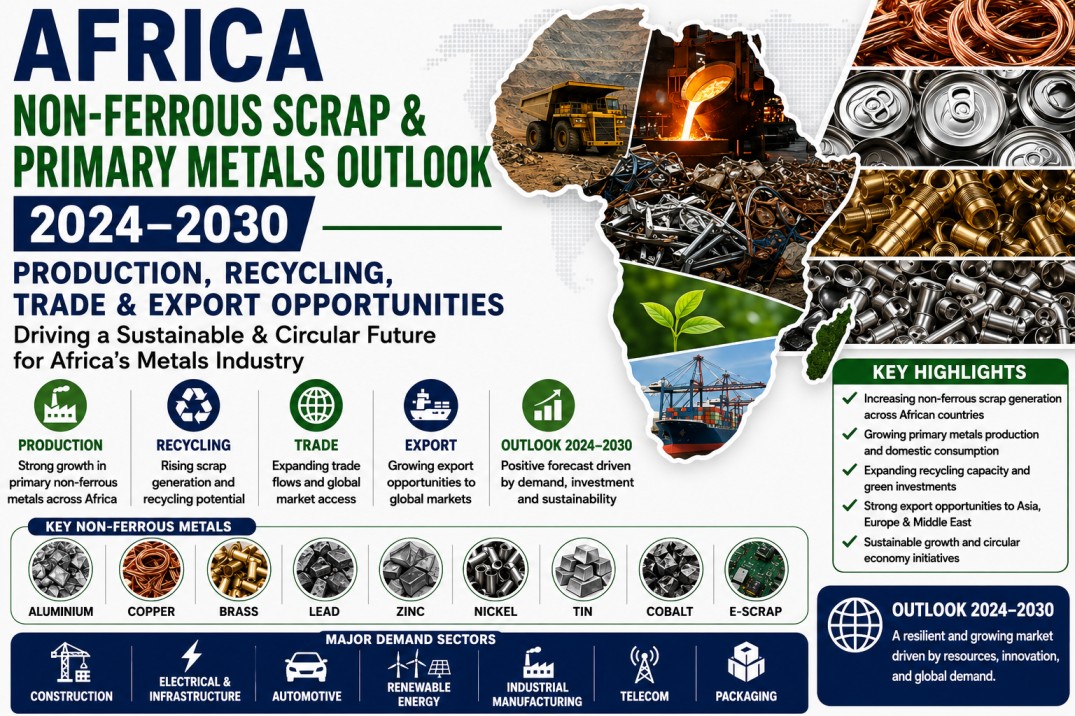
Africa Nonferrous Scrap Industry Outlook 2024 to 2030
Introduction
Africa is becoming an increasingly important region in the global non-ferrous metals supply chain due to its vast mineral reserves, expanding industrial base, urbanization, renewable energy investments, and growing recycling sector. The continent produces significant quantities of primary aluminium, copper, cobalt, lead, zinc, tin, manganese, nickel, and precious metals, while scrap generation is rising rapidly from automotive, electrical, construction, telecom, packaging, and consumer electronics sectors.
Between 2024 and 2026, African countries are expected to generate larger volumes of non-ferrous scrap as infrastructure replacement cycles accelerate and industrial activity expands. However, the recycling ecosystem remains uneven across the continent. Some countries are large exporters of scrap because of limited domestic processing capacity, while others are facing deficits due to growing downstream manufacturing demand.
Governments are increasingly implementing export restrictions on scrap metals to encourage domestic beneficiation, reduce illegal exports, and support local smelters and recyclers. Simultaneously, global demand for recycled non-ferrous metals is strengthening due to decarbonization policies, electric vehicle production, and sustainability targets.
This report analyzes:
• Non-ferrous scrap generation potential by African country
• Primary non-ferrous metal production trends
• Scrap surpluses and deficits
• Export opportunities
• Export restrictions
• Forecasts for 2026–2030
• Domestic consumption outlook
Major Types of Non-Ferrous Metals Covered
• Aluminium Scrap
• Copper Scrap
• Brass Scrap
• Lead Scrap
• Zinc Scrap
• Stainless Steel Scrap
• Nickel Scrap
• Tin Scrap
• Cobalt-bearing Scrap
• Electronic Scrap (E-scrap)
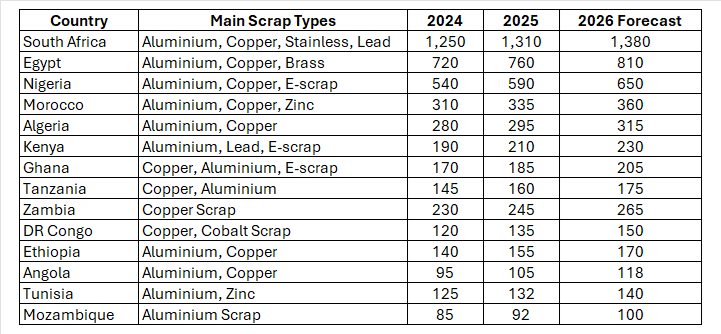
Non-Ferrous Scrap Generation Potential in Africa (2024–2026)
Estimated Scrap Generation by Major African Countries (Thousand Tonnes)
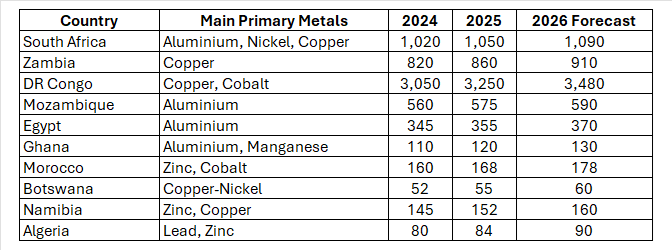
Primary Non-Ferrous Metal Production in Africa (2024–2026)
Estimated Primary Production (Thousand Tonnes)
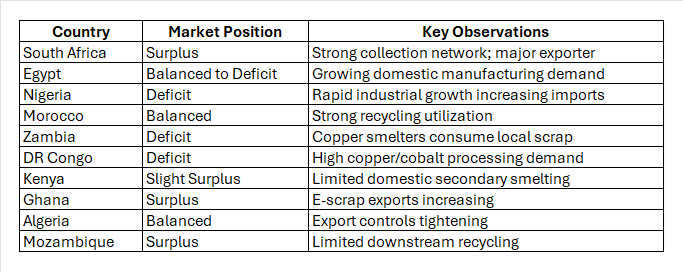
 Surplus or Deficit of Non-Ferrous Scrap
Export Opportunities by Country
South Africa
• Major exporter of copper, aluminium, stainless steel, and brass scrap
• Strong opportunities to Asia, Europe, and Middle East
Egypt
• Growing exports of aluminium scrap and brass scrap
• Increasing domestic retention policies may reduce exports
Nigeria
• Strong potential in aluminium and e-scrap exports
• Collection sector remains fragmented
Morocco
• Zinc and copper scrap exports expanding to Europe
Ghana
• Strong e-scrap and copper scrap exports
Zambia & DR Congo
• Limited export opportunities because local copper smelters absorb material
East Africa
• Kenya and Tanzania emerging as regional collection hubs
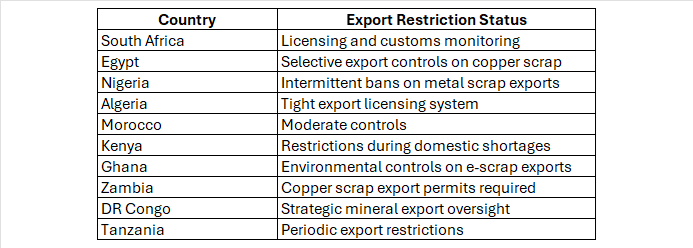
Export Restrictions on Non-Ferrous Scrap
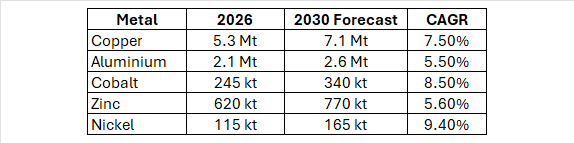
Forecast: Primary Non-Ferrous Production (2026–2030)
Estimated African Primary Production Growth
Key Drivers
• EV battery demand
• Renewable energy expansion
• Chinese investments
• Middle East industrial partnerships
• African industrialization initiatives
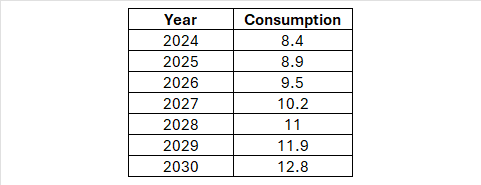
Domestic Usage of Non-Ferrous Materials
Estimated Domestic Consumption (Million Tonnes)
 Main Demand Sectors
• Construction
• Electrical infrastructure
• Renewable energy
• Automotive manufacturing
• Packaging
• Telecom infrastructure
Key Market Trends
a) Increasing Scrap Retention Policies
African governments increasingly prefer domestic recycling over raw scrap exports.
b) Copper and Aluminium Demand Surge
Grid expansion and renewable energy investments are boosting copper and aluminium consumption.
c) Rapid Growth of E-Scrap
Digitalization and telecom growth are increasing electronic waste generation.
d) Investment in Secondary Smelting
New recycling facilities are emerging in:
• South Africa
• Egypt
• Morocco
• Kenya
• Nigeria
e) Battery Metals Expansion
DR Congo and Zambia remain critical for cobalt and copper supply chains.
SWOT Analysis of Non-Ferrous Scrap Generation & Export Potential in African Countries
Africa’s non-ferrous scrap industry is evolving rapidly due to urbanization, mining expansion, infrastructure replacement, industrialization, renewable energy investments, and increasing global demand for recycled metals. However, the continent shows significant differences between countries in terms of scrap collection systems, recycling infrastructure, export regulations, and industrial demand.
This SWOT analysis evaluates the strengths, weaknesses, opportunities, and threats related to non-ferrous scrap generation and export activities across major African countries.
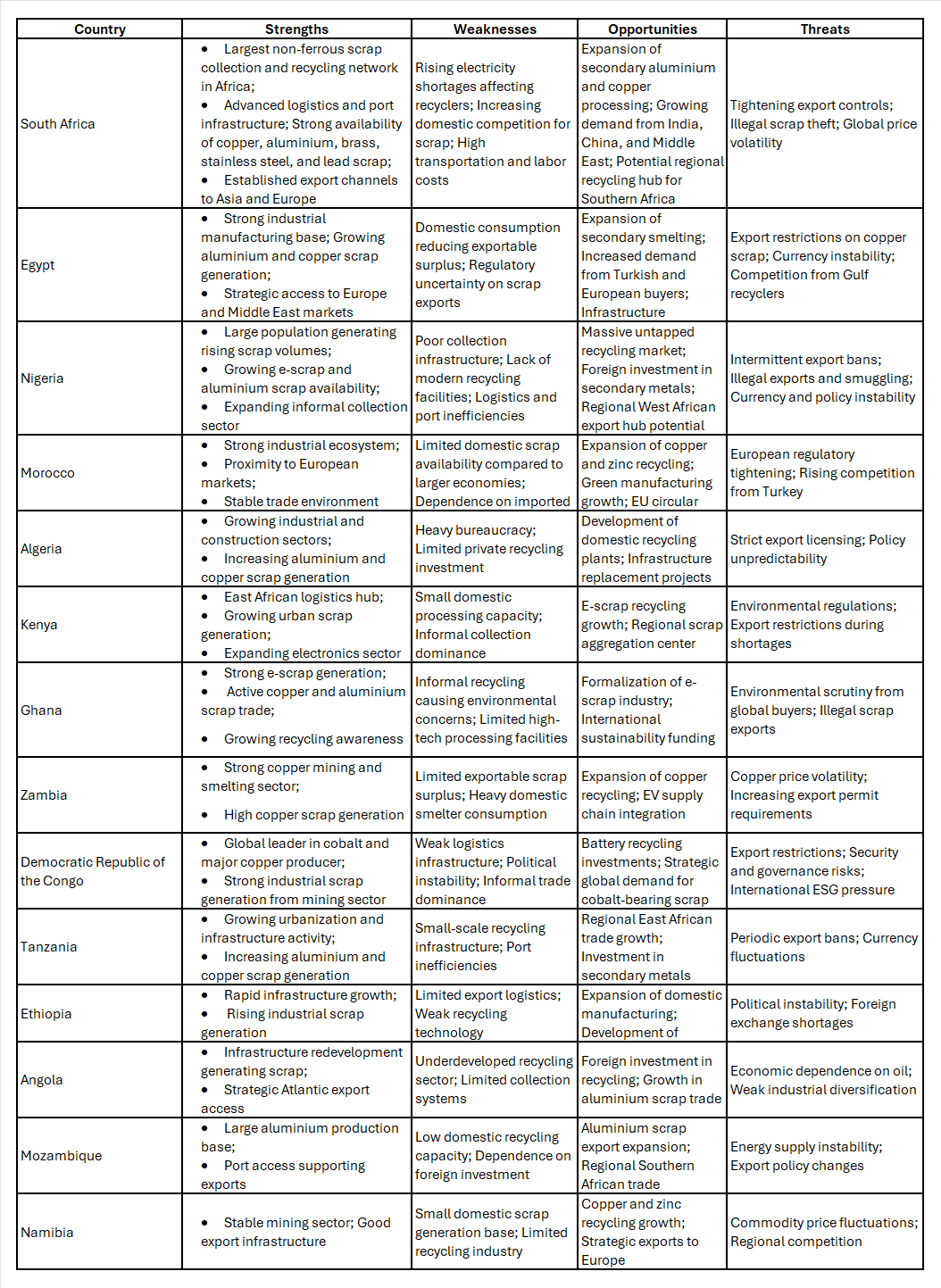
Africa Country-Wise Non-Ferrous Scrap Export Restrictions
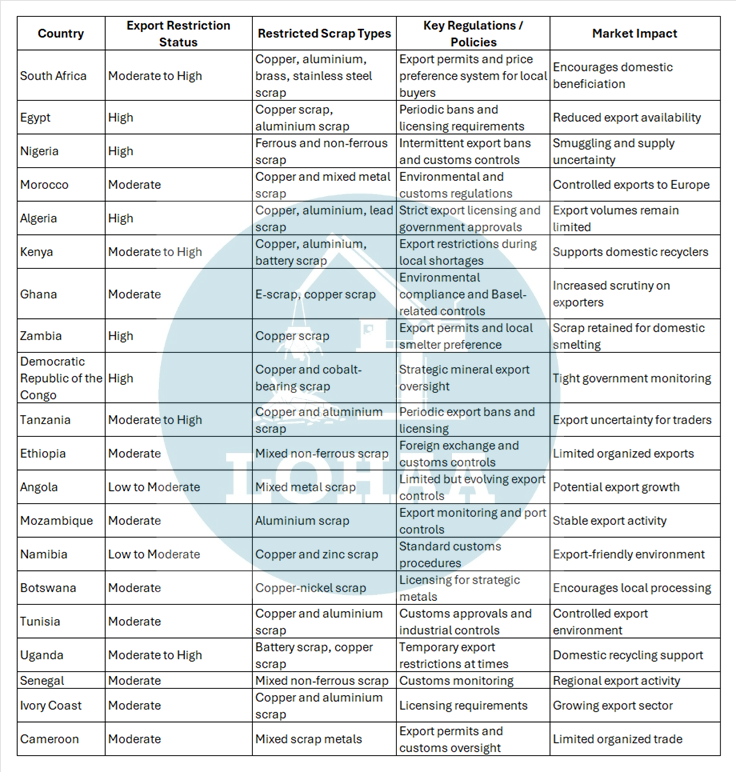 African countries are increasingly tightening controls on non-ferrous scrap exports to encourage domestic recycling, protect strategic mineral resources, and support local manufacturing industries. Copper scrap remains the most heavily regulated category due to its high industrial value and growing global demand.
Between 2026 and 2030, export restrictions are expected to expand further, especially for battery-related scrap, copper, cobalt-bearing materials, and electronic waste, as African governments focus more aggressively on industrialization and value-added metal processing.
Continental SWOT Summary

Key Strategic Trends (2026–2030)
a). Shift Toward Domestic Beneficiation
Many African governments are likely to prioritize local recycling and secondary smelting rather than exporting raw scrap.
b) Copper & Battery Metals Dominance
Copper, cobalt, nickel, and battery-related scrap will experience the strongest growth.
c). Expansion of Formal Recycling Sector
International investors are increasingly targeting:
• South Africa
• Egypt
• Morocco
• Kenya
• Nigeria
• Ghana
d) E-Scrap Growth
Africa’s digital transformation will sharply increase electronic scrap volumes.
e) Sustainability & ESG Pressure
Global buyers increasingly require:
• Traceability
• Responsible sourcing
• Environmental compliance
Conclusion
Africa’s non-ferrous metals sector is entering a transformative growth phase. Between 2024 and 2030, both primary production and scrap generation are expected to increase substantially due to industrialization, urbanization, energy transition projects, and infrastructure investments.
South Africa will remain the continent’s largest scrap generator and exporter, while DR Congo and Zambia will dominate copper and cobalt production. Egypt, Morocco, Nigeria, and Kenya are expected to emerge as important regional recycling and secondary processing hubs.
At the same time, export restrictions on scrap are likely to become more common as governments prioritize local value addition and industrial development. This could gradually reduce raw scrap exports while increasing investments in domestic smelting and refining.
The long-term outlook remains strongly positive, especially for copper, aluminium, cobalt, and recycled metals linked to electric vehicles, renewable energy, and circular economy initiatives.
References
• International Aluminium Institute (IAI)
• International Copper Study Group (ICSG)
• United Nations Comtrade
• African Development Bank (AfDB)
• World Bank Commodity Outlook
• International Energy Agency (IEA)
• US Geological Survey (USGS)
• OECD Global Material Resources Outlook
• National mining ministries and customs authorities
• Industry trade associations and recycling federations
By using digital trade platforms like LOHAA Mobile application, you can reach global buyers, source quality material, and strengthen long-term partnerships.
Download the LOHAA Mobile application today and connect with verified scrap suppliers and manufacturers.
(Notes: market and production volume estimates are synthesized from public market reports and industrial press; exact tonne figures for materials are not centrally published in a single comprehensive public dataset, therefore the numeric projection above is a conservative, documented estimate built from available intelligence and reasonable regional share assumptions.)


