
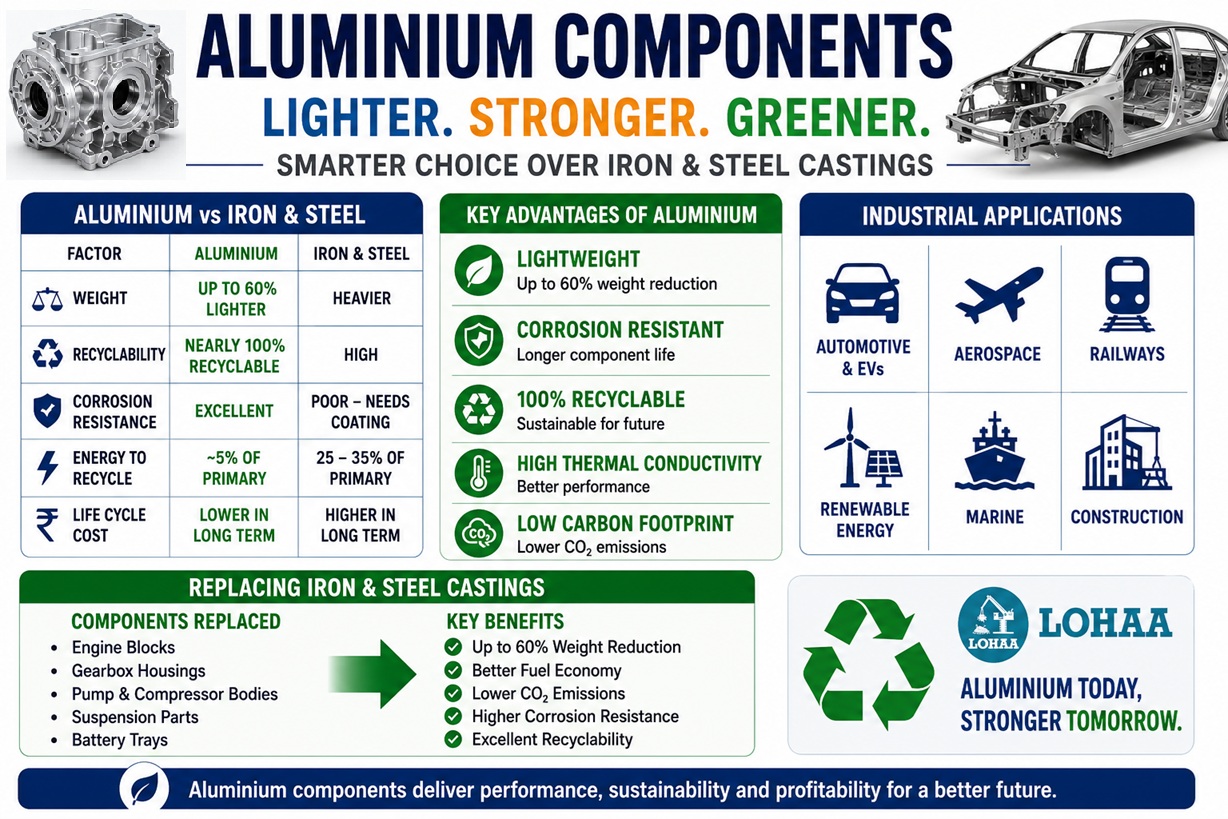
Why Aluminium Components Replace Iron & Steel Castings
Aluminium Components: Transforming Modern Manufacturing Through Lightweight, Recyclable and High-Performance Engineering
Introduction
Aluminium has become one of the most strategically important engineering materials in modern manufacturing. Industries worldwide are increasingly replacing conventional iron and steel components with aluminium to achieve lower weight, higher fuel efficiency, reduced carbon emissions and improved recyclability. The rapid growth of electric vehicles, aerospace, renewable energy and sustainable manufacturing has accelerated the demand for advanced aluminium alloys and casting technologies. Unlike ferrous metals, aluminium offers an excellent combination of high strength-to-weight ratio, corrosion resistance and nearly infinite recyclability without significant loss of properties. These advantages make aluminium a preferred material for next-generation industrial products and lightweight engineering solutions.
Importance of Aluminium Component Development Compared with Ferrous Components
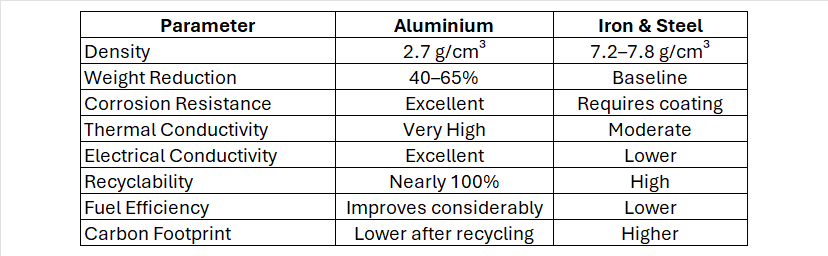
The global manufacturing industry is shifting towards lightweight materials to improve product efficiency while reducing environmental impact. Aluminium is increasingly replacing cast iron and steel in numerous engineering applications due to its superior mechanical performance, design flexibility and sustainability.
Table 1: Aluminium vs Ferrous Components
1. Cost of Recycling
Aluminium recycling requires only about 5% of the energy needed to produce primary aluminium from bauxite. This significantly reduces manufacturing costs and greenhouse gas emissions. Although steel recycling is also efficient, melting temperatures are considerably higher, increasing energy consumption and operating costs.
Table 2: Recycling Comparison
2. Change in Properties After Recycling
One of aluminium's greatest advantages is its ability to be recycled repeatedly with minimal degradation in mechanical properties. Proper alloy segregation ensures that recycled aluminium performs almost identically to primary metal.
Steel also retains most of its properties after recycling but often requires greater refining and alloy adjustments.
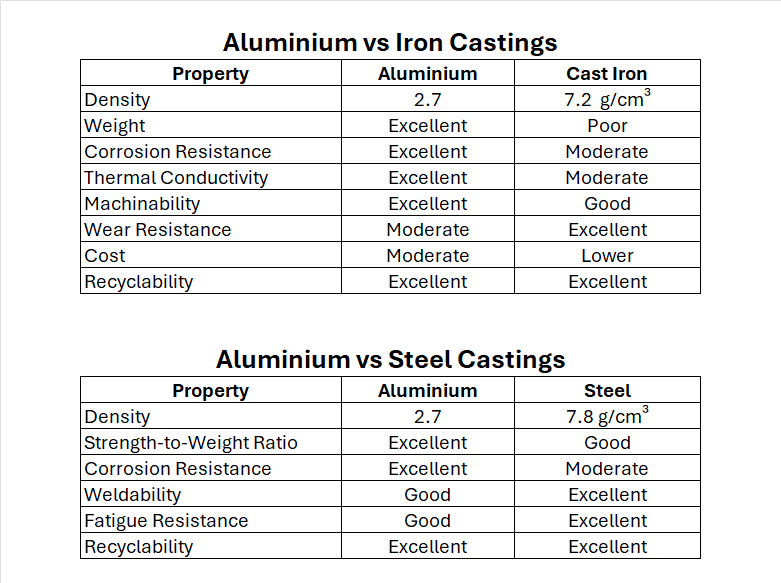
Table 3: Advantages of Aluminium Alloys
3. Availability of Materials for Recycling
Global aluminium recycling continues to expand because of increasing availability of beverage cans, automotive scrap, building materials and industrial machining scrap. Secondary aluminium now supplies a significant share of global demand.
Steel scrap availability remains high due to demolition, infrastructure replacement and industrial recycling. However, the increasing demand for low-carbon materials is encouraging greater use of recycled aluminium.
4. Flexibility in Design
Aluminium offers exceptional design freedom because of its lower density and superior castability. Manufacturers can produce complex thin-wall components using high-pressure die casting, gravity die casting and permanent mould casting.
Examples include:
• EV battery housings
• Automotive subframes
• Motor housings
• Structural castings
• Heat exchangers
• Consumer electronics
Large integrated "giga castings" now replace dozens of welded steel parts with a single aluminium casting, reducing manufacturing complexity.
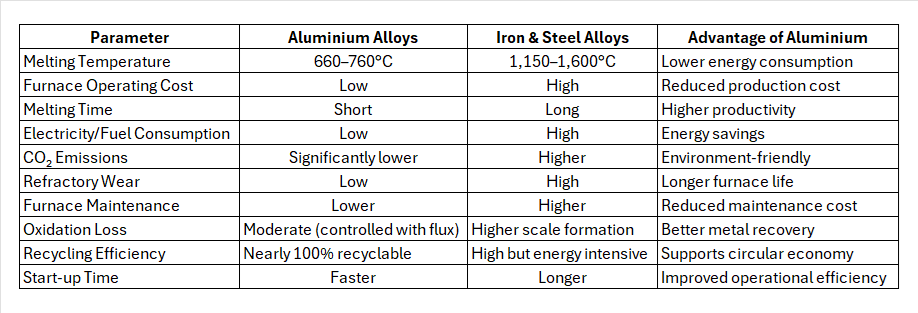
5. Advantages of Aluminium Melting Process Compared with Iron and Steel Alloy Melting
Aluminium melting offers several technical, economic, and environmental advantages over iron and steel melting. Due to its lower melting temperature and superior recyclability, aluminium has become the preferred material for industries focused on lightweight manufacturing and sustainability.
Table 4: Aluminium vs Iron & Steel Melting
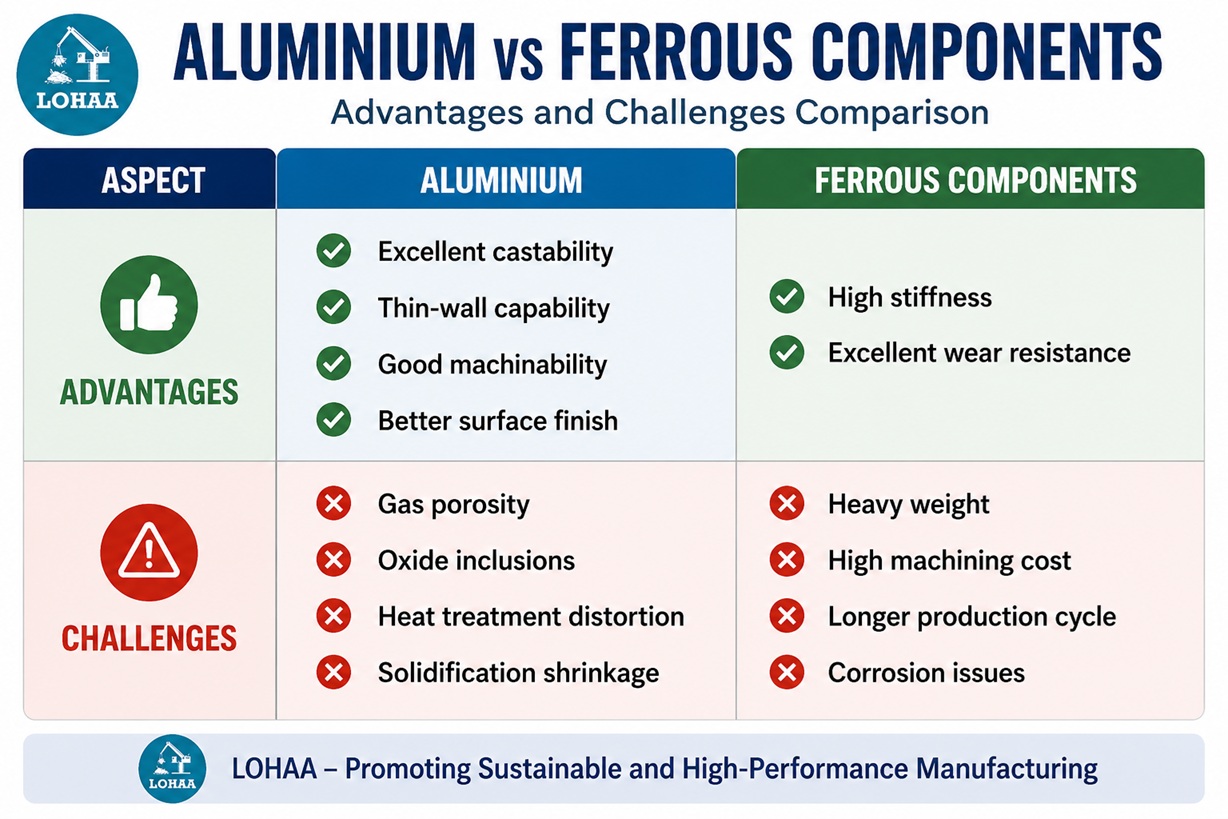
 6. Finished Component Manufacturing Issues
7. Comparison of Manpower Requirement for Manufacturing Aluminium and Ferrous Components
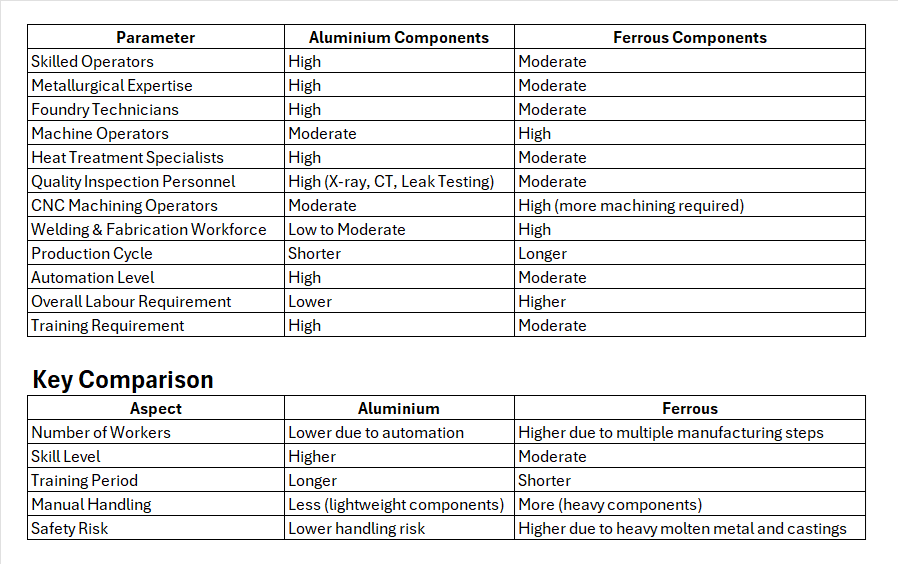
Although aluminium component manufacturing requires fewer operators because of automation and shorter production cycles, it generally demands higher technical skills than ferrous component manufacturing. Aluminium processing involves strict control of melt quality, degassing, alloy chemistry, and heat treatment, requiring experienced metallurgists and process engineers.
Table 5: Manpower Requirement – Aluminium vs Ferrous Components
8. Why Aluminium Requires More Skilled Manpower
• Precise alloy composition control.
• Melt treatment, degassing, and grain refinement.
• Oxide and hydrogen defect prevention.
• Advanced casting processes such as high-pressure die casting and vacuum die casting.
• Heat treatment (T5, T6, T7) expertise.
• Advanced non-destructive testing (X-ray, CT scanning, leak testing).
• Process simulation and quality control.
Why Ferrous Components Require More Overall Labour
• Handling heavier raw materials and castings.
• Longer melting and cooling cycles.
• More fettling, grinding, and cleaning operations.
• Extensive machining due to harder materials.
• Additional surface treatment and corrosion protection.
• Greater manual material handling throughout production.
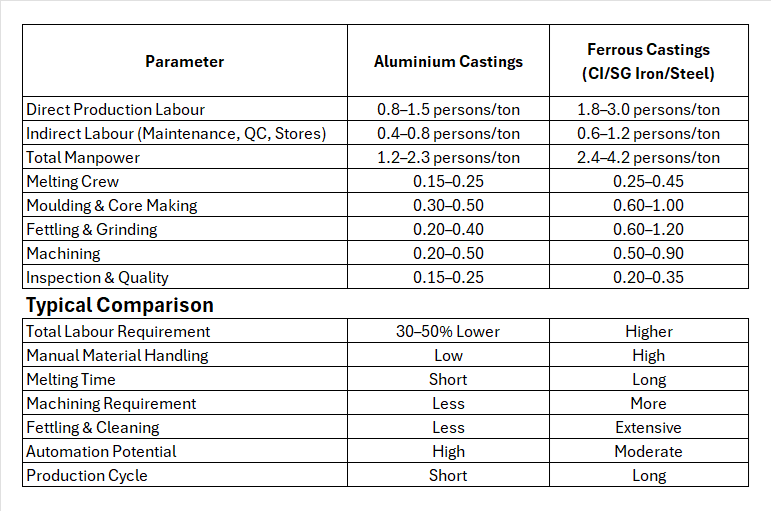
Manpower Requirement to Produce One Ton of Castings
There is no universal industry standard for manpower required to produce one tonne of castings because it varies significantly with:
• Level of automation
• Casting process (green sand, no-bake, HPDC, GDC, investment casting)
• Product complexity
• Foundry size
• Degree of machining and finishing
However, the following typical industry benchmark is widely used for medium-to-large automated foundries.
Table 6: Manpower requirements per ton
9. Recent Developments in Aluminium Alloys
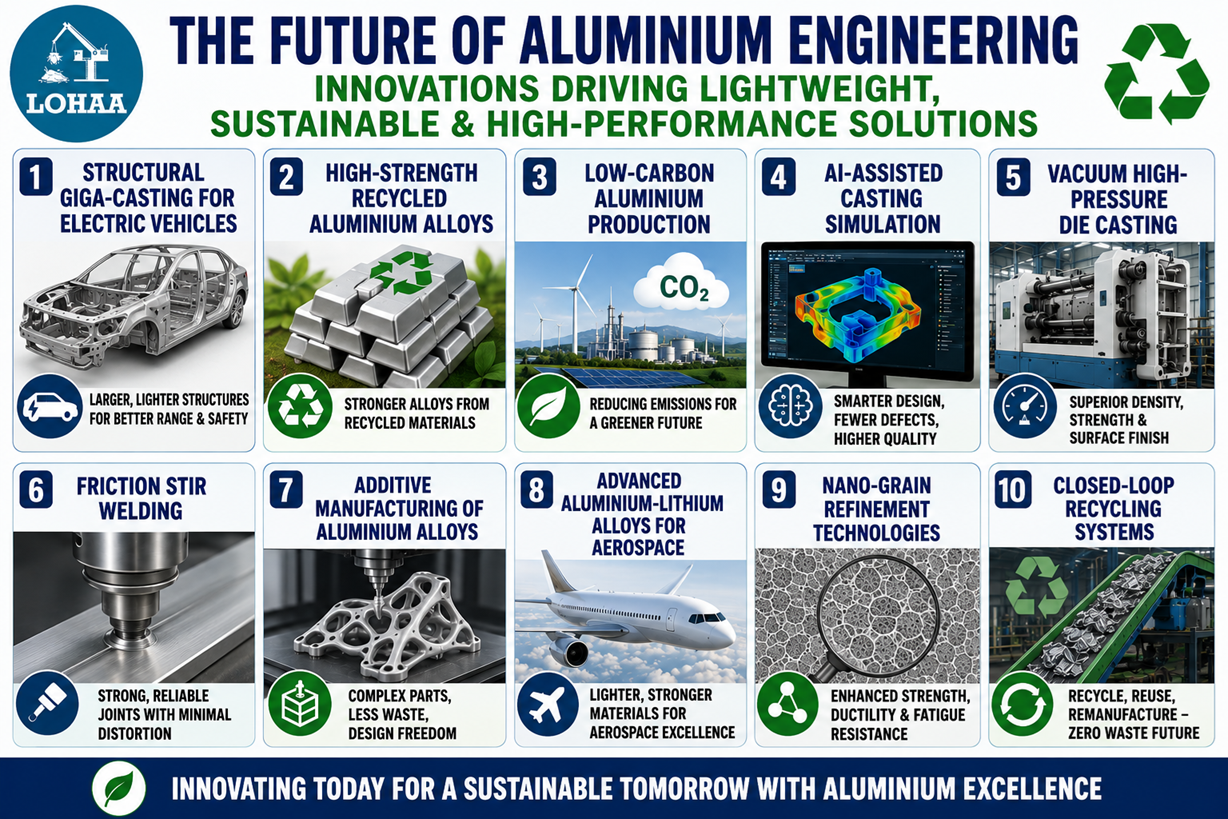
The aluminium industry has undergone rapid technological advancements during the past few years.
Major developments include:
• Structural giga-casting for electric vehicles
• High-strength recycled aluminium alloys
• Low-carbon aluminium production
• AI-assisted casting simulation
• Vacuum high-pressure die casting
• Friction stir welding
• Additive manufacturing of aluminium alloys
• Advanced aluminium-lithium alloys for aerospace
• Nano-grain refinement technologies
• Closed-loop recycling systems
These innovations are helping manufacturers reduce production costs while improving structural performance and sustainability.
10. Classification of Aluminium Alloys
Aluminium alloys are divided into two major categories.
- Wrought Alloys: Rolled, extruded, forged or drawn products
- Casting Alloys: Manufactured through sand casting, die casting, permanent mould casting and investment casting
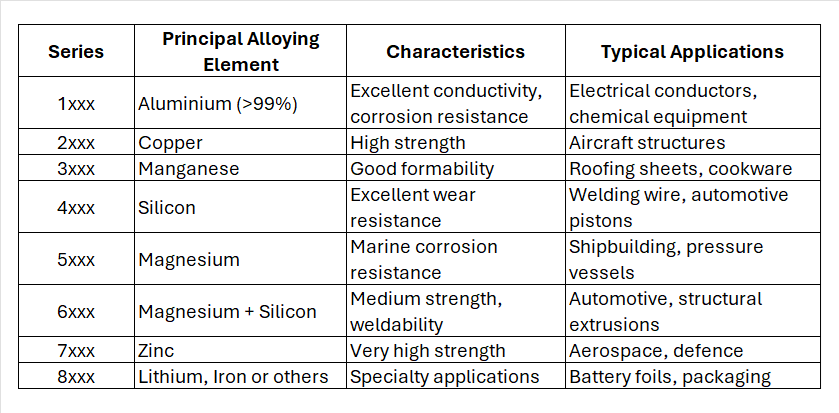
a. Wrought Aluminium Alloy Series
 b. Aluminium Casting Alloy Classification:
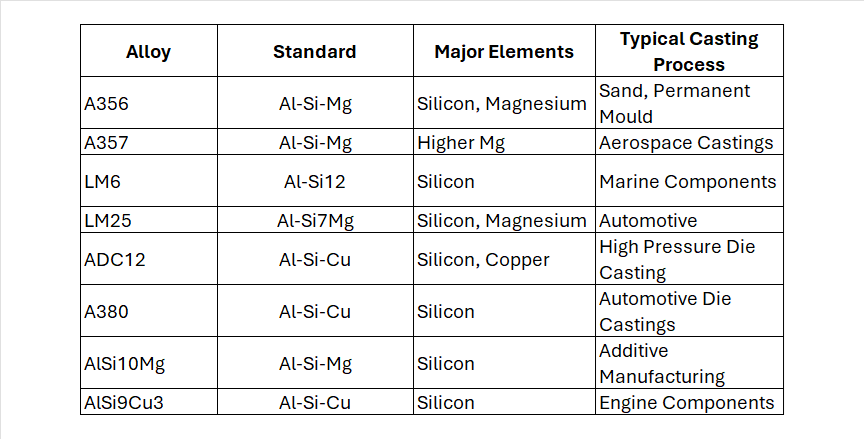
Table 7: Chemical Composition of Major Aluminium Alloys
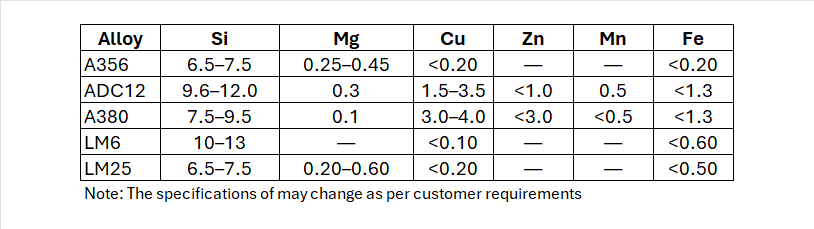 Table 8: Mechanical Properties
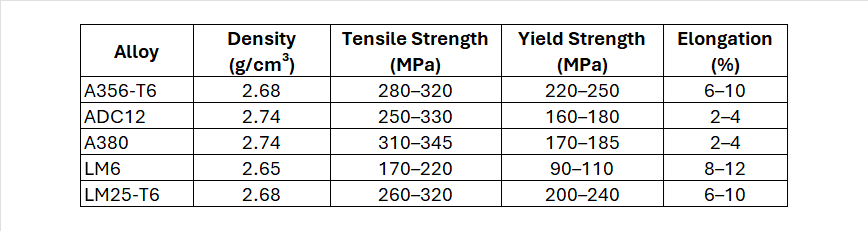
Table 9: Industrial Applications by Alloy Series
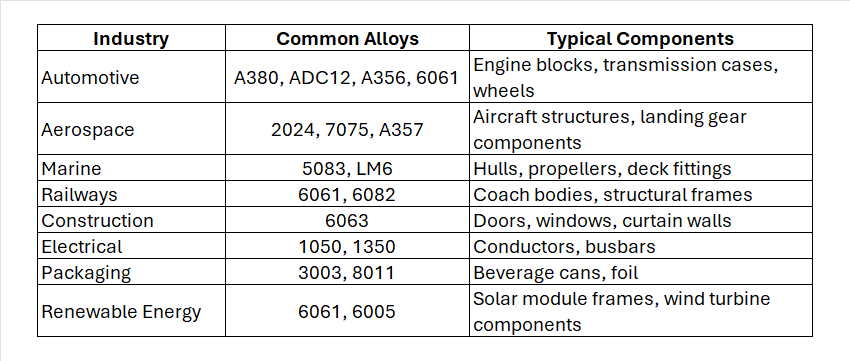 Table 10: Live Industrial Examples
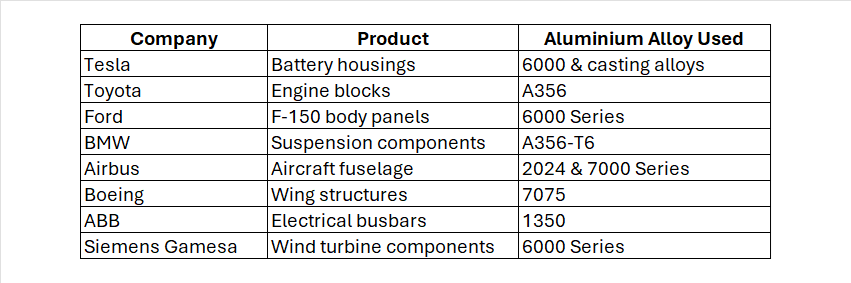 Table 11: Aluminium Substitution for Cast Iron
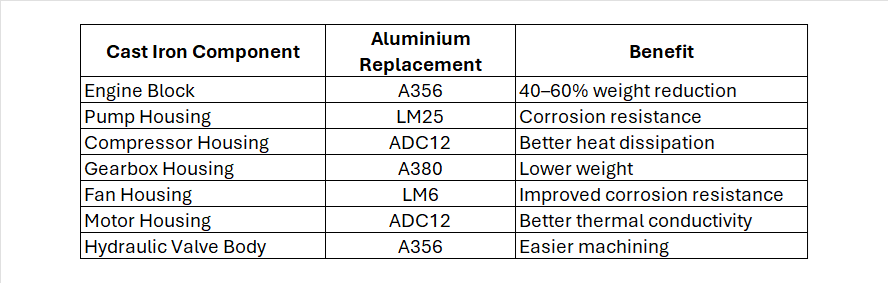 Table 11: Aluminium Substitution for Steel Castings
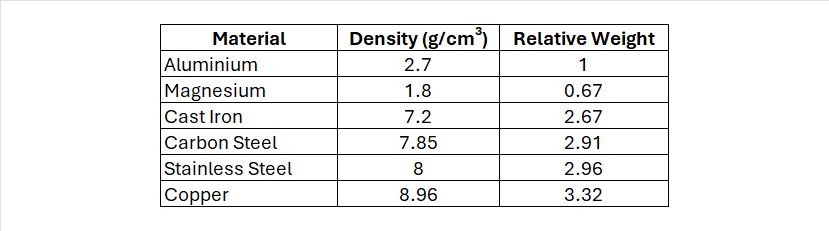
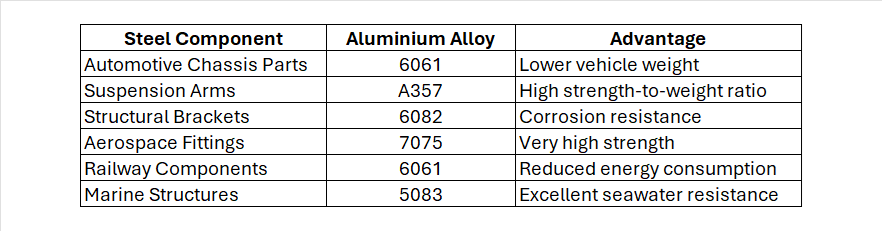 Table 11: Weight Comparison
11. Future Aluminium Technologies
• High-pressure vacuum die casting for giga-casting.
• Aluminium-lithium alloys for aerospace.
• Recycled low-carbon aluminium for automotive applications.
• Aluminium foam for lightweight structural components.
• Additive manufacturing using AlSi10Mg and advanced alloys.
• Nano-strengthened aluminium composites for demanding engineering applications.
12. Key Takeaways
• Aluminium demand is expected to outpace many other engineering metals through 2030 due to transportation electrification, renewable energy, and lightweight design.
• 6xxx and casting alloys (A356, A380, ADC12) are projected to remain the dominant grades for automotive and industrial applications.
• Aluminium can replace cast iron and steel in many structural and non-structural components where weight reduction, corrosion resistance, and energy efficiency are priorities.
• Continued advances in recycling, casting technologies, and alloy development will further expand aluminium's role across manufacturing industries.
Conclusion
Aluminium has evolved from a lightweight alternative to becoming a strategic engineering material that supports sustainability, energy efficiency and advanced manufacturing. Compared with conventional iron and steel, aluminium offers significant advantages in weight reduction, corrosion resistance, thermal conductivity and recyclability while enabling greater design flexibility for complex components. Although aluminium manufacturing requires specialised equipment and skilled manpower, its long-term economic and environmental benefits far outweigh these challenges. Continuous innovations in alloy development, recycling technologies, high-pressure die casting and digital manufacturing are expanding aluminium's applications across automotive, aerospace, railways, renewable energy and electric vehicles. As industries strive to reduce carbon emissions and improve resource efficiency, aluminium will continue replacing ferrous materials in numerous engineering applications. Companies investing in advanced aluminium technologies today will be better positioned to meet future market demands, comply with sustainability goals and remain competitive in the evolving global manufacturing landscape.
References
1. International Aluminium Institute (IAI)
2. The Aluminum Association
3. European Aluminium
4. International Energy Agency (IEA)
5. ASM Handbook – Volume 2: Properties and Selection: Nonferrous Alloys
6. ASM Handbook – Casting Technologies
7. NADCA – North American Die Casting Association
8. SAE International Technical Papers
9. Journal of Materials Processing Technology
10. Journal of Manufacturing Processes
11. Materials Today
12. International Journal of Metalcasting
13. Light Metal Age
14. World Auto Steel
15. Aluminium International Today
By using digital trade platforms like LOHAA Mobile application, you can reach global buyers, source quality material, and strengthen long-term partnerships.
Download the Lohaa Metal Trading App for Android to access live scrap prices and real-time market updates anytime, anywhere.
Download the Lohaa Metal Trading App for iOS to access live scrap prices and real-time market updates anytime, anywhere.
(Notes: market and production volume estimates are synthesized from public market reports and industrial press; exact tonne figures for materials are not centrally published in a single comprehensive public dataset, therefore the numeric projection above is a conservative, documented estimate built from available intelligence and reasonable regional share assumptions.)


