Aluminium Recycling Process Step By Step | Lohaa Guide
Aluminium is one of the most widely recycled metals in the world. Unlike many other materials, aluminium can be recycled repeatedly without losing its quality or strength. This makes it an essential resource for industries focused on sustainability and cost efficiency.
Understanding the Aluminium Recycling Process Step by Step helps businesses, scrap collectors, and manufacturers recognize how valuable aluminium waste can be. Recycling aluminium reduces energy consumption, lowers production costs, and minimizes environmental impact.
In this guide, we explain the aluminium recycling process and how it supports the global metal industry.
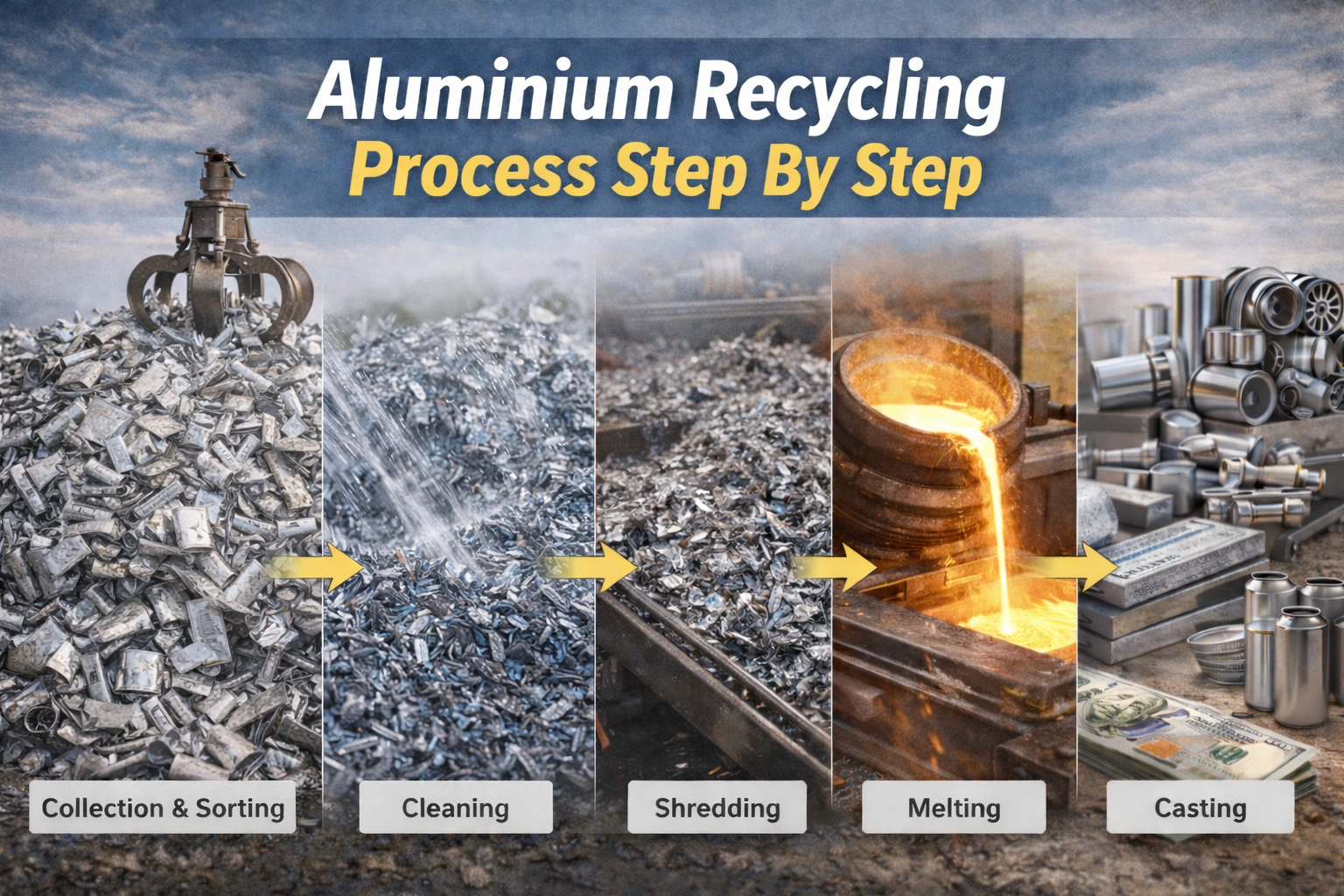
Collection and Sorting of Aluminium Scrap
The first stage of aluminium recycling begins with collecting scrap materials. Aluminium scrap can come from many sources such as beverage cans, automotive parts, construction materials, and industrial waste.
Once collected, the scrap materials must be sorted carefully. Sorting ensures that aluminium is separated from other metals and contaminants. Advanced facilities often use magnetic systems, sensors, and manual inspection to identify different grades of aluminium.
Proper sorting is a crucial step in the Aluminium Recycling Process Step by Step because impurities can affect the quality of the recycled metal.
Digital platforms such as Lohaa help connect scrap suppliers and recycling businesses through the metal trading network available on Lohaa, making it easier to source aluminium scrap efficiently.
Cleaning and Preparing Scrap Metal
After sorting, aluminium scrap undergoes a cleaning stage. During this phase, materials like plastic coatings, paint, and other contaminants are removed.
Cleaning methods may include:
- Chemical cleaning processes
- Mechanical separation
- Thermal treatment
These processes ensure that only pure aluminium material proceeds to the next stage. Removing impurities improves the quality of the final recycled product and increases its market value.
This preparation phase is an essential part of the Aluminium Recycling Process Step by Step, ensuring that the metal can be reused in manufacturing industries without defects.
Shredding and Size Reduction
Once the aluminium scrap is clean, it is shredded into smaller pieces. Shredding helps increase the surface area of the metal, making it easier to melt during the next stage.
Industrial shredders break down large aluminium components into smaller fragments. This process also allows recycling plants to remove any remaining non-metal materials.
Shredding improves the efficiency of the Aluminium Recycling Process Step by Step, enabling faster melting and reducing energy consumption during the recycling process.
Many recycling companies share aluminium scrap trading opportunities through Lohaa’s scrap metal marketplace, where suppliers and buyers can connect globally.
Melting and Refining Aluminium
The shredded aluminium pieces are then transported to a furnace where they are melted at high temperatures. Aluminium melts at approximately 660°C, which makes it relatively energy-efficient compared to other metals.
During the melting stage, the molten metal is refined to remove any remaining impurities. Special chemicals and filtration techniques help ensure that the aluminium reaches the required purity levels.
This stage is one of the most critical steps in the Aluminium Recycling Process Step by Step, as it determines the quality of the recycled aluminium used in manufacturing.
Recycling aluminium requires significantly less energy than producing aluminium from raw bauxite ore, making it a sustainable solution for industrial production.
Casting and Manufacturing New Products
After refining, the molten aluminium is poured into molds to create solid blocks known as ingots. These ingots are then cooled and prepared for transportation to manufacturers.
Manufacturers use recycled aluminium ingots to produce a wide range of products including:
- Beverage cans
- Automotive parts
- Construction materials
- Electronic components
The final stage completes the Aluminium Recycling Process Step by Step, transforming scrap metal into valuable industrial materials ready for reuse.
Benefits of Aluminium Recycling
Recycling aluminium offers several environmental and economic benefits.
Key advantages include:
- Reduces energy consumption by up to 95% compared to primary production
- Conserves natural resources such as bauxite ore
- Reduces landfill waste
- Supports sustainable manufacturing practices
These benefits make aluminium recycling a vital part of the circular economy and global sustainability initiatives.
Conclusion
Aluminium recycling plays a critical role in modern industrial sustainability. By reducing energy consumption, conserving natural resources, and supporting circular manufacturing systems, recycled aluminium helps industries operate more efficiently.
Understanding the Aluminium Recycling Process Step by Step allows businesses and scrap traders to appreciate the value of aluminium waste and the opportunities it creates in the recycling market.
Contact us we provides a global platform for metal trading and networking.
Frequently Asked Questions
Why is aluminium considered highly recyclable?
Aluminium can be reused repeatedly without losing its quality, making the Aluminium Recycling Process Step by Step highly efficient for industrial reuse.
Does recycling aluminium save energy?
Yes, the Aluminium Recycling Process Step by Step requires significantly less energy compared to producing aluminium from raw materials.
What industries use recycled aluminium?
Many industries benefit from the Aluminium Recycling Process Step by Step, including construction, automotive manufacturing, and packaging.
Is recycled aluminium as strong as new aluminium?
Yes, the Aluminium Recycling Process Step by Step preserves the strength and durability of the metal.
How does aluminium recycling support sustainability?
The Aluminium Recycling Process Step by Step reduces environmental impact by conserving natural resources and lowering industrial emissions.