
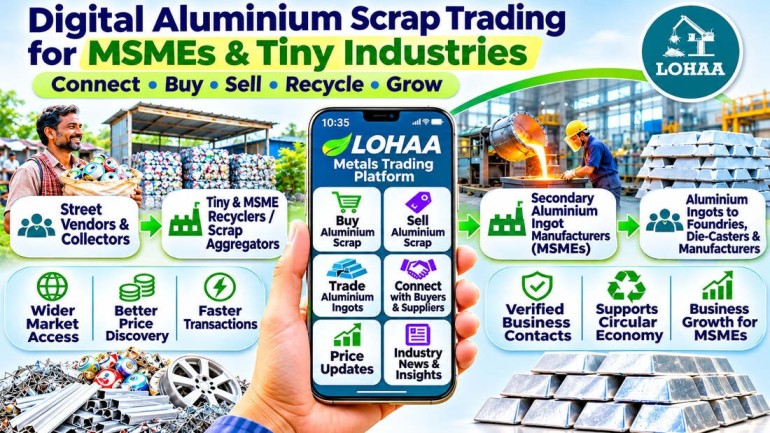
Aluminium Scrap Trading Online: MSME Guide
1. Introduction: Digital Transformation of India's Aluminium Recycling Industry
India's aluminium recycling industry plays an important role in manufacturing, resource conservation, employment generation and the circular economy. Micro, small and medium enterprises (MSMEs), tiny recycling units, scrap collectors, secondary aluminium ingot manufacturers and traders form an essential part of this ecosystem.
However, many smaller businesses continue to depend on traditional brokers, telephone calls, personal contacts and local scrap markets to buy or sell aluminium scrap.
This conventional trading system creates several challenges, including limited buyer access, price uncertainty, delayed payments, inconsistent scrap quality and high transportation costs.
Digital aluminium scrap trading platforms offer an alternative by connecting manufacturers, recyclers, scrap yards, importers, exporters and traders through mobile applications and online portals.
Platforms such as LOHAA can help businesses discover trading opportunities, communicate directly and expand their commercial networks.
For India's small and tiny aluminium industries, digital trading can become an important tool for improving market access, competitiveness and profitability.
2. Advantages of Digital Trading Platforms for Aluminium Scrap Buyers and Sellers
Digital platforms can reduce geographical limitations and make aluminium scrap trading more organised.
2.1 Benefits for manufacturers purchasing aluminium scrap
• Wider supplier network: Access scrap yards, recyclers, traders and importers across multiple locations.
• Price discovery: Compare quotations and market reference prices before purchasing.
• Material availability: Identify aluminium scrap grades, quantities and locations.
• Lower sourcing dependency: Reduce reliance on a limited number of suppliers or intermediaries.
• Procurement efficiency: Communicate directly with suppliers and negotiate commercial terms.
2.2 Benefits for scrap yards, exporters, importers and traders
Scrap sellers can reach more potential industrial buyers without establishing physical offices in every market.
Digital listings also help suppliers promote available stock, communicate specifications and identify buyers for different aluminium scrap grades.
i) Aluminium manufacturers
- Digital trading advantage: Multiple scrap suppliers
- Faster stock movement: Competitive procurement
ii) Scrap yards
- Digital trading advantage: Wider buyer visibility
- Faster stock movement: Faster stock movement
iii) Importers
- Digital trading advantage: Access to Indian industrial buyers
- Faster stock movement: Better market penetration
iv) Exporters
- Digital trading advantage: International buyer discovery
- Faster stock movement: Expanded sales opportunities
v) Traders
- Digital trading advantage: Faster communication
- Faster stock movement: Improved transaction efficiency
vi) Tiny recycling units
- Digital trading advantage: Direct industrial connections
- Faster stock movement: Reduced dependence on local networks
Digital platforms improve access to information, but actual savings depend on material quality, freight, commercial terms and supplier reliability.
3. How Tiny Aluminium Recycling Units Can Sell Scrap Collected from Street Vendors
Street vendors, itinerant scrap collectors, small scrap shops and neighbourhood aggregators contribute to India's aluminium scrap collection network.
They collect used aluminium utensils, beverage cans, wires, sheets, extrusions, household products and industrial offcuts.
Tiny recycling businesses can aggregate this material and prepare it for industrial resale.
3.1 Step-by-step digital trading process
Step 1: Collect and segregate scrap
Purchase material from local collectors and separate aluminium utensils, UBC, extrusion scrap, cast scrap and mixed aluminium.
Step 2: Weigh and inspect
Record quantities, remove obvious contamination and assess quality. Maintain traceability and applicable purchase records.
Step 3: Create a digital listing
Publish scrap type, approximate quantity, location, photographs, available test information and expected selling terms.
Step 4: Contact industrial buyers
Discuss grade requirements, minimum order quantity, delivery arrangements, inspection and payment terms.
Step 5: Complete the transaction
Verify the counterparty, document the agreed specifications, arrange safe transportation and retain transaction records.
3.2 Suitable aluminium scrap categories
a) UBC scrap
- Common source: Beverage cans
- Potential industrial buyer: Can recyclers and secondary smelters
b) Aluminium utensils
- Common source: Households and shops
- Potential industrial buyer: Secondary ingot manufacturers
c) Extrusion scrap
- Common source: Fabrication workshops
- Potential industrial buyer: Extrusion recyclers and remelters
d) Aluminium wire
- Common source: Electrical scrap
- Potential industrial buyer: Conductivity-grade recyclers
e) Cast aluminium scrap
- Common source: Automobile components
- Potential industrial buyer: Casting alloy manufacturers
f) Mixed aluminium scrap
- Common source: Street collection networks
- Potential industrial buyer: Sorting and secondary recycling units
Better segregation can improve material acceptance and potentially increase selling prices. Buyers should establish appropriate quality and contamination limits before purchase.
4. Benefits for Secondary Aluminium Ingot Manufacturers
Secondary aluminium ingot manufacturers convert recycled aluminium scrap into alloys used by automotive, engineering, electrical and other manufacturing industries.
Many small units manufacture casting alloys such as ADC12, LM-series alloys and customer-specific compositions.
Their profitability depends heavily on scrap procurement costs, metal recovery, energy consumption, alloy chemistry and selling prices.
4.1 Raw material sourcing
Digital platforms can help ingot manufacturers locate different aluminium scrap grades and compare offers from domestic scrap yards, importers and industrial recyclers.
A broader supplier network can reduce dependence on individual suppliers during shortages.
4.2 Selling secondary aluminium ingots
Manufacturers can advertise ingot availability to foundries, die-casting companies, component manufacturers and industrial buyers.
Listings should specify alloy grade, chemical composition, available quantity, location, inspection documents and delivery terms.
4.3 Better production planning
Visibility into scrap availability and buyer requirements can support purchasing schedules and production planning.
For small furnaces, purchasing suitable scrap is particularly important because contamination and poor alloy matching may increase dross generation, refining requirements and metal losses.
Better segregation can improve material acceptance and potentially increase selling prices. Buyers should establish appropriate quality and contamination limits before purchase.
4.4 Illustrative business opportunity
Consider a secondary aluminium manufacturer purchasing 50 tonnes of scrap monthly.*
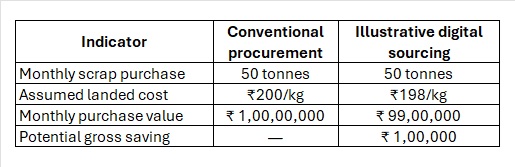 *Illustration only, not a current market quotation or guaranteed saving. Actual results depend on recovery yield, quality, freight, platform costs and payment terms.
Even small improvements in procurement economics can materially affect working capital and operating margins.
5.Strategies for overcoming challenges
Tiny businesses should begin with small transactions, maintain accurate material records and establish relationships with verified industrial counterparties.
They should also compare landed costs rather than quoted prices alone.
Formalisation can support long-term growth. Under India's revised MSME classification, effective April 2025, micro enterprises have investment limits of Rs2.5 crore and turnover limits of ?10 crore. Small enterprises have corresponding limits of Rs25 crore and ?100 crore. Udyam Registration Portal
The term tiny industry is commonly used for very small operations but is not a separate category under the current MSME classification.
6. How LOHAA Can Support MSMEs and Tiny Aluminium Industries
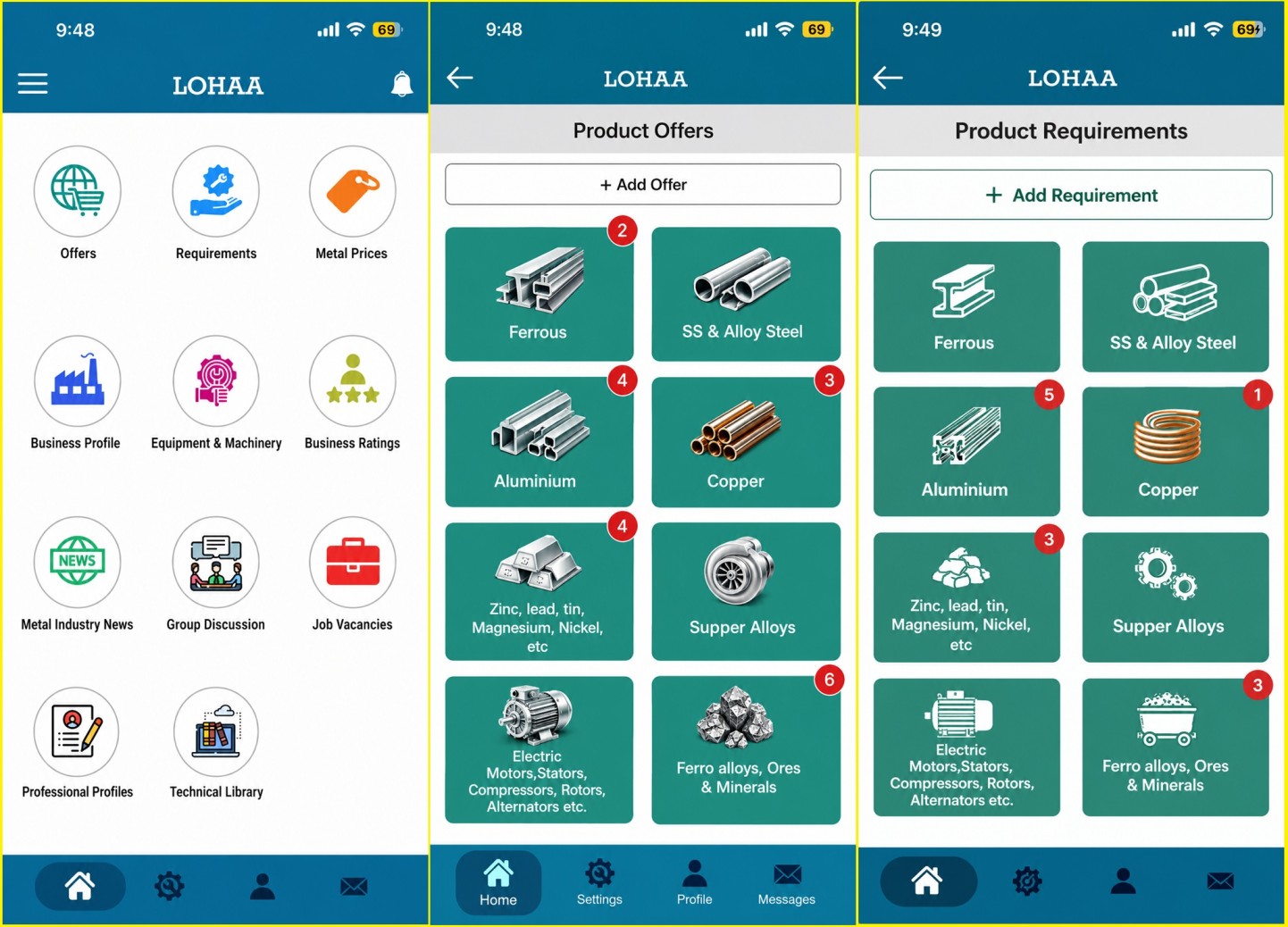
The LOHAA Mobile Application of Android and iPhone / Portal B2B Metals Marketplace helps business-focused digital platform connecting participants in the metals industry.
Through the LOHAA mobile application and web portal, aluminium recyclers, ingot manufacturers, scrap yards, importers, exporters and industrial traders can explore business opportunities.
6.1 Practical applications
a) Buying aluminium scrap: Discover available UBC, extrusion, cast aluminium, wire and other scrap offers.
b) Selling collected scrap: Publish business listings to attract industrial buyers.
c) Marketing secondary ingots: Promote aluminium alloys and available production quantities.
d) Monitoring metal prices: Follow LME and other available market price information.
e) Business networking: Connect with manufacturers, recyclers and metal traders.
f) Direct communication: Discuss specifications, quantities and commercial requirements.
g) Industry information: Access relevant metals-market news and updates.
h) Company visibility: Maintain a business profile for potential customers and suppliers.
LOHAA is intended for business users rather than individual street collectors or brokers. Tiny scrap aggregators operating as legitimate businesses can explore participation according to platform requirements.
6.2 Recommended digital adoption strategy
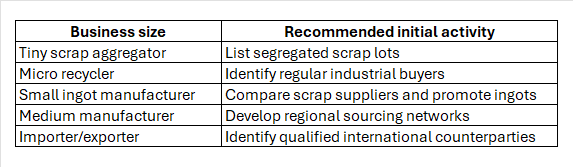
Explore the LOHAA platform: LOHAA Mobile & Web Portal
7. Conclusion: Digital Trading Can Strengthen Aluminium MSMEs
Digital aluminium scrap trading platforms can help India's MSMEs and tiny recycling businesses become more competitive by improving buyer discovery, supplier access, price visibility and business communication.
For street-level scrap aggregation businesses, digital platforms create opportunities to connect collected material with organised industrial demand.
For secondary aluminium ingot manufacturers, they can support more diversified raw material sourcing and wider product marketing.
India's transition towards a circular economy also strengthens the case for organised scrap trading. NITI Aayog's aluminium decarbonisation roadmap identifies digital scrap exchanges as a potential instrument for improving recycling efficiency and formalisation. NITI Aayog
Platforms such as LOHAA can contribute to this transition by helping smaller enterprises participate in broader industrial networks.
The future of aluminium recycling will depend not only on collecting more scrap, but also on connecting the right material with the right manufacturer at the right commercial terms.
8. Top 10 Frequently Asked Questions
i. What is a digital aluminium scrap trading platform?
It is an online platform that helps industrial buyers and sellers discover aluminium scrap, compare offers and communicate.
ii. Can tiny aluminium recycling units use digital platforms?
Yes. Eligible business operators can use platforms to advertise scrap and identify industrial customers.
iii. Can scrap collected from street vendors be sold online?
Yes. Registered aggregators can consolidate, segregate and market collected scrap, subject to platform requirements and applicable laws.
iv. How do secondary aluminium ingot manufacturers benefit?
They can discover raw material suppliers, compare quotations and reach potential ingot buyers.
v. Can MSMEs purchase imported aluminium scrap?
Yes, through eligible suppliers and importers, subject to applicable import, environmental and quality regulations.
vi. Does digital trading guarantee better aluminium scrap prices?
No. Prices depend on scrap grade, metal recovery, market conditions, transportation and negotiation.
vii. Which aluminium scrap grades are commonly traded?
UBC, extrusion scrap, aluminium wire, cast scrap, utensil scrap and mixed aluminium are common categories.
viii. How can MSMEs reduce online trading risks?
Verify business credentials, inspect material, confirm payment terms and maintain proper transaction documents.
ix. Can LOHAA help manufacturers find aluminium suppliers?
LOHAA provides business discovery and communication opportunities for participants in the metals industry.
x. Why is digital trading important for India's circular economy?
It can improve scrap visibility, connect collection networks with recyclers and support more efficient material utilisation.
9. References
1. Ministry of MSME – Official MSME Classification and Udyam Registration. Revised classification effective April 2025.
2. NITI Aayog – Roadmap for Aluminium Sector Decarbonisation. Recycling, scrap segregation and digital trading opportunities.
3. NITI Aayog – Designing a Policy for Medium Enterprises. MSME development and industrial competitiveness.
4. LOHAA – Digital Metals Trading Platform. Platform information and business access.
By using digital trade platforms like LOHAA Mobile application, you can reach global buyers, source quality material, and strengthen long-term partnerships.
Download the Lohaa Metal Trading App for Android to access live scrap prices and real-time market updates anytime, anywhere.
Download the Lohaa Metal Trading App for iOS to access live scrap prices and real-time market updates anytime, anywhere.
(Notes: market and production volume estimates are synthesized from public market reports and industrial press; exact tonne figures for materials are not centrally published in a single comprehensive public dataset, therefore the numeric projection above is a conservative, documented estimate built from available intelligence and reasonable regional share assumptions.)


