
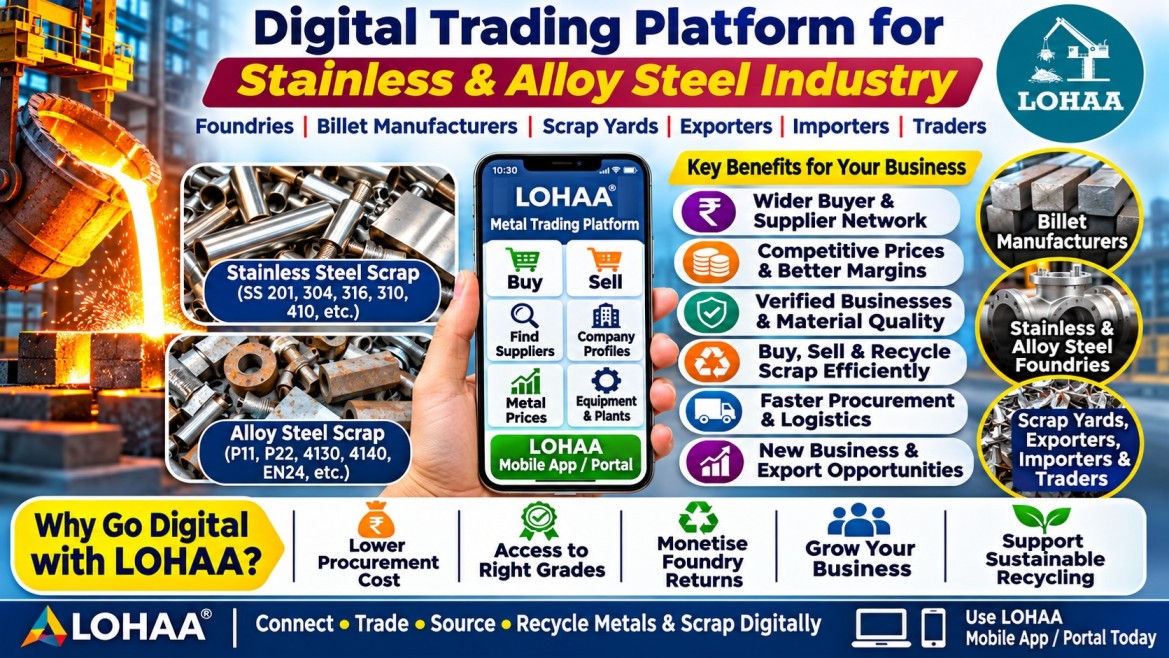
Stainless & Alloy Steel Scrap Trading in India
Digital Scrap Trading for Stainless & Alloy Steel Industry
1. Introduction: Digital Transformation of India's Steel Scrap Market
India's stainless steel and alloy steel industry is undergoing a transformation as manufacturers, scrap yards, recyclers, importers, exporters and traders increasingly explore digital B2B metal trading platforms.
Stainless steel and alloy steel scrap are essential raw materials for manufacturing engineering castings, billets, bars, industrial components, pumps, valves, automotive parts and specialised equipment.
Traditionally, businesses have relied on local scrap dealers, telephone negotiations, intermediaries and established supplier networks. These methods remain useful but can restrict market access, price transparency and procurement efficiency.
Digital metal trading platforms connect scrap generators, collectors, processors, foundries, billet manufacturers and international traders, creating opportunities for more transparent and organised transactions.
For MSMEs, small-scale and tiny industrial units, digital trading offers a cost-effective way to access suppliers and buyers without establishing extensive marketing networks.
2. Types of Stainless Steel and Alloy Steel Scrap Traded Digitally
Different foundries and billet manufacturers require specific scrap grades depending on their final product chemistry and manufacturing processes.
i) Austenitic stainless steel
Typical grades: SS 201, 304, 304L, 316, 316L
Major applications: Castings, billets, pipes, engineering products
ii) Ferritic stainless steel
Typical grades: SS 409, 430, 441
Major applications: Automotive and industrial products
iii) Martensitic stainless steel
Typical grades: SS 410, 420, 431
Major applications: Valves, shafts, wear-resistant castings
iv) Duplex stainless steel
Typical grades: 2205, 2507
Major applications: Marine and chemical equipment
v) Heat-resistant stainless steel
Typical grades: SS 309, 310, 310S
Major applications: Furnace components
vi) Chromium-molybdenum alloy steel
Typical grades: P11, P22, 4130, 4140
Major applications: Engineering and pressure equipment
vii) Nickel-chromium-molybdenum steel
Typical grades: 4340, EN24
Major applications: High-strength components
viii) Manganese steel
Typical grades: High-Mn steel grades
Major applications: Crusher and mining castings
ix) Tool and special alloy steel
Typical grades: H13, D2, M2
Major applications: Tooling and specialised engineering
Material segregation, chemical analysis and traceability are important because incorrect alloy composition can cause costly melting adjustments and rejected products.
3. Advantages of Digital Trading for Foundries, Billet Manufacturers and Traders
3.1 Wider supplier and buyer networks
Digital platforms help stainless steel foundries, alloy steel foundries and billet manufacturers discover scrap suppliers across India and international markets.
Scrap yards and traders can similarly reach customers beyond their immediate industrial regions.
3.2 Competitive pricing and transparency
Buyers can compare quotations from multiple suppliers, while sellers can evaluate competing offers.
Price comparisons should consider chemical composition, yield, contamination, transport, taxes and payment terms rather than the quoted scrap price alone.
3.3 Better quality control
Digital listings can include scrap grade, photographs, quantity, origin and chemical analysis reports.
For stainless steel, chromium, nickel and molybdenum are important. Alloy steel manufacturers may additionally monitor manganese, vanadium and other elements.
3.4 Faster procurement and inventory planning
Foundries and billet manufacturers can publish monthly requirements and identify available scrap before planned melting schedules.
Scrap yards can advertise stock immediately, improving inventory turnover and reducing storage pressure.
3.5 International trading opportunities
Importers and exporters can use digital platforms to identify overseas business partners, compare material availability and initiate commercial discussions.
Cross-border transactions must comply with applicable customs, environmental, shipment inspection and trade regulations.
4. How MSMEs and Scrap Yards Can Digitally Sell Scrap Collected from Street Vendors
India's scrap collection network includes street vendors, small scrap dealers, industrial dismantlers, fabrication workshops and local recycling businesses.
These participants collect stainless steel utensils, pipes, sheets, fabrication offcuts, machining scrap and discarded industrial equipment.
Small scrap yards and recyclers can aggregate these materials into commercially useful quantities.
4.1 Step-by-step digital selling process
a) Collection: Purchase scrap from street vendors, workshops and industrial generators.
b) Segregation: Separate stainless steel, carbon steel and alloy steel scrap.
c) Identification: Use suitable testing equipment, such as XRF analysers, to identify alloying elements. Carbon may require separate testing.
d) Processing: Remove contaminants and prepare material in buyer-acceptable sizes.
e) Digital listing: Publish grade, quantity, photographs, location and available test reports.
f) Buyer discovery: Connect with foundries, billet manufacturers, traders and exporters.
g) Negotiation: Agree on price, inspection, payment, weighing and delivery conditions.
h) Dispatch: Complete applicable invoices, transport documents and regulatory requirements.
This process enables small collectors to participate in organised industrial supply chains through registered businesses.
5. Benefits for MSME Foundries, Billet Manufacturers, Scrap Yards and Traders
Different industry participants can use digital platforms according to their commercial requirements.
Business segment & Major digital trading benefits
- Stainless steel foundries: Access grade-specific scrap and sell foundry returns
- Alloy steel foundries: Source specialised alloy scrap and improve procurement planning
- Stainless billet manufacturers: Identify bulk scrap suppliers and recurring availability
- Alloy steel billet manufacturers: Source suitable alloy scrap and compare procurement costs
- MSME and tiny units: Reach wider markets with limited marketing expenditure
- Scrap yards: Sell segregated scrap to industrial consumers
- Scrap processors: Market tested, graded and processed materials
- Importers: Discover international suppliers and domestic buyers
- Exporters: Reach overseas industrial consumers
- Traders: Expand buyer-supplier networks and improve stock visibility
5.1 Benefits for billet manufacturers
Billet manufacturers require consistent metallic input to maintain chemistry, casting quality and production efficiency.
Digital procurement can support planned purchasing, diversified supply sources and improved availability of grade-compatible scrap.
5.2 Benefits for foundries
Foundries can purchase suitable scrap and sell surplus runners, risers, machining waste and rejected castings.
Maintaining separate scrap streams helps preserve valuable alloying elements and reduces cross-contamination.
5.3 Benefits for exporters, importers and traders
Digital platforms can help traders identify demand in different regions, promote available inventory and communicate directly with potential business partners.
However, international shipments require verification of counterparties, material classification, destination-country rules and contractual obligations.
6. How LOHAA Mobile Application and Portal Help the Industry
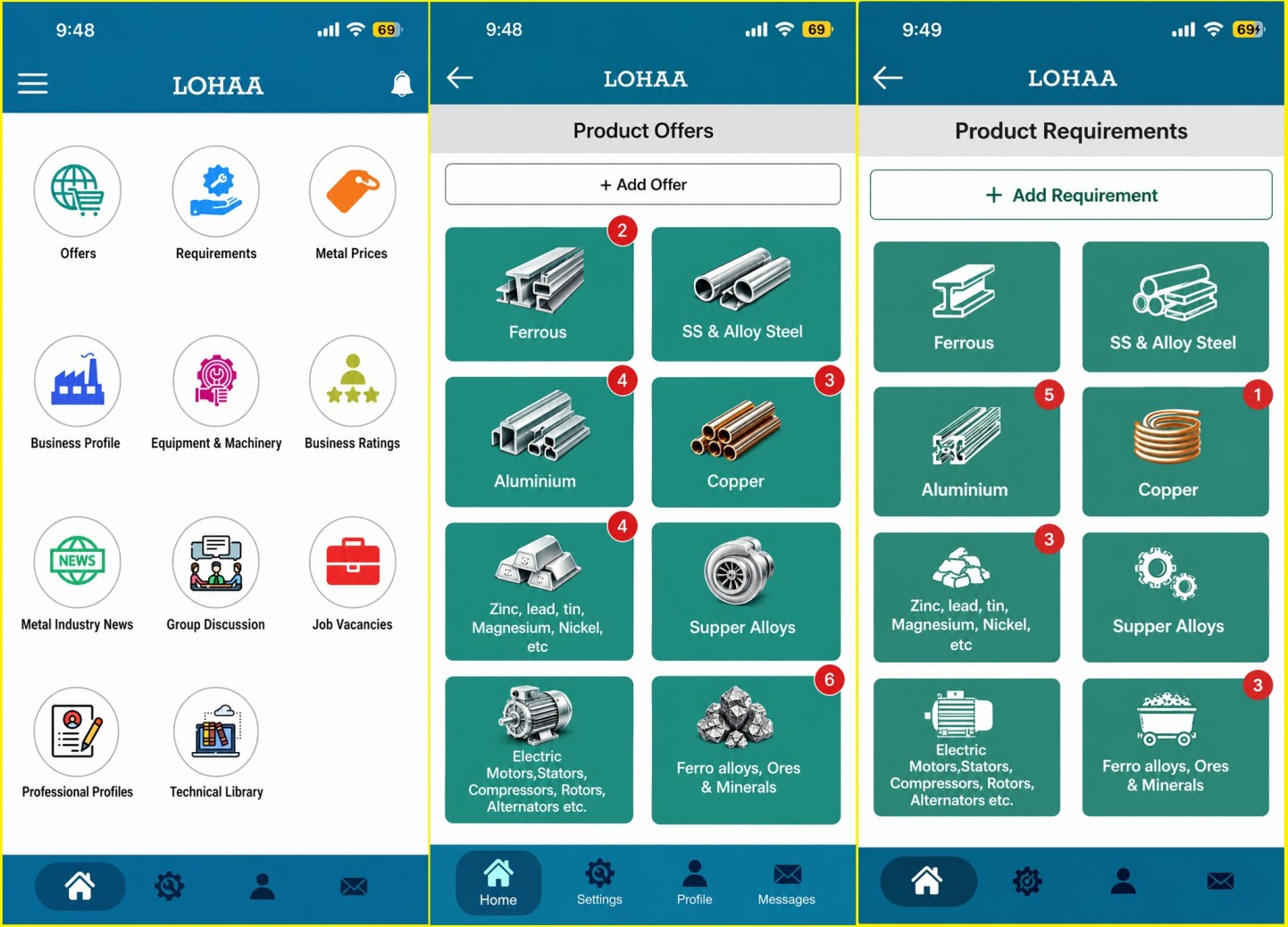
The The LOHAA Mobile Application of Android and iPhone / Portal B2B Metals Marketplace helps business-focused digital platform connecting participants in the metals industry - metal manufacturers, recyclers, scrap yards, traders, importers and exporters.
7.1 Key LOHAA features and applications
LOHAA feature Industrial application
- Buy requirements: Publish stainless and alloy steel scrap requirements
- Sale offers: Advertise scrap, billets and surplus materials
- Company profiles: Discover potential suppliers and customers
- Direct messaging: Discuss specifications, quantities and commercial terms
- Metal market information: Follow relevant market developments
- Business ratings: Review available business feedback
- Equipment listings: Explore foundry and recycling equipment
- International networking: Connect with overseas metal businesses
7.2 Practical business examples
Example 1 – Stainless steel billet manufacturer: A manufacturer requiring 100 tonnes of SS 304 scrap can publish a buying requirement specifying chemistry, quantity and delivery location.
Example 2 – Alloy steel foundry: A foundry can advertise surplus EN24 machining scrap or alloy steel runners to suitable recyclers.
Example 3 – MSME scrap yard: A small processor collecting SS 304 and SS 316 scrap can list segregated quantities and reach industrial buyers.
Example 4 – Importer or exporter: An international trader can identify prospective business partners and initiate discussions on material specifications and shipment conditions.
LOHAA facilitates business discovery and communication. Material quality, counterparty verification and payment arrangements remain essential responsibilities of the trading parties.
8. Digital Trading, Recycling and the Circular Economy
Stainless steel and alloy steel recycling conserves valuable metallic resources, including chromium, nickel and molybdenum.
Reusing properly segregated scrap can reduce dependence on primary raw materials and support more resource-efficient manufacturing.
India's Steel Scrap Recycling Policy, 2019, encourages organised collection, processing and environmentally responsible recycling.
Digital platforms can support these objectives by connecting scrap generators with suitable industrial consumers.
9. Top 10 Frequently Asked Questions
FAQ 1. What is digital stainless steel scrap trading?
It is the online buying and selling of stainless steel scrap through B2B marketplaces connecting industrial buyers and sellers.
FAQ 2. Can alloy steel foundries purchase scrap digitally?
Yes. Foundries can publish grade-specific requirements and discover potential suppliers.
FAQ 3. Can stainless steel billet manufacturers use digital platforms?
Yes. They can identify bulk scrap suppliers, compare quotations and plan procurement.
FAQ 4. How can small scrap yards benefit?
They can advertise segregated scrap, reach additional customers and improve inventory visibility.
FAQ 5. Can street-collected stainless steel scrap be sold online?
Yes. Registered collectors and processors can aggregate, segregate and list suitable scrap.
FAQ 6. Which stainless steel grades are commonly traded?
SS 201, 304, 316, 310, 410, 420, 430 and duplex grades are among the commonly recognised categories.
FAQ 7. Can importers and exporters use digital metal marketplaces?
Yes. They can discover potential international partners, subject to applicable trade regulations.
FAQ 8. How is scrap quality verified?
Through material inspection, chemical analysis, supplier documentation and independent testing where necessary.
FAQ 9. How does LOHAA support metal trading?
LOHAA enables businesses to publish requirements, advertise offers, discover companies and communicate directly.
FAQ 10. Can digital trading reduce procurement costs?
It can improve price comparison and supplier discovery. Actual savings depend on material quality, logistics and commercial terms.
10. Conclusion: Building a Digitally Connected Steel Scrap Industry
Digital trading platforms offer significant opportunities for India's stainless steel and alloy steel ecosystem.
Foundries, billet manufacturers, scrap yards, importers, exporters and traders can benefit from wider business networks, improved material visibility and more efficient procurement.
MSMEs and tiny enterprises can particularly benefit by accessing industrial markets beyond their traditional geographic boundaries.
LOHAA Mobile Application and Web Portal can support this transformation by connecting buyers and sellers across the metal recycling and manufacturing value chain.
Combining digital connectivity with reliable quality control, transparent negotiations and responsible recycling can strengthen India's stainless steel and alloy steel industry.
11. References
1. Ministry of Steel, Government of India — Steel Scrap Recycling Policy, 2019.
2. worldstainless — Stainless steel recycling, sustainability and industry information.
3. Bureau of International Recycling — Global metals recycling information.
4. Recycled Materials Association (ReMA) — Scrap specifications and recycling resources.
5. Directorate General of Foreign Trade — Indian import-export regulations.
6. LOHAA — Digital B2B metal trading platform.
By using digital trade platforms like LOHAA Mobile application, you can reach global buyers, source quality material, and strengthen long-term partnerships.
Download the Lohaa Metal Trading App for Android to access live scrap prices and real-time market updates anytime, anywhere.
Download the Lohaa Metal Trading App for iOS to access live scrap prices and real-time market updates anytime, anywhere.
(Notes: market and production volume estimates are synthesized from public market reports and industrial press; exact tonne figures for materials are not centrally published in a single comprehensive public dataset, therefore the numeric projection above is a conservative, documented estimate built from available intelligence and reasonable regional share assumptions.)


