
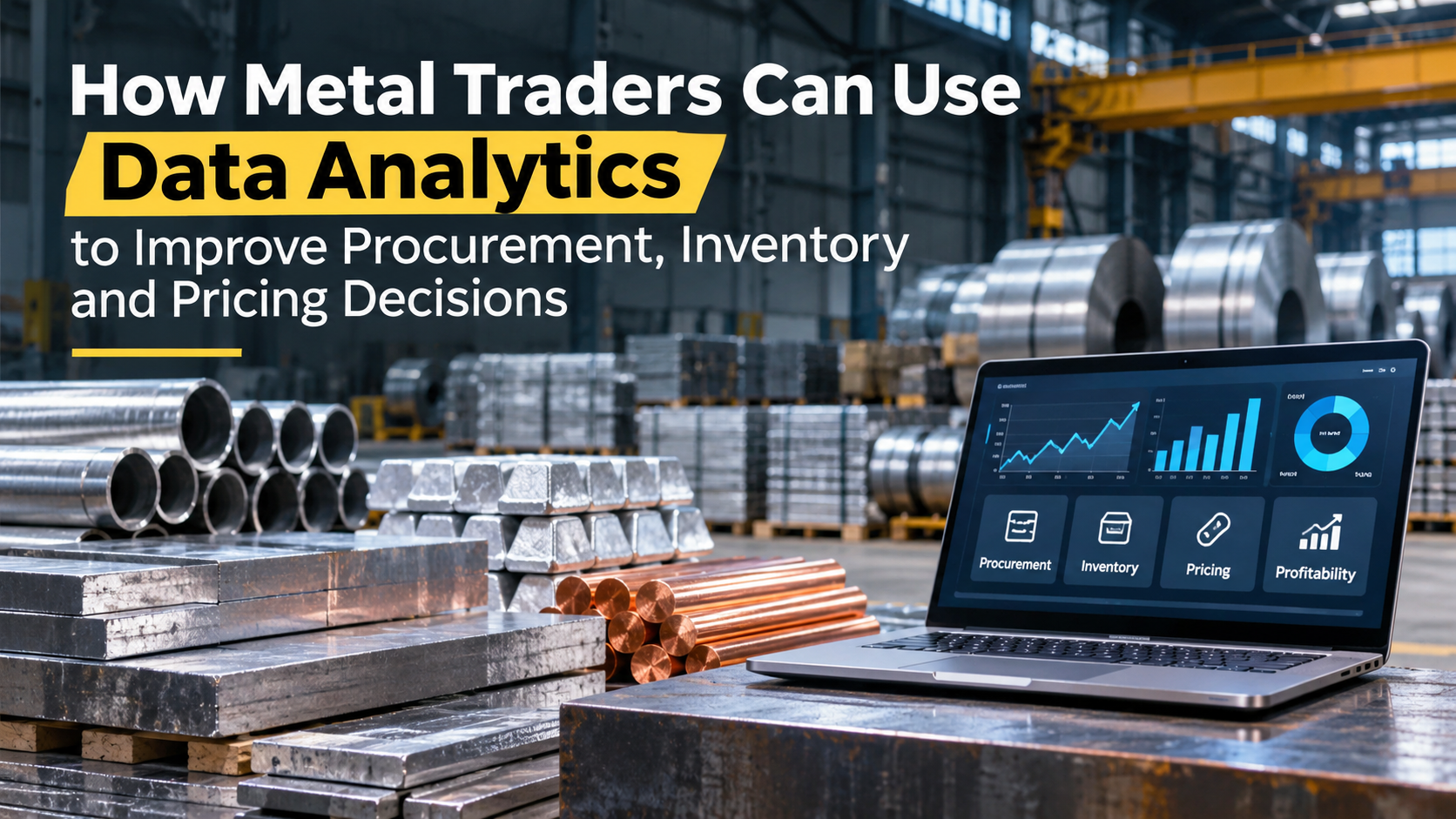
How Metal Traders Can Use Data Analytics to Improve Business Decisions
Metal trading can look straightforward from the outside: source the material, negotiate a price, arrange transportation and complete the sale. In reality, every transaction involves several decisions. Traders need to consider material grades, quality, actual weight, supplier terms, transportation costs, market prices and customer requirements.
When this information is scattered across spreadsheets, notebooks, invoices and phone conversations, understanding the actual performance of a business becomes difficult. A trader might know how much material was purchased last month but still struggle to identify which suppliers offered the best value or which transactions generated the highest margins.
This is where data analytics can make a difference. It does not replace experience, market knowledge or business relationships. Instead, it helps traders understand their operations better, identify patterns and make decisions based on more complete information.
Start with the Information Your Business Already Collects
A metal trading business does not need an expensive technology platform to begin using data analytics. Most businesses already generate useful information through everyday transactions.
Purchase orders, supplier quotations, weighment slips, quality inspection reports, transportation bills, sales invoices, payment records and stock registers are all valuable sources of business information.
The first step is to organize these records consistently. Material grades should be recorded using standard descriptions, quantities should follow consistent measurement units, and transactions should have identifiable references.
For example, if employees use different descriptions for the same metal grade, it becomes difficult to compare purchases accurately. Similarly, combining materials with different specifications can produce misleading reports.
Reliable information is more important than an advanced dashboard. Once business records are organized, even basic reporting can reveal opportunities for improvement.
1. Make Better Procurement Decisions
Buying material at the lowest quoted price does not necessarily mean getting the best deal.
Metal traders need to consider the complete cost of purchasing and handling material. Depending on the transaction, this may include transportation, loading, unloading, sorting, testing, processing, storage and financing expenses.
Consider two suppliers offering similar material.
Supplier A provides a lower quotation but is located farther away, and the material may require additional sorting. Supplier B offers a slightly higher rate but provides more consistent quality and is located closer to the buyer.
Looking only at the quoted price makes Supplier A appear more attractive. However, when transportation, handling and expected processing expenses are included, Supplier B might offer better overall value.
Businesses can use procurement records to compare:
-
Quoted and final purchase prices.
-
Material grades and specifications.
-
Actual received quantities.
-
Transportation and handling expenses.
-
Additional sorting or processing costs.
-
Supplier delivery and quality history.
Over time, these comparisons help traders understand which suppliers consistently meet expectations and where purchasing costs can be reduced.
The purpose is not to complicate every purchase with lengthy analysis. It is to make recurring purchasing decisions more informed.
2. Improve Inventory Management
Knowing the total quantity of metal available is useful, but it does not provide the complete picture of inventory.
Two businesses might hold the same quantity of stock but have very different inventory positions. One may have material ready for confirmed orders, while the other may have stock waiting for inspection, sorting or suitable buyers.
A useful inventory management system should track material type, grade, quantity, storage location, condition and date of receipt.
With this information, traders can understand:
-
Which materials are selling regularly.
-
Which grades are accumulating in storage.
-
How long individual lots have remained unsold.
-
Which materials are awaiting inspection or processing.
-
How much working capital is tied up in inventory.
Inventory ageing reports are particularly useful. They identify materials that have remained in stock longer than expected, giving management an opportunity to investigate the reasons.
Slow-moving inventory does not always need to be sold at a discount. It could reflect a temporary shortage of buyers, a quality concern or a decision to hold material for a particular customer.
The important thing is to identify the situation early rather than discovering it when storage costs or working capital become a concern.
Digital inventory records should also be regularly compared with physical stock to identify discrepancies and recording errors.
3. Understand Profit Margins Beyond Sales Revenue
High sales revenue does not automatically mean a metal trading business is profitable.
A transaction may involve substantial purchasing, transportation, handling and processing expenses. Unless these costs are recorded properly, the actual contribution from a deal can be difficult to understand.
A better approach is to analyze profitability at the transaction or material-lot level.
For example, a business might discover that one category of scrap generates significant sales but requires considerable sorting and transportation expenses. Another category might have lower sales volumes but provide more consistent margins.
Weight differences also deserve attention. When the purchased quantity differs from the sold quantity, businesses should investigate whether the difference relates to moisture, contamination, processing loss, measurement variation or recording errors.
By examining transactions individually, traders can identify where money is being spent, which materials deliver better returns and whether certain purchasing or selling practices need to change.
This information can support decisions about purchasing limits, transportation arrangements, customer pricing and inventory planning.
4. Use Historical Data to Understand Metal Price Movements
Metal prices are influenced by several factors, including market demand, available supply, international benchmarks, currency movements, transportation expenses, trade conditions and material quality.
While no analytics tool can accurately predict every market movement, businesses can maintain historical records to understand how prices have changed and how those changes have affected their transactions.
It is useful to distinguish between market reference prices, supplier quotations, buyer offers, agreed purchase rates and actual selling prices.
These figures are not interchangeable. A published market price does not necessarily represent the price a trader can secure for a particular material, grade, quantity and location.
Historical transaction records allow traders to compare current quotations with previous deals, review changes in purchasing costs and understand the difference between initial offers and final negotiated prices.
This gives business owners a better foundation for negotiations and purchasing decisions without treating historical trends as guaranteed future prices.
5. Evaluate Supplier and Customer Performance
Supplier relationships are important in metal trading, but evaluating suppliers only by their quoted rates can be misleading.
Businesses should also consider delivery consistency, material quality, quantity accuracy, documentation and adherence to agreed specifications.
The same principle applies to customers.
A customer placing large orders may not necessarily be the most profitable account. Payment delays, repeated changes in specifications, disputes and additional service costs can affect the overall value of a business relationship.
Maintaining transaction histories can help businesses understand order frequency, average quantities, payment patterns and contribution margins.
These records are particularly useful when reviewing credit terms, negotiating future orders or identifying relationships that require closer attention.
6. How AI and Automation Can Support Metal Trading
Many metal trading businesses still spend considerable time transferring information between documents and systems.
Purchase details may arrive through emails or messaging applications. Invoices may be shared as PDF files, while weighment slips and inspection documents often require manual verification.
Automation tools can reduce some of this repetitive work.
For example, document-processing systems can extract invoice numbers, quantities, dates and supplier details for employees to verify. Business systems can also identify missing information, duplicate references or differences between purchase orders and invoices.
AI tools can help summarize documents, categorize incoming enquiries and search historical business records more efficiently.
However, these technologies should support human decision-making rather than replace it. A mistake in identifying a metal grade or extracting a quantity could lead to financial loss.
Important decisions involving quality acceptance, purchase approvals, prices and payments should continue to have appropriate human checks.
Businesses exploring these technologies can also learn how data analytics in digital transformation helps organizations turn everyday operational information into useful business insights.
7. Build Reports That Support Everyday Decisions
A business dashboard does not need dozens of charts to be useful. Sometimes a simple weekly report can provide more value than a complicated reporting system that nobody regularly checks.
Metal trading businesses can begin by monitoring a few important areas:
Procurement: Recent purchase rates, total landed costs and supplier delivery performance.
Inventory: Available quantities by grade, stock ageing and materials waiting for inspection.
Sales: Order volumes, negotiated prices, pending dispatches and customer demand.
Profitability: Contribution margins by transaction, material category and customer.
Cash flow: Outstanding customer payments, upcoming supplier payments and capital tied up in inventory.
The most useful indicators depend on the nature of the business. A scrap processor may focus on material recovery and processing losses, while a distributor may pay more attention to inventory movement, transportation expenses and customer payments.
Start with information that directly supports business decisions. There is little benefit in collecting dozens of measurements that management never uses.
8. Common Mistakes Businesses Should Avoid
Introducing data analytics can become unnecessarily complicated when businesses focus too much on technology and not enough on their existing processes.
A few mistakes are worth avoiding.
Collecting information without a purpose: Identify the business problem first and then decide what information is required.
Using inconsistent records: Different descriptions, missing quantities and incomplete transaction details can produce misleading reports.
Depending only on averages: Average metal prices and purchase costs can hide important differences between grades, locations and quality levels.
Ignoring physical verification: Digital inventory records should complement weighbridge checks, material inspections and physical stock verification.
Automating inefficient processes: Technology cannot automatically fix an inconsistent purchasing or inventory process. Standardizing the process should come first.
Treating forecasts as guarantees: Historical information supports better planning, but market conditions can change unexpectedly.
9. How Metal Traders Can Get Started
Businesses do not need to replace all their existing systems to start making better use of data.
A practical approach is to identify one problem that has a noticeable impact on operations. It could be difficulty comparing supplier quotations, unexplained inventory differences or delays in identifying slow-moving stock.
Next, identify where the relevant information is stored. Bring together a manageable set of records, standardize the important fields and verify the information against original documents.
Create a basic report that answers the business question. Discuss the findings with employees who handle those transactions because their experience can help explain details that may not be obvious from the numbers.
Once the process proves useful, extend it to other areas such as procurement, inventory, sales and financial reporting.
The technology should match the size and requirements of the business. A well-maintained spreadsheet may be sufficient for a smaller trader, while a larger operation may benefit from connected inventory, accounting and analytics systems.
Conclusion
Metal trading depends on experience, relationships and a strong understanding of material quality and market conditions. Data analytics does not replace these strengths. It helps businesses understand the information behind their daily transactions.
When purchasing, inventory, sales and payment records are properly organized, traders can identify where costs are increasing, which materials are moving slowly and which supplier or customer relationships deserve closer attention.
Better decisions do not always require advanced AI systems or expensive software. They often begin with accurate records, a clear understanding of business costs and a regular habit of reviewing information before making important decisions.
For metal traders looking to improve operational efficiency and profitability, that is a practical place to start.


