
India Copper & Bronze Scrap Market Forecast 2030
Introduction
India is entering a transformational decade for copper and copper alloy consumption. Rapid industrialization, electrification, renewable energy expansion, electric vehicle (EV) manufacturing, metro rail development, AI-powered data centers and smart infrastructure projects are driving unprecedented demand for copper, brass and bronze across the country.
Copper has emerged as one of the world’s most strategic industrial metals because of its superior electrical conductivity, thermal efficiency, corrosion resistance and recyclability. Brass and bronze, both copper-based alloys, are equally important in sectors such as defence, marine engineering, electrical systems, automotive manufacturing, plumbing, industrial machinery and aerospace applications.
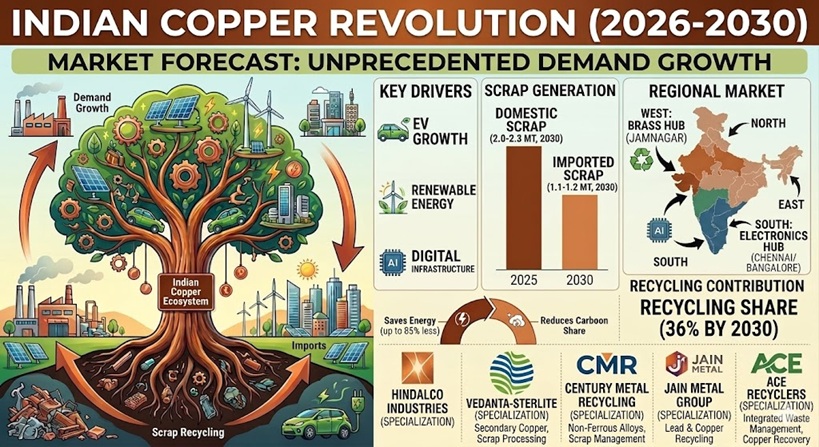
India’s copper demand is projected to rise sharply from around 1.8–1.9 million tonnes in 2025 to nearly 3.2–3.3 million tonnes by 2030. Simultaneously, demand for brass, bronze and other copper alloys is expected to grow steadily due to manufacturing expansion and infrastructure development.
However, India faces a major structural challenge: limited domestic copper ore availability and increasing dependence on imports of refined copper, concentrates and scrap. This is accelerating investments in copper recycling, organized scrap collection, e-waste recovery and secondary metal refining.
The recycling industry is becoming strategically important because recycled copper consumes nearly 85% less energy compared to primary copper extraction. As sustainability goals and circular economy policies gain momentum globally, India’s non-ferrous recycling industry is expected to witness strong long-term growth.
India’s Copper, Brass & Bronze Requirement (2026–2030)
India’s copper and alloy consumption is primarily driven by:
• Power transmission and distribution
• Renewable energy infrastructure
• Electric vehicles
• Railways and metro projects
• Construction and real estate
• Electronics manufacturing
• Defence and aerospace
• Telecommunications
• Industrial machinery
• AI data centers and digital infrastructure
Estimated Demand Forecast
India’s apparent copper usage is expected to more than double by 2030 because of the country’s energy transition, electrification and industrial modernization initiatives.
Key Drivers of Copper Demand in India
1. Electric Vehicle Revolution
Electric vehicles consume significantly more copper compared to conventional internal combustion engine vehicles.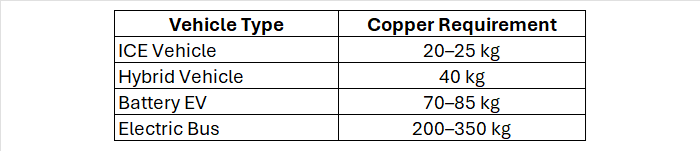
Copper is widely used in:
• EV motors
• Battery systems
• Charging stations
• Wiring harnesses
• Power electronics
• Inverters
India’s rapidly growing EV ecosystem will remain one of the strongest long-term drivers of copper demand.
2. Renewable Energy Expansion
Solar and wind energy installations require extensive copper infrastructure.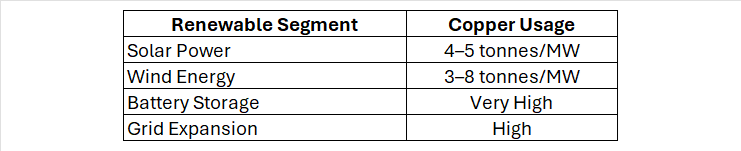 India’s target of achieving 500 GW renewable energy capacity by 2030 is expected to generate enormous structural copper demand.
Copper is extensively used in:
• Transformers
• Inverters
• Power cables
• Grid connections
• Battery storage systems
3. Power Grid Modernization
India is heavily investing in:
• Smart grids
• Rural electrification
• Transmission infrastructure
• Urban power distribution
Copper remains essential because of its conductivity, durability and efficiency in electrical systems.
4. AI Data Centers & Digital Infrastructure
AI-powered data centers require dense electrical architecture and advanced cooling systems, significantly increasing copper consumption.
The rapid growth of:
• Cloud computing
• AI processing
• Telecom infrastructure
• Semiconductor manufacturing
is expected to support long-term copper demand growth in India.
Types of Copper Scrap in India
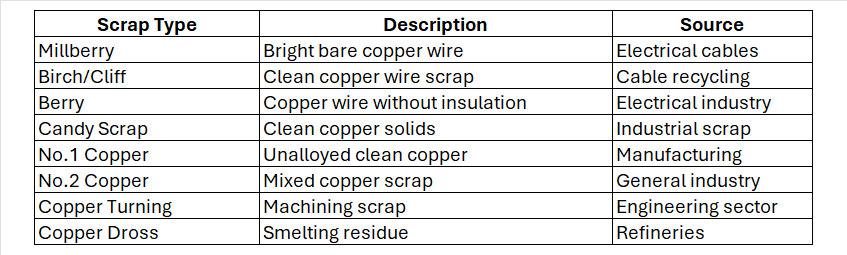
Copper scrap is classified based on purity, contamination and source.
Major Copper Scrap Grades
Types of Brass Scrap
Brass is a copper-zinc alloy widely recycled because of its excellent remelting properties.
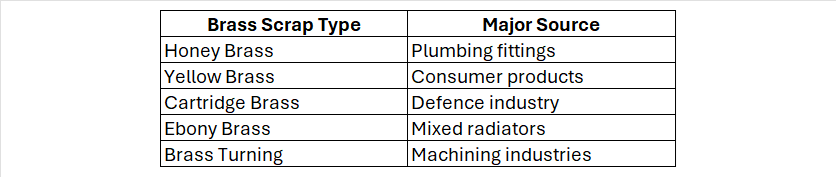
Gujarat’s Jamnagar region remains India’s largest brass recycling and manufacturing hub.
Types of Bronze Scrap
Bronze is mainly a copper-tin alloy used in engineering and marine industries.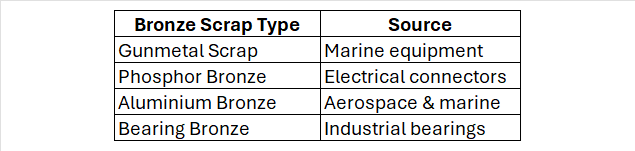 Copper Scrap Generation in India
India’s non-ferrous scrap generation is rising rapidly because of:
• Urbanization
• Industrialization
• Infrastructure replacement
• Growing electronics consumption
• Automotive replacement demand
Estimated Copper. Brass, Bronze Scrap Generation
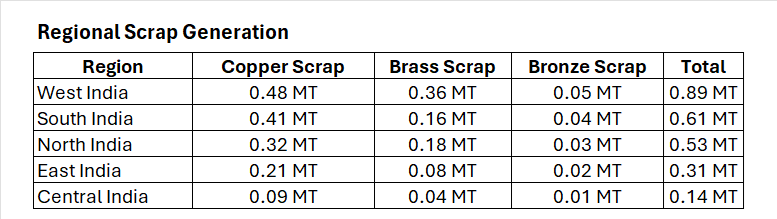
West India leads due to the presence of Jamnagar brass clusters, manufacturing industries and strong port connectivity.
 Domestic Recycling Contribution in India'
India’s recycling sector is shifting from an informal ecosystem toward organized and technology-driven processing.
The share of secondary copper in India’s total copper supply increased significantly over recent years and could dominate the market by 2030. (The Core)
Regional Recycling Contribution
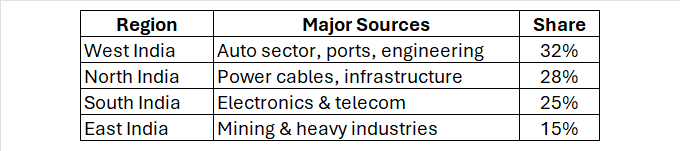
West India dominates due to:
• Jamnagar brass cluster
• Strong port connectivity
• Manufacturing concentration
• Export-oriented industries
Importance of Copper, Bass, Bronze Recycling
Copper recycling is becoming strategically critical for India.
Key Benefits
• Reduces import dependency
• Saves energy
• Supports ESG targets
• Reduces carbon emissions
• Strengthens circular economy
• Provides cost advantages
• Enhances supply security
Secondary copper production consumes nearly 85% less energy compared to primary mining and smelting operations.(Persistence Market Research)
Recycling Contribution to India’s Copper, Brass, Bronze Supply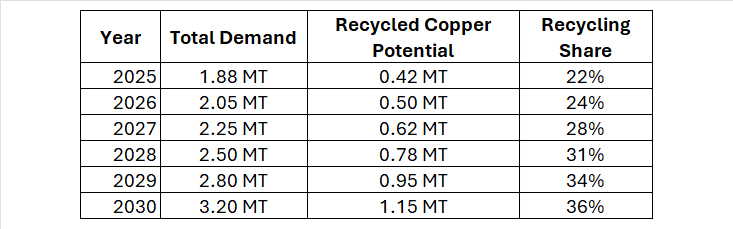 Organized recycling is expected to become a central pillar of India’s future copper ecosystem.
India’s Copper, Brass & Bronze Scrap Imports
India remains heavily dependent on imported copper scrap because domestic scrap generation is insufficient to meet industrial demand.
Copper, Brass, Bronze Scrap Import Forecast
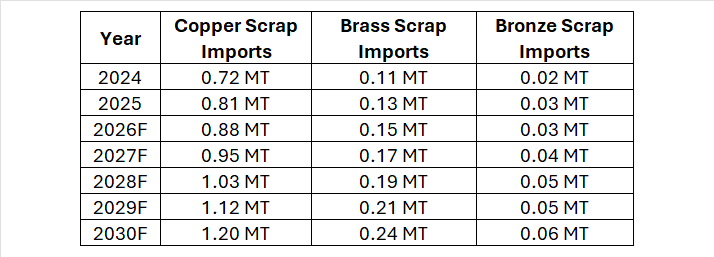
India’s brass honey scrap imports increased strongly in 2025 due to robust demand from Jamnagar manufacturers. (BigMint)
Copper scrap imports experienced temporary volatility in 2026 due to global shipment disruptions and seasonal slowdowns. (BigMint)
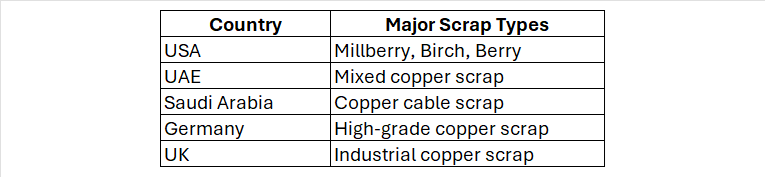
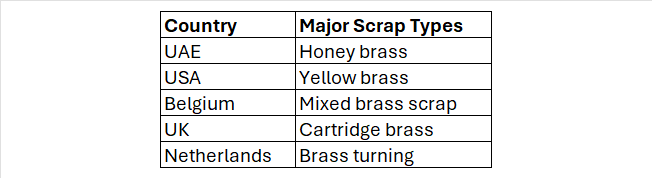
Major Scrap Exporting Countries to India
Copper Scrap Exporters
Brass Scrap Exporters
Bronze Scrap Exporters
Regional SWOT Analysis
West India
Strengths
• Jamnagar brass manufacturing hub
• Strong port infrastructure
• Large recycling ecosystem
• Automotive manufacturing base
Weaknesses
• Dependence on imported scrap
• Environmental compliance costs
Opportunities
• EV and renewable energy demand
• Alloy export expansion
• Advanced refining investments
Threats
• Global scrap shortages
• Trade restrictions
• Freight volatility
South India
Strengths
• Electronics manufacturing ecosystem
• Strong engineering base
• Renewable energy manufacturing
Weaknesses
• Fragmented scrap collection
• Limited dismantling ecosystem
Opportunities
• E-waste recycling expansion
• Aerospace manufacturing growth
Threats
• Imported refined copper competition
• Tightening environmental regulations
North India
Strengths
• Large infrastructure market
• Cable and electrical equipment industry
• Strong informal collection network
Weaknesses
• Pollution control challenges
• Informal recycling dominance
Opportunities
• Smart city projects
• EV infrastructure expansion
• Railways modernization
Threats
• Regulatory crackdowns
• Volatile scrap availability
East India
Strengths
• Mining ecosystem
• Smelting infrastructure
• Mineral proximity
Weaknesses
• Lower urban scrap generation
• Logistics bottlenecks
Opportunities
• Industrial corridor development
• Copper smelting investments
Threats
• Export competition
• Environmental regulations
Applications of Copper, Brass & Bronze
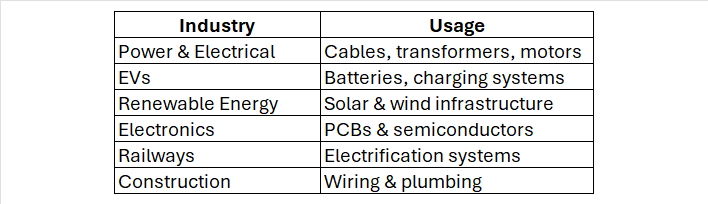
Copper Applications
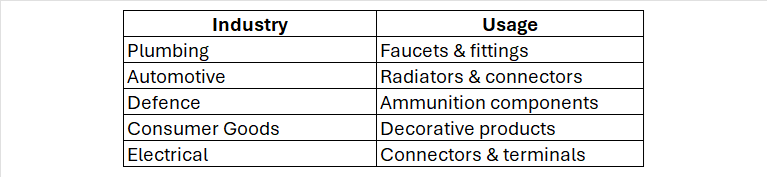
 Brass Applications
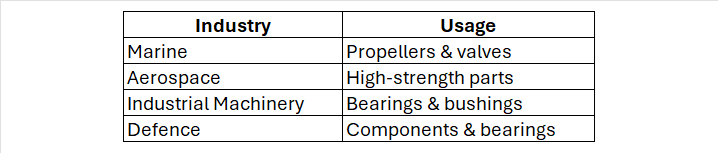
Bronze Applications
India Copper, Brass & Bronze Scrap Imports (2025–2030)
India remains heavily dependent on imported copper scrap because domestic scrap generation is insufficient to meet growing industrial demand.
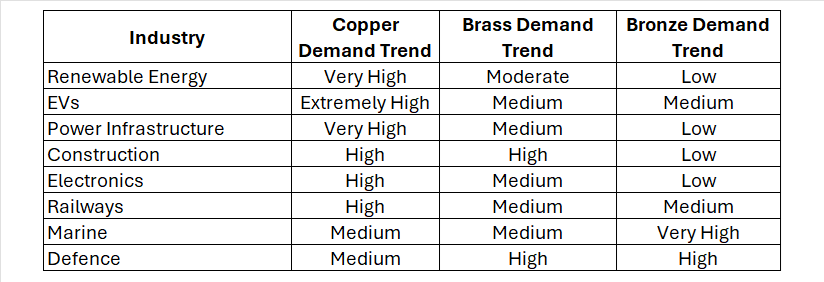
Industry-Wise Demand Forecast (2026–2030)
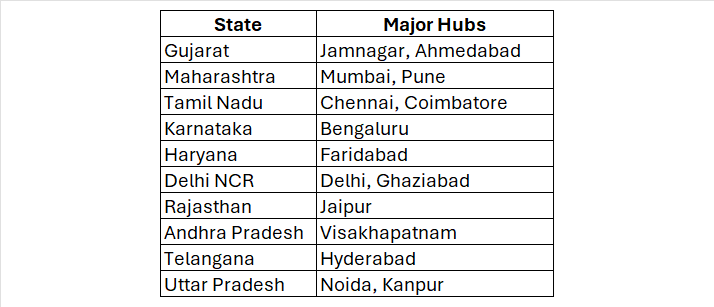
Major Recycling Hubs in India
Top Recycling States
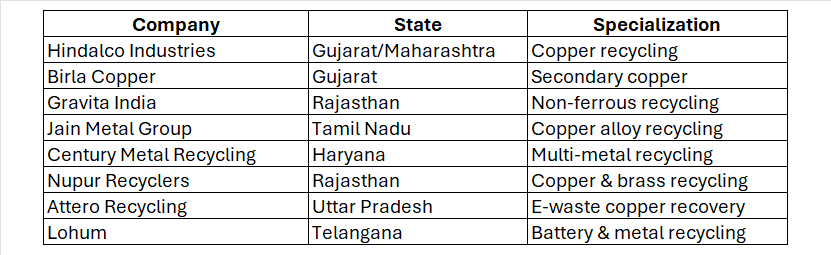
Major Recycling Companies in India
Challenges Facing India’s Copper Industry
- Limited Domestic Ore Reserves: India’s copper ore reserves remain insufficient compared to future demand growth.
- Import Dependence: India continues to rely heavily on imported concentrates and scrap.
- Informal Recycling Sector: A significant portion of recycling operations remains unorganized and environmentally inefficient.
- Environmental Compliance: Pollution control norms and ESG regulations are increasing operational costs.
Future Outlook (2026–2030)
India’s copper, brass and bronze ecosystem is expected to witness one of the strongest growth cycles in its industrial history.
Major Growth Themes
• EV manufacturing expansion
• Renewable energy investments
• Smart grid modernization
• AI data center growth
• Metro rail expansion
• Defence manufacturing
• Circular economy initiatives
• Advanced recycling technology adoption
Industry experts expect India to emerge as one of the world’s largest copper-consuming economies by 2035. Recycling is expected to play a major role in bridging the supply-demand gap.
Organized scrap collection, advanced refining technologies and environmentally compliant recycling infrastructure will become increasingly important for India’s long-term industrial competitiveness.
Conclusion
India’s copper, brass and bronze industry is entering a transformational phase driven by electrification, renewable energy expansion, EV adoption, industrial automation and infrastructure modernization. Copper is rapidly becoming the backbone of India’s energy transition and industrial growth story.
India’s copper demand is expected to exceed 3 million tonnes by 2030, creating enormous opportunities in:
• Copper scrap trading
• Recycling
• Alloy manufacturing
• Smelting and refining
• E-waste recovery
• Circular economy infrastructure
Although India’s dependence on imported scrap and concentrates will continue in the near term, the rapid development of organized recycling infrastructure offers a major strategic opportunity to reduce import dependency and improve supply security.
West India, especially Gujarat and Jamnagar, will continue dominating brass recycling and alloy manufacturing, while South India is expected to emerge as a major e-waste and copper recovery hub. North and East India will also experience significant expansion due to infrastructure growth and industrial investments.
Between 2026 and 2030, recycling, sustainability and circular economy practices will become central pillars of India’s non-ferrous metals industry. Companies investing in advanced recycling technologies, organized scrap collection systems and environmentally compliant processing facilities are likely to gain significant long-term advantages in India’s rapidly expanding copper ecosystem.
References
1. Ministry of Mines, Government of India – Vision Document on Copper Sector
2. International Copper Association India (ICA India)
3. International Copper Study Group (ICSG)
4. Reuters – Global Copper Demand & EV Copper Consumption Outlook
5. S&P Global – Copper Demand from AI & Data Centers
6. Grand View Research – India Copper Scrap Market Analysis
7. Fastmarkets – Global Copper Scrap Market Outlook
8. Financial Times – AI Infrastructure and Copper Consumption
9. Economic Times – Renewable Energy & EV Copper Demand in India
10. Centre for Social and Economic Progress (CSEP) – India Copper Report
11. Future Market Insights – Copper Recycling Market Forecast
12. Metals Hub – Global Copper Scrap Trade Analysis
13. BigMint – India Brass Honey Scrap Import Trends
14. Persistence Market Research – Secondary Copper & Recycling Industry
15. India Copper Vision Report – Demand & Infrastructure Forecast
16. LOHAA – Indian Copper Cable & Scrap Market Insights
17. Ministry of New and Renewable Energy (MNRE), Government of India
18. Invest India – EV & Renewable Manufacturing Outlook
19. International Energy Agency (IEA) – Critical Minerals & Copper Demand
20. World Bank – Minerals for Energy Transition Report
By using digital trade platforms like LOHAA Mobile application, you can reach global buyers, source quality material, and strengthen long-term partnerships.
Download the LOHAA Mobile application today and connect with verified scrap suppliers and manufacturers.
(Notes: market and production volume estimates are synthesized from public market reports and industrial press; exact tonne figures for materials are not centrally published in a single comprehensive public dataset, therefore the numeric projection above is a conservative, documented estimate built from available intelligence and reasonable regional share assumptions.)


