
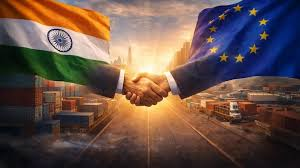
India and EU Trade Deal: Impact on Metal Parts Exports & Scrap Imports
Why Value-Added Metal Products Win — and Why Scrap Trade Still Demands Discipline
Introduction: A Structural Shift, Not a Simple Tariff Story
The conclusion of the India–Europe trade agreement in early 2026 marks one of the most consequential shifts in bilateral industrial trade in more than a decade. While early commentary has focused on tariff reductions and improved market access, such framing understates the real impact on the metal sector. This agreement is not simply about price competitiveness; it is about how value is created, verified, and traded across borders.
For Indian metal manufacturers and exporters, the agreement clearly favours value-added products: fabricated steel structures, aluminium components, engineered sub-assemblies, precision machined parts, and specialised castings and forgings. These products sit at the intersection of three critical dimensions:
1. Tariff liberalisation
2. Manufacturing depth and transformation
3. Supply-chain reliability and traceability
Indian industry has steadily improved across all three over the past decade, making it well positioned to benefit.
At the same time, the agreement does not fundamentally liberalise scrap metal flows. Scrap trade between European Union and India remains governed primarily by environmental and waste regulation, not by trade policy.
- EU Waste Shipment Regulations,
- Basel Convention obligations,
- carbon accountability mechanisms, and
India’s own import controls continue to define what can move, when, and at what cost. In some respects, regulatory scrutiny is intensifying rather than easing.
The outcome is a two-speed metal trade ecosystem:
• Finished and fabricated metal products gain faster, clearer, and more predictable access to European markets.
• Scrap metal trade remains conditional, compliance-heavy, and documentation-intensive.
This article is written for decision-makers — exporters, importers, recyclers, mill operators, and digital marketplace, LOHAA builders — who need to understand where the agreement truly helps, where it does not, and how to position strategically. It breaks down the opportunity by product category, Indian region, and European geography, and closes with practical operating checklists and strategic guidance.
What the Agreement Actually Changes for Metal Trade
The agreement between the European Union and India is broad in scope, covering thousands of tariff lines and regulatory chapters. However, its impact on metals is highly differentiated by product type and position in the value chain.
What Meaningfully Changes
1. Tariff Liberalisation on Manufactured Goods
A wide range of fabricated and semi-finished metal products now benefit from reduced or zero import duties when entering Europe. This includes:
• Engineered components
• Fabricated steel and aluminium products
• Machined and assembled parts
• Forgings, castings, and fasteners
For Indian exporters, this materially improves landed cost competitiveness, especially in segments where margins were previously compressed by tariffs of 3–8%. In European supply chains where supplier selection often hinges on marginal cost differences, tariff relief can decisively shift sourcing decisions.
2. Clearer and Enforceable Rules of Origin (RoO)
Preferential access is tied to demonstrable manufacturing value addition in India. Products must show meaningful transformation — such as casting, forging, machining, welding, forming, or assembly — rather than simple processing or re-export.
This rewards companies with genuine manufacturing depth and discourages arbitrage-driven trade models. Over time, it structurally favours industrial manufacturers over commodity traders.
3. Improved Predictability for Long-Term Contracts
The agreement introduces clearer customs procedures, harmonised documentation expectations, and dispute-resolution mechanisms. For exporters and European buyers alike, this reduces uncertainty and lowers the perceived risk of multi-year sourcing arrangements.
The practical result is a shift from spot or trial orders toward longer-term framework contracts, particularly in automotive, machinery, and energy sectors.
What Does Not Change
1. Environmental and Sustainability Regulation in Europe
European regulation around carbon emissions, product safety, chemical compliance, and sustainability remains stringent. Mechanisms such as the Carbon Border Adjustment Mechanism increasingly influence steel and aluminium trade economics.
Even where financial liabilities are phased in, European buyers already expect carbon transparency and emissions data from suppliers.
2. Scrap Metal as “Waste,” Not Merchandise
Scrap metal movements remain governed by EU waste shipment law, Basel Convention rules, and national enforcement within exporting states. These frameworks operate largely independently of free trade agreements.
Tariff liberalisation does not override environmental classification.
3. India’s Import Controls Remain Decisive
India’s DGFT notifications, HS code classifications, port-level enforcement, and environmental inspections continue to determine whether scrap shipments clear smoothly or face delays, reclassification, or rejection.
The practical implication is clear: manufactured products benefit faster and more directly than raw or recyclable materials.
Part 1: Exporting Metal Parts from India to Europe
Why Europe Remains a Strategic Market
Europe remains one of the world’s most important and sophisticated destinations for industrial metal products. Demand spans a broad spectrum:
• Automotive and EV components
• Engineering and industrial machinery parts
• Fabricated steel and aluminium structures
• Precision-machined, forged, and die-cast components
Despite slower macroeconomic growth, European industry continues to invest in modernisation, electrification, renewable energy, and automation — all of which are metal-intensive.
Indian manufacturers align well with this demand due to several long-term strengths:
• Competitive production economics without sacrificing quality
• A large and experienced pool of engineers, metallurgists, and production specialists
• Capability in customised, mid-volume manufacturing — often underserved by mass producers
• Growing familiarity with global quality, safety, and compliance systems
The trade agreement strengthens this alignment by reducing tariff friction, allowing Indian exporters to compete more effectively with suppliers from Eastern Europe, Turkey, and parts of Southeast Asia.
Key Benefits for Indian Exporters of Metal Parts
1. Lower Import Duties Improve Commercial Viability
In many fabricated metal categories, even modest tariff reductions can determine supplier selection. Automotive and machinery supply chains operate under constant cost pressure, and procurement teams often evaluate suppliers on total landed cost, not just ex-works pricing.
The agreement improves margins for Indian exporters while lowering procurement costs for European buyers — a win-win that increases sourcing stickiness.
2. Structural Push Toward Value-Added Manufacturing
Because preferential treatment depends on Rules of Origin, the agreement incentivises deeper processing within India. This structurally favours:
• Component manufacturers
• Fabricators and assemblers
• Tier-2 and Tier-3 suppliers integrated into OEM supply chains
over pure commodity traders or low-transformation exporters.
Over time, this supports India’s broader industrial objective of moving up the manufacturing value chain.
3. Integration into European Supply Chains
European OEMs are actively diversifying sourcing to manage geopolitical risk, cost volatility, and capacity constraints. Indian suppliers that demonstrate consistency, compliance, and delivery reliability can secure long-term positions in:
• Automotive and EV platforms
• Renewable energy equipment (wind, solar, grid infrastructure)
• Industrial machinery, tooling, and automation systems
Once qualified, suppliers often benefit from repeat orders and platform-wide adoption.
4. Greater Contract Certainty
Clearer trade rules reduce the risk premium attached to long-term sourcing decisions. This encourages multi-year supply agreements rather than opportunistic spot buying, improving capacity planning and investment confidence for Indian manufacturers.
Challenges Exporters Must Actively Manage
Europe remains a high-reward but high-expectation market.
Technical and Regulatory Standards
CE marking, ISO systems, and sector-specific standards are mandatory. Non-compliance can lead to shipment rejection, liability exposure, or reputational damage.
Carbon and Sustainability Disclosure
Steel and aluminium exporters increasingly face scrutiny over embedded emissions. Even before full CBAM cost pass-through, European buyers expect transparency around energy mix, process emissions, and improvement pathways.
Documentation and Traceability
Preferential tariffs only apply if origin and value addition are provable. Incomplete or inconsistent documentation can eliminate all tariff benefits — or worse, trigger audits.
The competitive edge will belong to exporters who treat compliance as a strategic capability, not a box-ticking exercise.
Part 2: Importing Scrap Metal from Europe into India
Why Europe Is Still a Key Scrap Source
Europe generates large volumes of high-quality recyclable metals, including:
• Ferrous scrap (HMS, shredded scrap)
• Aluminium scrap (UBCs, extrusion scrap, turnings)
• Copper and brass scrap
• Stainless steel scrap
European scrap is valued globally because it is:
• Well-segregated at source
• Relatively clean and low-contamination
• Consistent in chemical composition
For Indian steelmakers, foundries, and recyclers, this supports:
• Electric Arc Furnace (EAF) steelmaking
• Lower carbon intensity compared to ore-based routes
• Higher yield efficiency and metallurgical control
Why Scrap Trade Remains Fundamentally Different
Scrap metal is regulated primarily as waste, not as a traded commodity. This single distinction defines the entire trade dynamic.
Key governing frameworks include:
• EU Waste Shipment Regulation
• Basel Convention obligations
• National enforcement within exporting EU states
• India’s DGFT rules and customs practices
As a result, tariff preferences do not guarantee movement. A shipment with competitive pricing but weak documentation can be blocked, delayed, or reclassified as prohibited waste.
In scrap trade, regulatory compliance precedes commercial negotiation.
Opportunities for Indian Scrap Importers
Despite constraints, disciplined operators can still extract value:
• Access to premium scrap that supports green steel and aluminium production
• Long-term contracts with certified European recyclers
• Improved consistency for downstream manufacturing and casting operations
These benefits accrue to importers who operate with process maturity, supplier vetting, and compliance discipline.
Risks and Structural Limitations
• Sudden DGFT or environmental policy changes in India
• Export restrictions or stricter enforcement in Europe
• High documentation, testing, and inspection costs
• Port congestion and shipment delays
In scrap trade, risk management is as important as pricing — often more so.
Regional Dynamics Within India
East India (West Bengal, Odisha, Jharkhand, Bihar)
Exporting
• Products: large castings, welded structures, heavy fabricated components
• Strengths: proximity to iron ore, established heavy industry
• Constraints: older plants, higher carbon intensity, inland logistics
• Priority: modernisation, EAF adoption, port-linked bulk export models
Importing Scrap
• Focus: bulk ferrous scrap for integrated and secondary steelmakers
• Risks: port congestion, documentation gaps, policy volatility
• Actions: DGFT pre-checks, accredited labs, pre-clearance protocols
West India (Gujarat, Maharashtra)
Exporting
• Products: auto components, fasteners, fabricated assemblies
• Strengths: excellent port connectivity, mature exporter ecosystem
• Constraints: intense competition, strict documentation scrutiny
• Strategy: EU-eligible tagging, DDP pricing, RoO-ready listings
Importing Scrap
• Focus: high-volume ferrous and non-ferrous scrap
• Strengths: processing scale, logistics infrastructure
• Strategy: certified lots, chain-of-custody, bonded warehousing
South India (Tamil Nadu, Karnataka, Andhra Pradesh, Telangana)
Exporting
• Products: precision machined parts, die-castings, OEM components
• Strengths: deep OEM clusters, higher certification levels
• Constraints: cost pressure, sustainability expectations
• Strategy: Tier-1 readiness, standardised compliance and emissions templates
Importing Scrap
• Focus: high-grade non-ferrous and specialty ferrous scrap
• Risks: Basel/EU misclassification
• Strategy: EU-sourced consignments with full consent and lab reports
European Country Priorities
Top Markets for Indian Metal Products
• Germany — manufacturing core; automotive and engineering demand
• Italy — machinery, specialty components, long trade ties
• Netherlands — distribution gateway via Rotterdam
• France — industrial and fabricated metal demand
• Belgium and Spain — ports, construction, industrial imports
Key European Scrap Origins
• Netherlands — re-export and port hub
• Germany — major ferrous and stainless scrap producer
• Belgium — Antwerp-centred bulk shipments
• United Kingdom — significant non-EU exporter to India
• Spain, France, Poland — commodity-specific flows
Practical Operating Checklists
For Exporting Metal Parts to Europe
1. Confirm HS codes and preferential tariff schedules
2. Prepare Rules of Origin declarations for each SKU
3. Maintain ISO, CE, REACH, and sector-specific compliance
4. Provide cradle-to-gate emissions or energy-mix statements
5. Offer predictable delivery via major EU ports
For Importing Scrap into India
1. Pre-confirm HS classification and DGFT status
2. Work only with EU suppliers providing full waste-shipment compliance
3. Require lab analysis, photos, and segregation statements
4. Use accredited pre-shipment inspection agencies
5. Plan bonded storage for quality-sensitive consignments
Strategic Verdict: Where to Focus Now
The India–Europe trade agreement is unambiguously positive for Indian exporters of value-added metal products. Those who invest in compliance, documentation, and sustainability transparency will integrate deeper into European supply chains.
For scrap importers, the agreement is neutral to selectively positive. Success depends not on tariff relief but on quality, traceability, and regulatory discipline.
In the post-agreement environment, one principle stands out:
Compliance is no longer a cost Centre — it is a competitive advantage.
For metal businesses and digital trading platforms LOHAA, the winners will be those who align commercial ambition with regulatory readiness and supply-chain transparency.
References (authoritative sources used)
1. Reuters — coverage of the India–EU trade deal (conclusion and tariff liberalization). (The Guardian)
2. Eurostat — EU statistics on iron & steel trade and recyclable raw materials (2024 summaries). (European Commission)
3. TradingEconomics / UN COMTRADE — EU imports/exports of iron & steel and trade flows by partner (India figures, 2024). (Trading Economics)
4. GMK Center — EU scrap export volumes and country/destination snapshots (2024). (GMK)
5. WITS / World Bank COMTRADE extracts — country-level product flows (stainless & ferrous scrap exports from EU to India; consult for HS-specific numbers). (World Integrated Trade Solution)
6. ICRIER / academic reports — analysis of India’s scrap import patterns and concentration of sources. (ICRIER)


