
India Zinc Market Report 2025 to 2030
1. Introduction
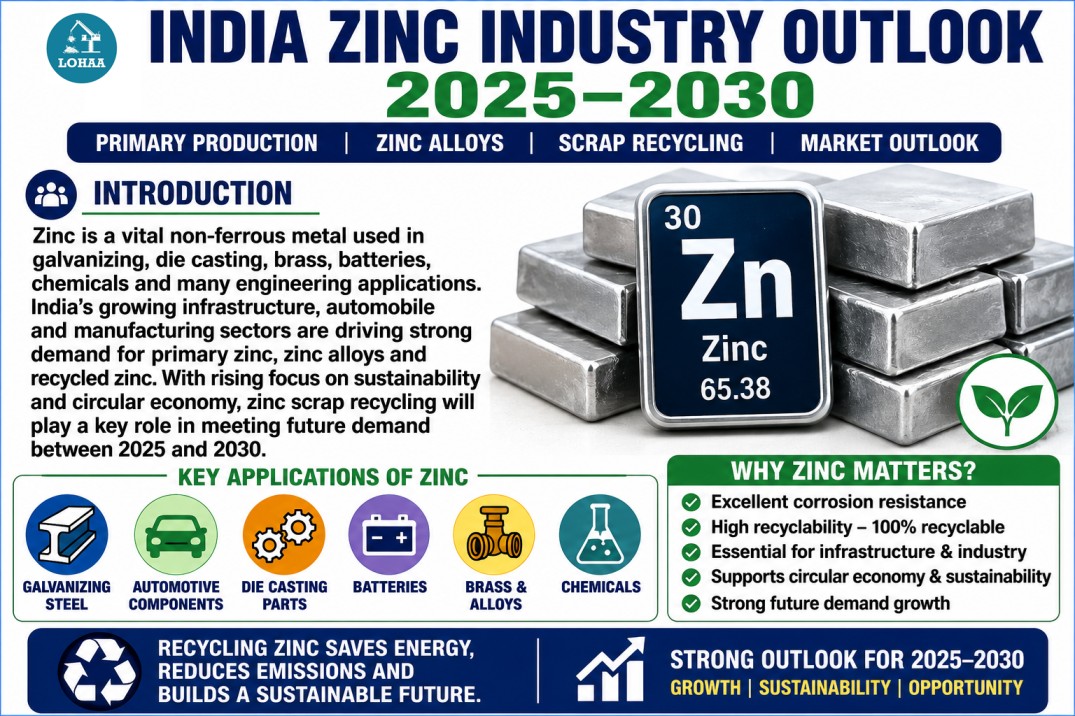
Zinc is one of the most strategically important non-ferrous metals supporting modern infrastructure, transportation, engineering, renewable energy, electronics, construction, and manufacturing industries worldwide. Owing to its excellent corrosion resistance, superior casting characteristics, recyclability, and long service life, zinc has become indispensable for galvanizing steel, producing die-cast components, manufacturing brass alloys, batteries, chemicals, and precision engineering products. India has emerged as one of the world's fastest-growing zinc-consuming nations due to rapid urbanization, infrastructure expansion, industrialization, and automobile production. Simultaneously, recycling of zinc scrap is becoming increasingly significant as industries adopt circular economy practices, reduce energy consumption, lower carbon emissions, and improve raw material security. Between 2025 and 2030, both primary zinc production and secondary recycling are expected to witness sustained growth globally.
2. Importance of Zinc in Engineering Industries and General Applications
Zinc plays a vital role in almost every industrial sector due to its unique physical, mechanical, and chemical properties. It protects steel against corrosion, enhances alloy performance, improves product life, and contributes significantly to sustainable manufacturing through high recyclability.
Key Engineering Advantages
• Excellent corrosion resistance
• Low melting temperature (419.5°C)
• High fluidity for precision die casting
• Outstanding dimensional stability
• Good electrical and thermal conductivity
• Easy machinability
• Excellent recyclability
• Long service life
• Low maintenance costs
• High strength-to-weight ratio in alloy applications
Major Engineering Applications
a). Steel Galvanizing
Nearly 55–60% of global zinc consumption is used for galvanizing steel to prevent corrosion.
Applications include:
• Structural steel
• Transmission towers
• Railway bridges
• Roofing sheets
• Water pipelines
• Highway guardrails
• Telecom towers
• Industrial sheds
b). Automobile Industry
Zinc protects automobile bodies against rust while zinc die-casting alloys manufacture:
• Door handles
• Carburetor parts
• Lock systems
• Gear housings
• Fuel system components
• Steering components
• Electrical connectors
• Interior decorative parts
c). Construction Industry
Widely used in
• Roofing
• Cladding
• Architectural panels
• Bridges
• Fasteners
• Structural components
• Drainage systems
d). Electrical & Electronics
Applications include
• Electrical terminals
• Cable connectors
• Switchgear
• Consumer electronics
• Mobile accessories
• LED housings
• Computer components
e). Brass Manufacturing
Zinc is the second major constituent of brass.
Products include
• Valves
• Plumbing fittings
• Decorative hardware
• Musical instruments
• Precision machined parts
f). Chemical Industry
Major zinc chemicals include
• Zinc oxide
• Zinc sulphate
• Zinc chloride
• Zinc phosphate
• Zinc carbonate
These are widely used in
• Rubber
• Paints
• Fertilizers
• Pharmaceuticals
• Cosmetics
• Ceramics
g). Renewable Energy
Rapidly growing applications include
• Solar mounting structures
• Wind turbine components
• Battery technologies
• Green infrastructure
Major Zinc Consumption by Sector (2025)
- Steel Galvanizing: 57%
- Die Casting: 16%
- Brass Manufacturing: 14%
- Chemicals: 6%
- Batteries:3%
- Others: 4%
3. Worldwide Primary Zinc Production (2025) and Forecast (2026–2030)
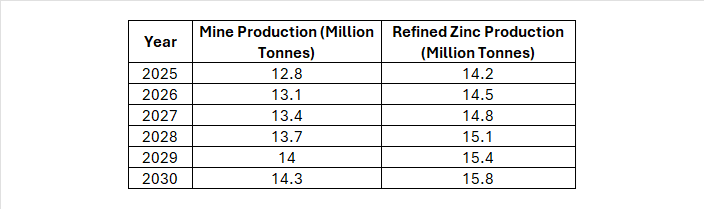
Global zinc production continues to expand due to growing demand from infrastructure, electric vehicles, renewable energy, transportation, and galvanized steel manufacturing. China remains the world's largest producer, followed by Peru, Australia, India, and Mexico.
Table 1: Estimated Global Primary Zinc Mine & Refined Production
Top Primary Zinc Producing Countries (2025) in million tonns
- China: 6.80
- Peru: 1.55
- Australia: 1.42
- India: 1.15
- Mexico: 0.78
- Bolivia: 0.60
- Kazakhstan: 0.45
- Canada: 0.34
- United States: 0.31
- Iran: 0.28
Market Outlook (2026–2030)
The global zinc industry is expected to grow at a compound annual growth rate (CAGR) of approximately 2.5–3.5% through 2030. Demand growth will be driven by:
• Expansion of galvanized steel production.
• Rapid urbanization in Asia and Africa.
• Increasing electric vehicle manufacturing.
• Renewable energy infrastructure projects.
• Modern railway and metro developments.
• Circular economy policies encouraging recycling.
4. Types of Zinc Alloys and Their Applications
Zinc alloys offer superior strength, castability, corrosion resistance, and dimensional accuracy, making them indispensable in engineering and manufacturing.
Major Zinc Alloys and Their Uses
- Zamak 2 (Zn-Al-Cu): High-strength engineering components
- Zamak 3 (Zn-Al): Automotive die casting, electrical fittings
- Zamak 5 (Zn-Al-Cu): Hardware, gears, machine parts
- Zamak 7 (Zn-Al): Decorative die casting, electronics
- ZA-8 (Zinc-Aluminium): Bearings, bushings
- ZA-12 (Zinc-Aluminium): Industrial machinery
- ZA-27 (Zinc-Aluminium): Heavy-duty engineering components
- Zinc-Brass Alloys (Copper-Zinc): Plumbing, valves, musical instruments
- Zinc-Nickel Alloys (Zn-Ni) Automotive coatings
- Zinc-Magnesium Alloys (Zn-Mg): Aerospace, electronics
Major Applications
Automotive
• Door handles
• Gear housings
• Fuel system parts
• Locks
• Mirrors
• Interior components
Electrical
• Cable connectors
• Switchgear
• Electrical terminals
• Junction boxes
Consumer Goods
• Furniture hardware
• Decorative fittings
• Kitchen accessories
• Bathroom fittings
Heavy Engineering
• Pumps
• Valves
• Machine tools
• Agricultural equipment
Electronics
• Mobile phone frames
• Laptop casings
• Camera housings
• LED lighting components
5. Future Prospects of Zinc and Zinc Alloy Demand (2026–2030)
Global zinc demand is expected to rise steadily over the next five years due to increased infrastructure spending, automotive production, renewable energy investments, and industrial manufacturing. Zinc alloys will continue to gain market share because of their excellent casting characteristics, recyclability, and cost-effectiveness.
Major Growth Drivers
• Expansion of galvanized steel production.
• Growth in electric vehicle manufacturing.
• Rapid urban infrastructure development.
• Renewable energy installations.
• Railway modernization.
• Smart city projects.
• Increased use of die-cast components.
• Rising demand for corrosion-resistant materials.
• Adoption of circular economy initiatives.
• Technological advancements in recycling.
Estimated Global Zinc Demand Forecast (Million Tonnes)
- 2025: 14.5
- 2026: 14.9
- 2027: 15.3
- 2028: 15.7
- 2029: 16.2
- 2030: 16.7
By 2030, recycled zinc is expected to account for an increasing share of total supply, supported by stricter environmental regulations and improved scrap collection systems.
6. Sources of Zinc Scrap Generation
Zinc scrap is generated at various stages of manufacturing, fabrication, product usage, and end-of-life recycling. It is broadly classified into new (prompt) scrap, generated during manufacturing, and old (obsolete) scrap, recovered after products reach the end of their service life.
Major Sources of Zinc Scrap
- Galvanizing Plants: Zinc dross, zinc ash, hard zinc, skimmings generated during hot-dip galvanizing operations.
- Die Casting Industries Sprues, runners, rejected castings, machining chips, and production offcuts.
- Brass Manufacturing Brass turnings, brass rejects, machining scrap, and fabrication waste containing zinc.
- Construction & Demolition Roofing sheets, gutters, cladding, galvanized structural steel, and architectural zinc products recovered from demolished buildings.
- Automobile Recycling Zinc die-cast parts, galvanized body panels, brackets, lock assemblies, and hardware recovered from end-of-life vehicles.
- Electrical & Electronics Connectors, switchgear, terminals, electronic housings, and consumer appliance components.
- Battery Recycling Zinc recovered from zinc-carbon, alkaline, and specialty batteries.
- Chemical Industry Zinc oxide residues, filter dust, and production waste from chemical processing plants.
- Machine Shops Zinc turnings, borings, chips, and machining swarf generated during precision engineering operations.
- Municipal Scrap Yards Mixed zinc scrap recovered from household appliances, furniture, hardware, and consumer goods.
The availability of zinc scrap is expected to increase significantly between 2026 and 2030 due to growing infrastructure replacement, higher vehicle scrappage rates, and improved organized recycling networks.
7. State-wise Zinc Scrap Generation in India (Top 10 States) (2025–2030)
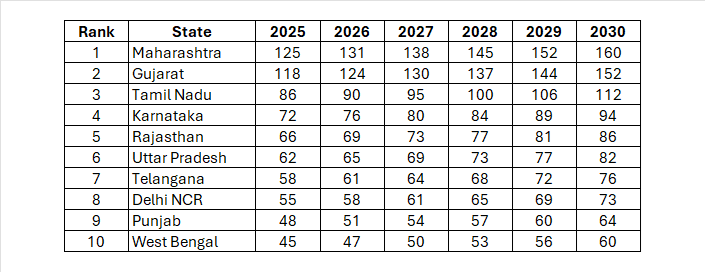
India's zinc scrap generation is closely linked to the concentration of galvanizing plants, automobile manufacturing, construction activities, die-casting industries, brass production, engineering industries, and infrastructure development. Maharashtra, Gujarat, Tamil Nadu, and Karnataka collectively contribute nearly half of the country's organized zinc scrap generation.
Table 2: State-wise Zinc Scrap Generation Forecast ('000 MT)
8. India's Unorganized Zinc Recycling Sector (Top 10 States)
India's informal recycling sector processes approximately 55–60% of all recyclable zinc scrap through small furnaces, local scrap dealers, and secondary smelters.
Estimated Unorganized Zinc Recycling (2025) in ('000 MT)
- Gujarat: 110
- Maharashtra: 102
- Delhi NCR: 86
- Tamil Nadu: 79
- Punjab: 68
- Rajasthan: 63
- Uttar Pradesh: 59
- Karnataka: 54
- Telangana: 48
- West Bengal: 42
Characteristics
• Small induction furnaces
• Local collection networks
• Manual scrap segregation
• Limited automation
• Low operating costs
• High recycling potential after modernization
9. Top Secondary Zinc Producers in India (Region-wise)
India's secondary zinc industry converts zinc scrap, dross, ash, die-casting scrap, and residues into zinc ingots, zinc alloys, zinc oxide, and specialty products.
Table 3: Major Secondary Zinc Producers
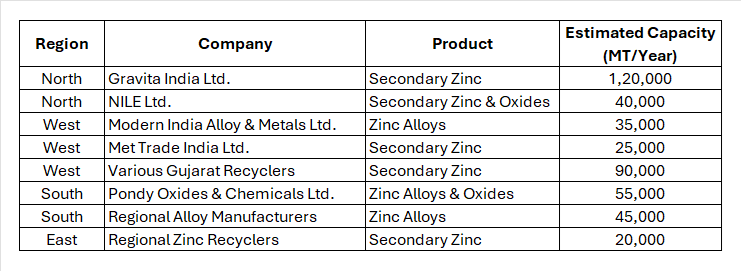
Regional Installed Capacity (MT/Year)
- North India: 190,000
- West India 150,000
- South India 100,000
- East India 35,000
10. Worldwide Top 20 Zinc Recycling Countries (Estimated Capacity)
The global zinc recycling industry continues to expand as governments promote circular economy initiatives and low-carbon manufacturing.
Top Zinc Recycling Countries (Million MT/Year)
- China: 3.60
- United States: 1.10
- Japan: 0.92
- Germany: 0.85
- South Korea: 0.70
- India: 0.62
- Belgium: 0.60
- Italy: 0.52
- France: 0.44
- Spain: 0.40
- Canada: 0.36
- United Kingdom: 0.32
- Turkey: 0.30
- Mexico: 0.26
- Australia: 0.24
- Brazil: 0.22
- Poland: 0.20
- Netherlands: 0.18
- Thailand: 0.16
- Malaysia 0.14
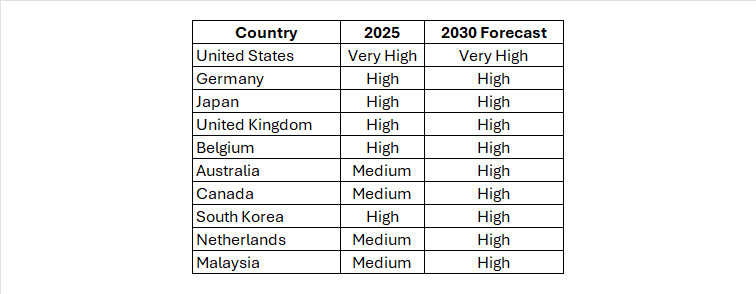
11. Major Zinc Scrap and Zinc Ingot Exporting Countries (2025–2030)
International zinc scrap trade continues to expand because of increasing recycling demand and resource conservation.
Table 4: Major Exporting Countries
 Major Export Materials
• Zinc die-casting scrap
• Zinc dross
• Zinc ash
• Hard zinc
• Zinc ingots
• Zinc alloy ingots
• Zinc sheets
• Brass scrap
• Galvanized steel scrap
• Zinc turnings
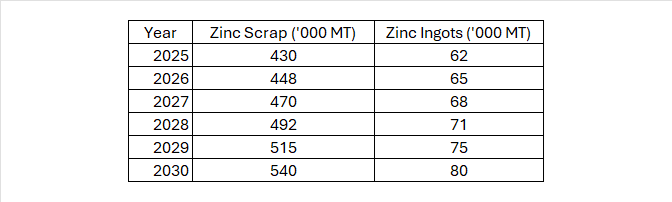
12. India Zinc Scrap and Zinc Ingot Imports (2025–2030)
India remains a net importer of zinc scrap to support its expanding secondary metal industry.
Table 5: Estimated Imports
Major Import Sources
• United States
• United Kingdom
• Germany
• UAE
• Saudi Arabia
• Australia
• Belgium
• Japan
• South Korea
• Singapore
13. India's Zinc Scrap & Zinc Alloy Production vs Demand (2025–2030)
Demand for zinc alloys continues to rise due to growth in die casting, automobiles, electrical equipment, and galvanized steel manufacturing.
Table 6: Zinc Industry Outlook
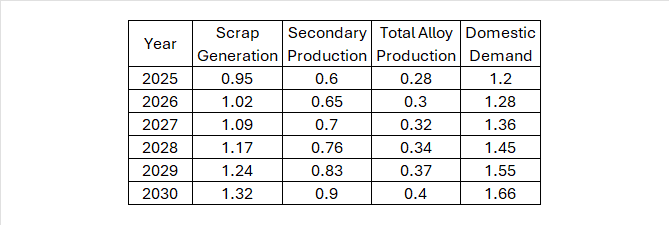
(Million tonnes, except alloy production where applicable.)
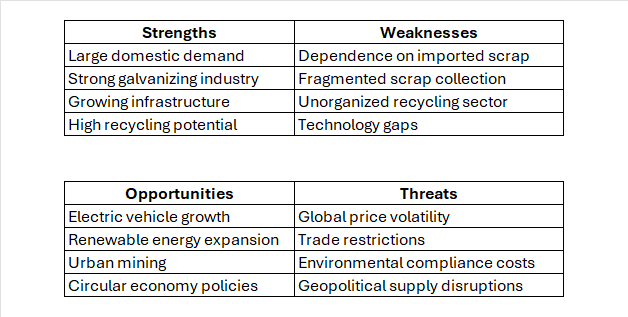
14. SWOT Analysis
Table 7: SWOT Analysis of India's Zinc Industry
 15. Importance of LOHAA Mobile Application of Android and iPhone / Portal for Zinc Scrap & Alloy Procurement
The LOHAA Mobile Application provides a dedicated digital B2B marketplace connecting
- Zinc producers,
- Recyclers,
- Alloy manufacturers,
- Foundries, galvanizers, die-casting companies,
- Traders,
- Importers & exporters,
- Engineering industries.
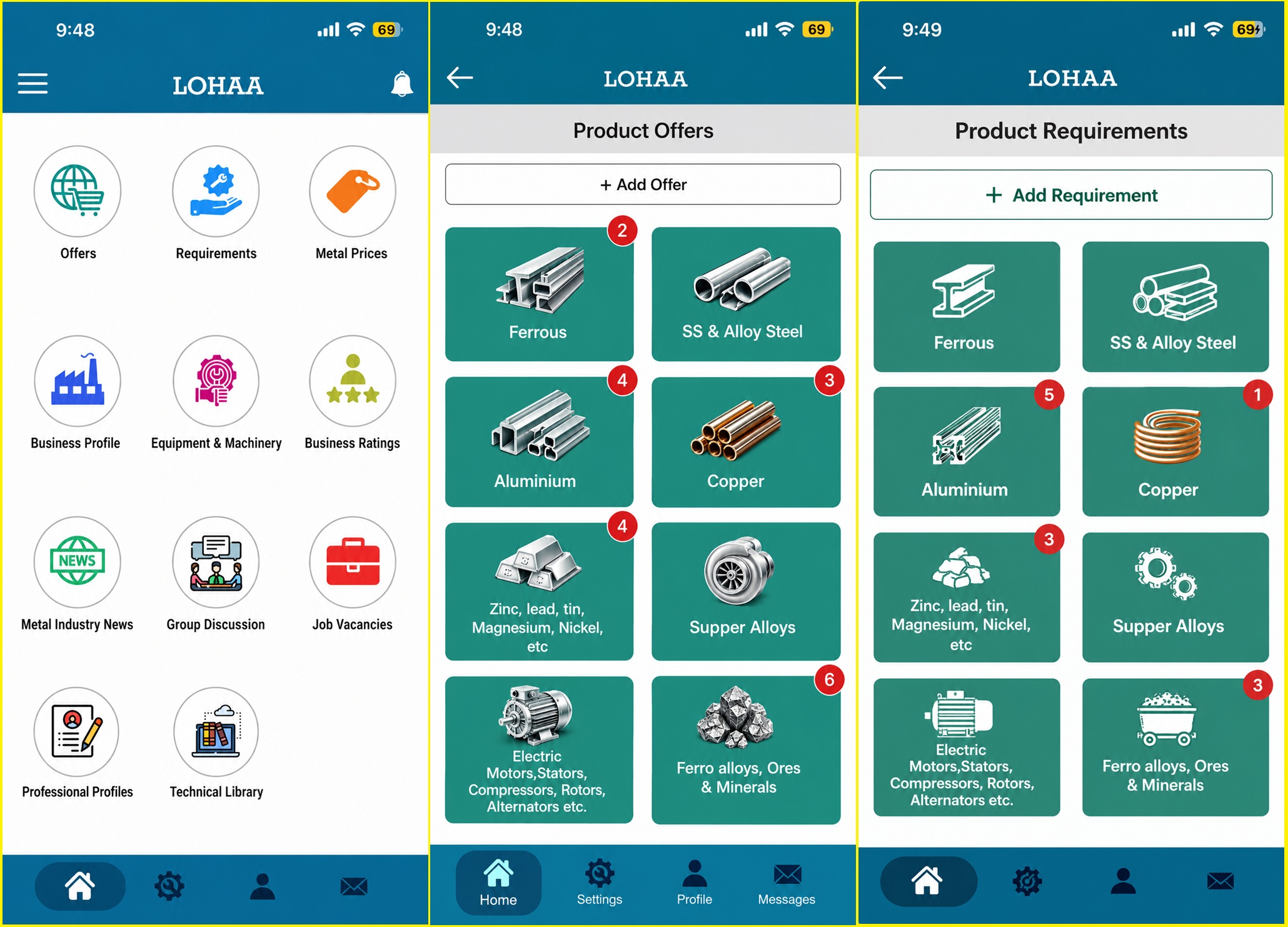
Key Features
• Purchase and sale of zinc scrap and zinc alloys
• Procurement of zinc ingots and secondary zinc
• Daily domestic and international zinc price updates
• Verified KYC-based buyers and sellers
• Publish buying requirements
• Publish selling offers
• Import and export business opportunities
• Company profile verification
• Machinery and equipment listings
• Industrial job postings
• Metal industry news
• Direct communication with verified businesses
• Digital inquiry management
• Market transparency and wider supplier access
LOHAA helps reduce procurement time, improve price discovery, and expand business networks across India's metal recycling ecosystem.
16. Major Zinc Scrap Categories (share in %)
- Galvanizing: 57%
- Die Casting: 16%
- Brass: 14%
- Chemicals: 6%
- Batteries: 3%
- Others: 4%
Estimated India's Zinc Consumption in Million MT
- 2025: 1.20 Million MT
- 2026: 1.28 Million MT
- 2027: 1.36 Million MT
- 2028: 1.45 Million MT
- 2029: 1.55 Million MT
- 2030: 1.66 Million MT
Zinc Scrap Collection Sources
- Galvanizing: 35%
- Construction: 18%
- Automobile: 16%
- Brass: 12%
- Engineering: 8%
- Electrical: 6%
- Others: 5%
Secondary Zinc Products
- SHG Zinc Ingots
- Zinc Alloy Ingots
- Zinc Oxide
- Zinc Dust
- Zinc Sulphate
- Brass Alloys
Future Growth Drivers
- Infrastructure: Very High
- Automobiles: High
- Renewable Energy: Very High
- Construction: High
- Engineering: High
- Electrical Equipment: Moderate to High
17. Conclusion
The zinc industry is expected to remain one of the fastest-growing segments of the global non-ferrous metals sector through 2030. Increasing demand for galvanized steel, die-cast components, brass products, renewable energy infrastructure, automobiles, and engineering goods will continue to support growth in both primary zinc production and secondary recycling. India is well positioned to strengthen its role in the global zinc value chain due to expanding infrastructure, rising manufacturing activity, and increasing emphasis on circular economy practices. Modernization of scrap collection, improved recycling technologies, and greater formalization of the recycling sector can significantly enhance resource efficiency and reduce dependence on imported raw materials. Digital B2B platforms such as the LOHAA Mobile Application further support this transition by connecting verified buyers and sellers, improving market transparency, simplifying procurement, and enabling efficient commercial transactions. Together, these developments are expected to make India's zinc industry more competitive, sustainable, and resilient over the 2025–2030 period.
18. References
1. International Lead and Zinc Study Group (ILZSG)
2. International Zinc Association (IZA)
3. World Bureau of Metal Statistics (WBMS)
4. United States Geological Survey (USGS) – Mineral Commodity Summaries
5. Indian Bureau of Mines (IBM)
6. Ministry of Mines, Government of India
7. Ministry of Commerce & Industry, Government of India
8. Directorate General of Commercial Intelligence and Statistics (DGCIS)
9. Hindustan Zinc Limited – Annual Reports
10. Gravita India Limited – Annual Reports
11. Pondy Oxides & Chemicals Limited – Annual Reports
12. NILE Limited – Annual Reports
13. Central Pollution Control Board (CPCB)
14. NITI Aayog – Circular Economy Reports
15. Ministry of Steel, Government of India
16. UN Comtrade Database
17. OECD Trade Statistics
18. International Resource Panel (UNEP)
19. International Energy Agency (IEA)
20. World Steel Association
21. International Trade Centre (ITC) Trade Map
22. London Metal Exchange (LME) Market Data
23. World Bank Commodity Markets Outlook
24. OECD Environment Directorate Publications
25. Industry publications and market intelligence reports on global zinc production, recycling, and trade.
By using digital trade platforms like LOHAA Mobile application, you can reach global buyers, source quality material, and strengthen long-term partnerships.
Download the Lohaa Metal Trading App for Android to access live scrap prices and real-time market updates anytime, anywhere.
Download the Lohaa Metal Trading App for iOS to access live scrap prices and real-time market updates anytime, anywhere.
(Notes: market and production volume estimates are synthesized from public market reports and industrial press; exact tonne figures for materials are not centrally published in a single comprehensive public dataset, therefore the numeric projection above is a conservative, documented estimate built from available intelligence and reasonable regional share assumptions.)


