
Investment Casting in India: Trends, SWOT & Capacity
1. Introduction
Investment casting, commonly referred to as the lost-wax casting process, is one of the most precise and sophisticated metal manufacturing techniques available today. With origins dating back over 5,000 years, this process has evolved significantly with advancements in materials science, automation, and engineering technologies. Today, it is widely used to produce complex, high-precision components across multiple industries.
In modern manufacturing ecosystems, investment casting plays a vital role in sectors such as aerospace, automotive, energy, medical devices, and industrial engineering. The ability to produce near-net-shape components with exceptional dimensional accuracy and surface finish makes it highly desirable, particularly for applications where performance and reliability are critical.
India has emerged as a major global hub for investment casting due to several key advantages:
• Competitive manufacturing costs
• Availability of skilled technical labor
• Strong export infrastructure
• Increasing domestic demand driven by industrial growth
• Government initiatives supporting manufacturing (e.g., Make in India)
The process minimizes machining requirements, reduces material wastage, and supports the production of intricate geometries that would be difficult or impossible with traditional methods.
As global industries shift toward lightweight, high-performance components and efficient supply chains, investment casting is gaining even greater importance—placing India in a strong position within the global market.
2. Investment Casting Process – Step-by-Step Explanation
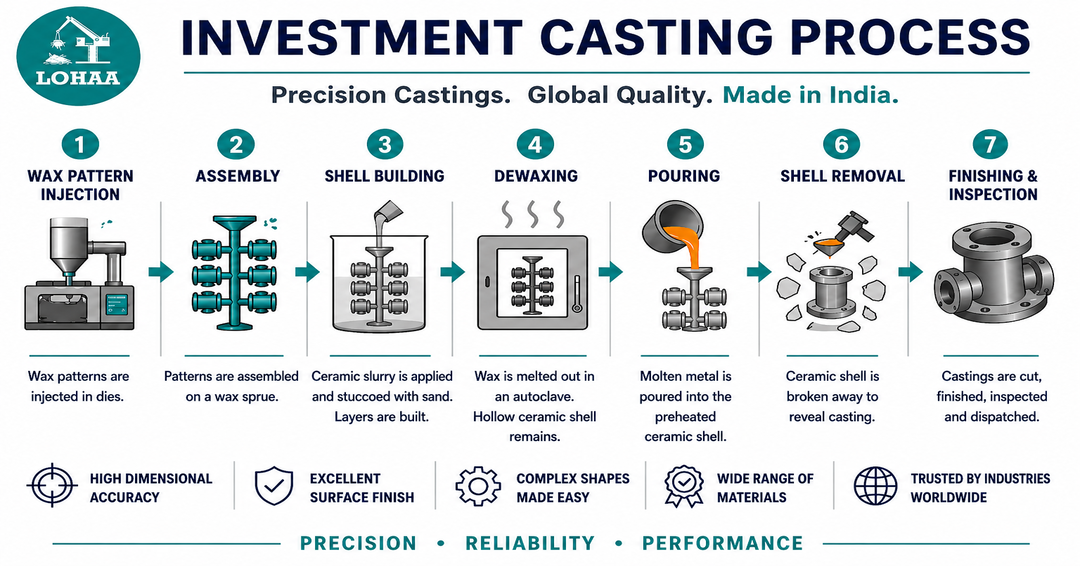
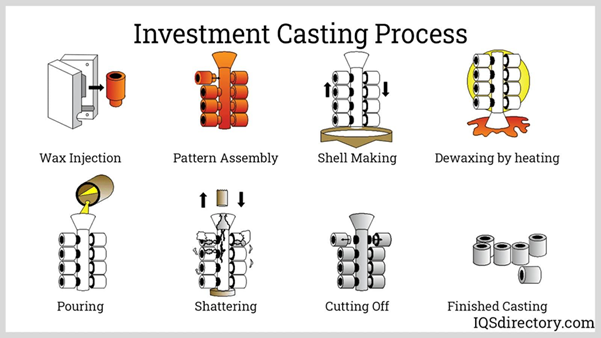
The investment casting process involves multiple stages, each requiring precision and quality control.
Below is a detailed breakdown:
2.1 Pattern Creation
The process begins with the creation of a wax pattern using injection molding. The wax is injected into a metal die that defines the exact geometry of the final component. This ensures high dimensional accuracy from the start.
2.2 Assembly (Tree Formation)
Multiple wax patterns are attached to a central wax sprue, forming a “tree.” This setup allows multiple parts to be cast simultaneously, improving efficiency and productivity.
2.3 Shell Building
The assembled tree is repeatedly dipped into a ceramic slurry and coated with fine sand (stucco). Each layer is allowed to dry before applying the next, gradually forming a strong ceramic shell.
2.4 Dewaxing
The ceramic-coated assembly is placed in a furnace or autoclave where the wax is melted and removed. This leaves behind a hollow mold cavity that replicates the exact geometry of the parts.
2.5 Metal Pouring
Molten metal (such as stainless steel, carbon steel, or superalloys) is poured into the preheated ceramic mold under controlled conditions.
2.6 Cooling and Solidification
The molten metal cools and solidifies within the mold, taking the exact shape of the cavity.
2.7 Shell Removal
Once solidified, the ceramic shell is broken away using mechanical or chemical methods to reveal the cast components.
2.8 Finishing
Final processes include:
• Cutting components from the tree
• Grinding and polishing
• Heat treatment
• Machining (if required)
• Surface finishing
3. Investment Casting vs Other Casting Processes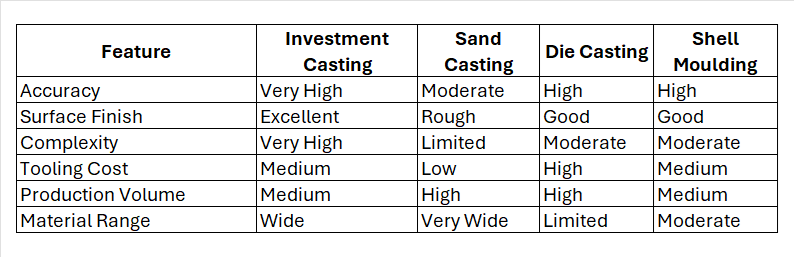 Key Insight:
Investment casting stands out when precision, complexity, and surface finish are critical. Sand casting is better suited for large and simple components, while die casting is ideal for high-volume production of non-ferrous metals.
4. Advantages of Investment Casting
Investment casting offers numerous technical and economic advantages:
• Exceptional dimensional accuracy (tight tolerances)
• Smooth surface finish (typically Ra 1.6–3.2 µm)
• Ability to produce highly complex shapes
• Reduced machining requirements
• Compatibility with a wide range of alloys
• Lower material wastage compared to machining
• Capability to produce thin-wall components
• Consistency in mass production
5. Limitations of Investment Casting
Despite its advantages, the process has certain constraints:
• Higher initial tooling costs compared to sand casting
• Longer production cycles due to multiple stages
• Not economical for very large components
• Fragility of ceramic molds during handling
• Requires skilled workforce and quality control systems
6. Maximum Weight Range in Investment Casting
| Category |
Weight Range |
| Micro Precision Parts | 0.01 – 0.5 kg |
| Standard Industrial Castings | 1 – 25 kg |
| Heavy Precision Castings | 25 – 100 kg |
| Specialized Foundries | Up to 250 kg |
Industry Insight:
Most Indian manufacturers focus on the 1–25 kg segment, which aligns well with export demand, especially in automotive and industrial sectors.
7. Indian Investment Casting Industry – Production Capacity
India has become one of the leading global suppliers of precision castings.
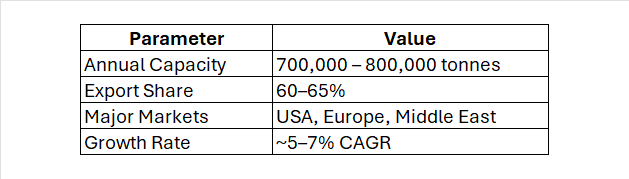 Key Insight:
India’s competitive edge lies in export-oriented manufacturing combined with cost efficiency.
8. Regional Distribution of Investment Casting in India
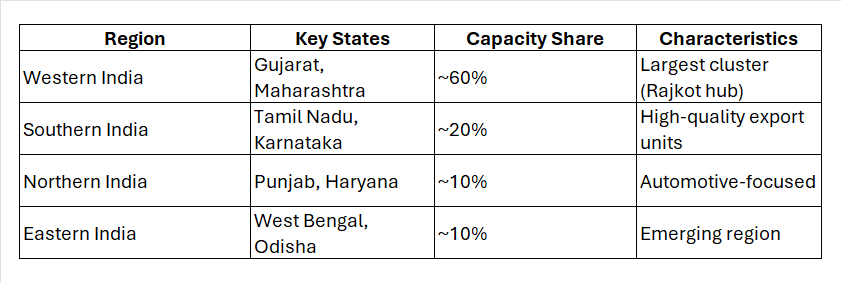 Observation:
Gujarat dominates due to strong infrastructure, cluster advantages, and export connectivity.
9. SWOT Analysis of Indian Investment Casting Industry
Strengths
• Cost competitiveness
• Skilled manpower
• Strong export ecosystem
• Wide alloy capabilities
Weaknesses
• Limited automation in small and medium enterprises
• Quality inconsistency across units
• Dependence on imported alloys
Opportunities
• Growth in aerospace and defence
• Expansion of EV and renewable sectors
• China+1 global sourcing strategy
• Government manufacturing initiatives
Threats
• Rising raw material prices
• Environmental regulations
• Competition from China and Southeast Asia
10. Leading Investment Casting Companies in India
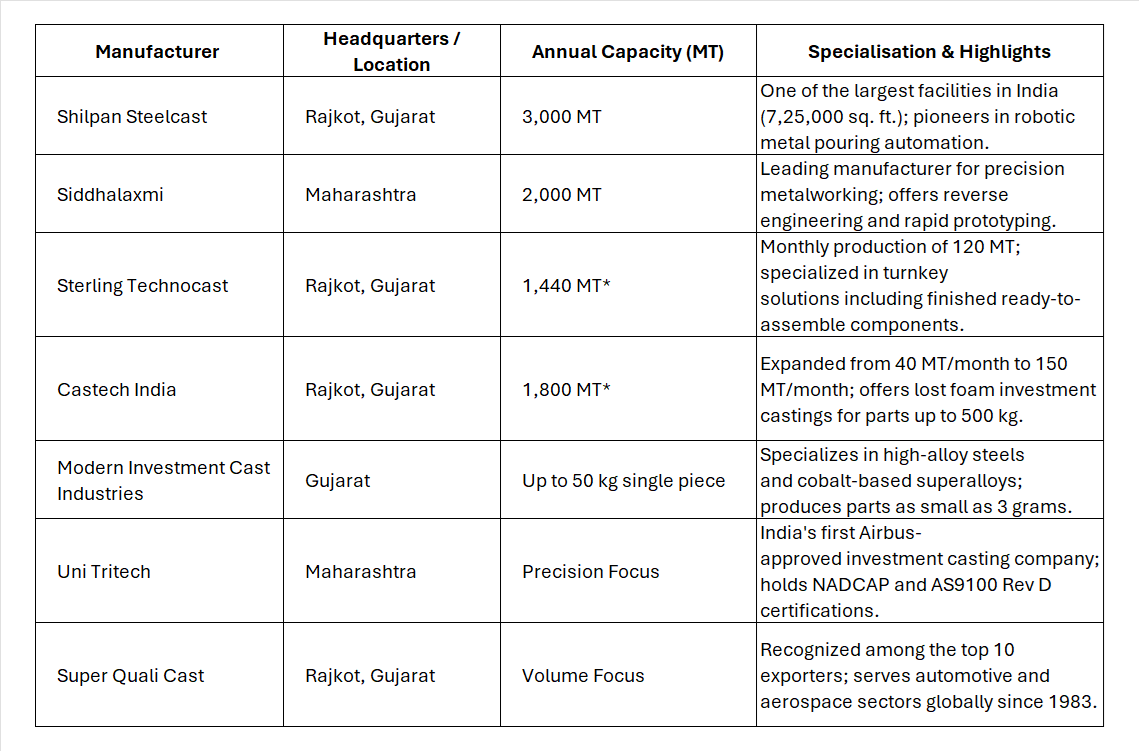
Gujarat dominates due to cluster advantages and export infrastructure.
India hosts several globally recognized manufacturers known for quality and export excellence. These companies specialize in sectors like aerospace, automotive, and industrial machinery, offering advanced casting solutions and value-added services.
Key strengths of leading players include:
• Automation and robotics adoption
• High-end certifications (NADCAP, AS9100)
• Capability in superalloys and precision components
• Strong export presence
11. Technology Adoption: India vs Global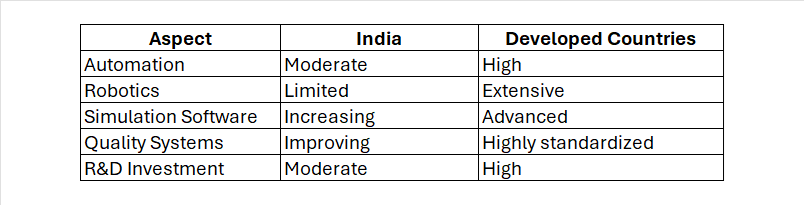
Trend:
India is rapidly adopting:
• 3D printed wax patterns
• Casting simulation software (MAGMA, ProCAST)
• Robotic shell building and pouring systems
12. Cost Structure of Investment Casting
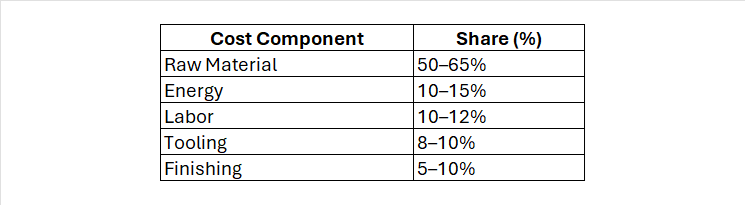
Key Insight:
Raw material cost—especially nickel and scrap—is the largest contributor to overall casting cost.
13. Scrap Price Impact on Casting Cost

Mechanism:
a). Scrap prices increase
b). Melting costs rise
c). Alloy surcharges are applied
d) Final casting prices increase
14. 2026 Market Trends (India & Global)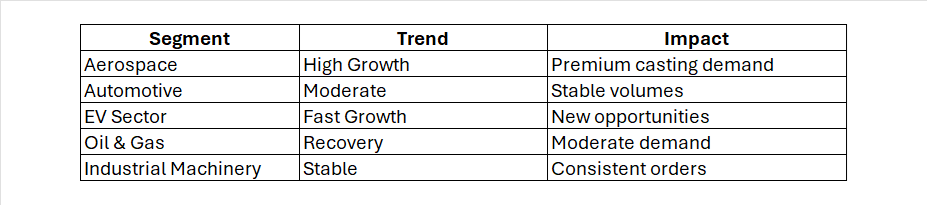 15. Market Size Growth Trend
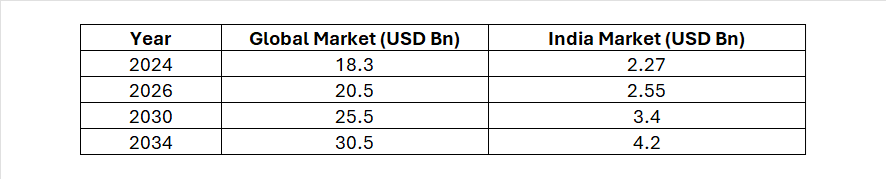 Insight:
India is growing faster than the global average, driven by exports and domestic demand.
16. Future Prospects of Investment Casting
Growth Drivers
• Aerospace and defense expansion
• EV and lightweight component demand
• Renewable energy equipment
• Global supply chain diversification
Technology Trends
• Industry 4.0 integration
• AI-based inspection systems
• Automation and robotics
• Sustainable and eco-friendly casting processes
17. Key Takeaways
• Investment casting is a high-precision manufacturing process
• India is a global leader in cost-effective precision castings
• Gujarat dominates the industry with ~60% capacity
• Raw material prices significantly affect costs
• Future growth driven by aerospace, EV, and defense sectors
• India benefits from global supply chain shifts
18. Conclusion
Investment casting in India is at a transformative stage, where traditional strengths such as cost efficiency and skilled labor are being enhanced by technological advancements and global integration.
While challenges such as raw material volatility and automation gaps persist, the industry is well-positioned to capitalize on increasing global demand, export opportunities, and emerging technologies.
With continued investments in automation, quality systems, and sustainability, India is expected to strengthen its position as a global
By using digital trade platforms like LOHAA Mobile application, you can reach global buyers, source quality material, and strengthen long-term partnerships.
Download the LOHAA Mobile application today and connect with verified scrap suppliers and manufacturers.
(Notes: market and production volume estimates are synthesized from public market reports and industrial press; exact tonne figures for materials are not centrally published in a single comprehensive public dataset, therefore the numeric projection above is a conservative, documented estimate built from available intelligence and reasonable regional share assumptions.)


