
Next Gen Aluminium Alloys for EV Manufacturing
Introduction
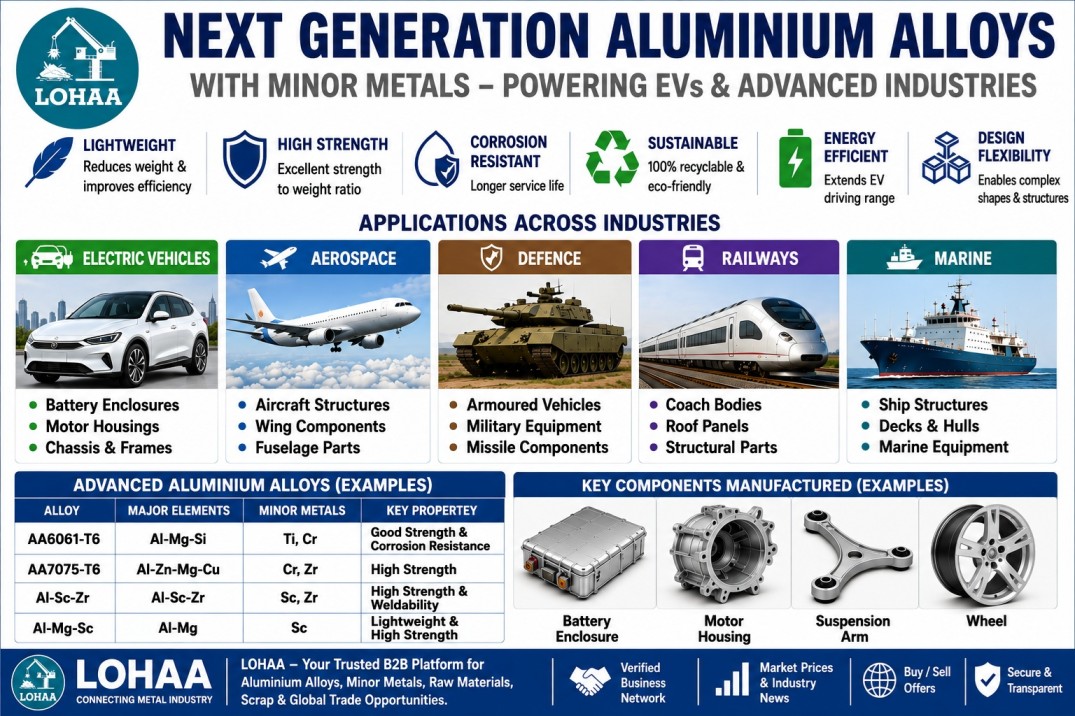
The rapid transition toward electric mobility, lightweight transportation, and sustainable manufacturing has significantly increased the demand for advanced aluminium alloys. Modern aluminium alloys are no longer based solely on aluminium, silicon, magnesium, and copper; they increasingly incorporate minor metals such as scandium, zirconium, titanium, vanadium, chromium, manganese, cobalt, and erbium to achieve exceptional strength, corrosion resistance, thermal stability, fatigue life, and weldability. These next-generation alloys are enabling manufacturers to produce lighter, stronger, and more durable components for electric vehicles (EVs), aerospace, defence, railways, marine, renewable energy, and industrial machinery. As global industries pursue carbon neutrality and energy efficiency, advanced aluminium alloys have become one of the most strategically important engineering materials.
Aluminium Alloys with Minor Metals and Their Importance in EVs
Electric vehicles require materials that reduce overall vehicle weight without compromising structural integrity or safety. Every kilogram of weight reduction contributes to longer driving range, improved acceleration, enhanced battery efficiency, and lower energy consumption. Aluminium has therefore become one of the preferred materials in modern EV manufacturing.
Traditional aluminium alloys such as the 5xxx, 6xxx, and 7xxx series already offer excellent strength-to-weight ratios. However, as battery packs become larger and crash safety requirements become more demanding, manufacturers increasingly rely on aluminium alloys enhanced with carefully controlled additions of minor metals.
Minor metals refine the grain structure, improve precipitation hardening, reduce hot cracking during welding, enhance corrosion resistance, and increase fatigue performance. These improvements allow aluminium components to withstand repeated loading, high temperatures, vibration, and harsh environmental conditions encountered during the vehicle's service life.
The benefits of advanced aluminium alloys in EVs include:
• Weight reduction of 30–50% compared with conventional steel.
• Increased battery driving range through lower vehicle mass.
• Improved crash energy absorption and passenger safety.
• Higher corrosion resistance for extended service life.
• Excellent thermal conductivity for battery cooling systems.
• Better recyclability, supporting sustainable manufacturing.
• Reduced carbon emissions during vehicle operation.
Today, aluminium accounts for a significant portion of the structural components in premium electric vehicles, including battery enclosures, chassis members, suspension systems, motor housings, and body structures.
New Generation Aluminium Alloys and Their Importance in Automotive & Engineering Industries
The automotive industry is undergoing one of the most significant material transformations in its history. Vehicle manufacturers are replacing traditional steel components with advanced aluminium alloys to improve fuel economy, comply with emission regulations, and enhance overall vehicle performance.
Beyond the automotive sector, industries such as aerospace, defence, marine, rail transportation, robotics, renewable energy, electronics, and industrial machinery are also adopting these alloys due to their exceptional combination of low density, high strength, and corrosion resistance.
Modern alloy development focuses on micro-alloying—adding very small quantities of strategic minor metals that significantly improve material performance.
Key characteristics of next-generation aluminium alloys include:
• Ultra-high strength comparable to some high-strength steels.
• Excellent fatigue resistance for cyclic loading.
• Superior weldability using advanced joining technologies.
• Improved thermal stability at elevated temperatures.
• Enhanced machinability for precision engineering.
• Better corrosion resistance in marine and industrial environments.
• High dimensional stability during heat treatment.
• Excellent recyclability and circular economy compatibility.
These alloys support emerging technologies such as giga-casting, battery-electric vehicle platforms, hydrogen-powered transportation, additive manufacturing, aerospace structures, and lightweight industrial automation systems.
Role of Minor Metals in Advanced Aluminium Alloys
Minor alloying elements are added in carefully controlled amounts, often below 1%, yet they have a profound effect on the alloy's microstructure and performance.
The following data summarizes the typical roles and primary functions of minor metals.
- Titanium (Ti) 0.05–0.20%: Grain refinement
- Zirconium (Zr) 0.05–0.25%: High-temperature strength
- Scandium (Sc) 0.10–0.40: Strength and weldability
- Vanadium (V) 0.05–0.20%: Fatigue and wear resistance
- Chromium (Cr) 0.05–0.35%: Corrosion resistance
- Manganese (Mn) 0.30–1.50%: Strength and ductility
- Cobalt (Co) 0.05–0.50%: Thermal stability
- Erbium (Er) 0.10–0.40%: Grain refinement and heat resistance
Chemical Composition
The following table presents representative aluminium alloy compositions incorporating minor metals. Actual compositions vary depending on alloy grade and application.
Table:1
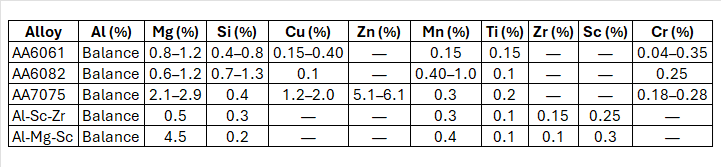 Table:2
Mechanical Properties
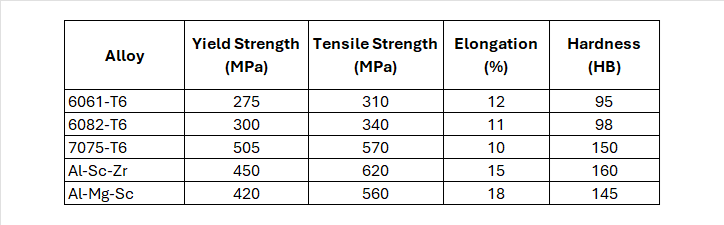
Minor metal additions significantly enhance the performance of aluminium alloys.
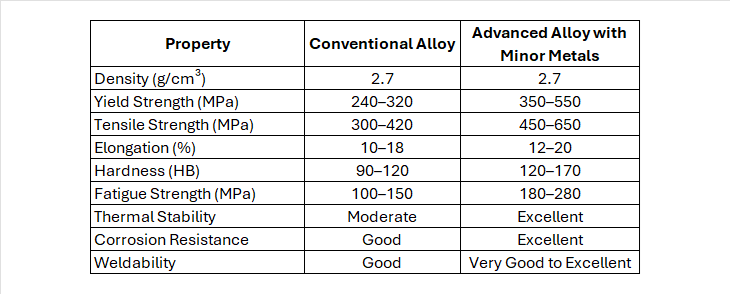 The improvements arise from grain refinement, precipitation strengthening, and enhanced resistance to recrystallization, making these alloys ideal for demanding engineering applications.
Applications
Advanced aluminium alloys containing minor metals are used in a wide range of industries where lightweight construction, durability, and high performance are critical.
Electric Vehicles (EVs)
• Battery enclosures
• Battery trays
• Structural crash members
• Motor housings
• Inverter and power electronics housings
• Suspension arms
• Wheel carriers
• Chassis cross members
• Body-in-white structures
• Thermal management components
Automotive
• Engine blocks
• Transmission housings
• Wheels
• Brake components
• Steering systems
• Roof structures
• Doors and hoods
• Bumpers
• Subframes
• Lightweight body panels
Aerospace
• Aircraft fuselage panels
• Wing structures
• Landing gear components
• Satellite structures
• Spacecraft frames
• Fuel tanks
Railways
• High-speed train bodies
• Bogie frames
• Passenger coaches
• Roof panels
• Structural beams
Marine
• Ship superstructures
• Offshore platforms
• Fast ferries
• Naval vessels
• Deck structures
Renewable Energy
• Wind turbine components
• Solar mounting systems
• Battery energy storage enclosures
Industrial Engineering
• Robotics
• Automation equipment
• Pressure vessels
• Heat exchangers
• Industrial machinery
• Precision engineering components
The incorporation of minor metals enables these alloys to meet increasingly demanding requirements for strength, durability, thermal performance, and sustainability, making them indispensable in the next generation of transportation and engineering technologies.
New Generation Aluminium Alloys with Minor Metals
The demand for lightweight, high-strength, corrosion-resistant, and sustainable materials has accelerated the development of next-generation aluminium alloys. These alloys incorporate carefully controlled additions of minor metals such as scandium (Sc), zirconium (Zr), titanium (Ti), chromium (Cr), vanadium (V), manganese (Mn), erbium (Er), cobalt (Co), hafnium (Hf), and rare earth elements to achieve exceptional mechanical properties while maintaining aluminium's inherent lightweight characteristics.
These advanced alloys are widely used in electric vehicles (EVs), aerospace, defence, railways, marine, renewable energy, robotics, additive manufacturing, and high-performance engineering applications.
Table 3: Major New Generation Aluminium Alloys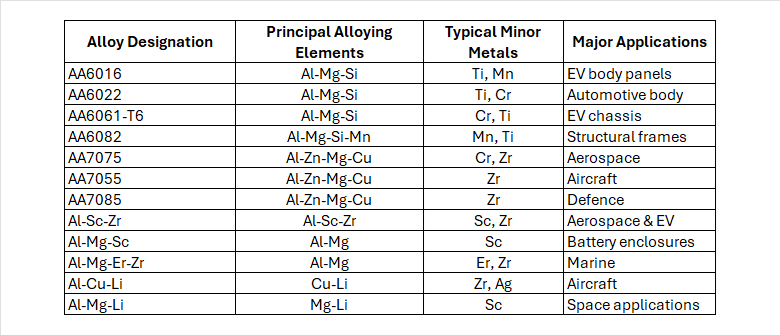 Table:4 Typical Chemical Composition (%)
 Table 5: Mechanical Properties
 Electric Vehicle (EV) Applications
Advanced aluminium alloys have become essential materials in modern EV manufacturing due to their lightweight characteristics and excellent crashworthiness.
Components
• Battery enclosure
• Battery tray
• Battery cooling plate
• Motor housing
• Rotor housing
• Inverter housing
• Control unit housing
• Suspension arm
• Steering knuckle
• Chassis
• Sub-frame
• Crash management system
• Cross members
• Door inner panel
• Hood
• Tailgate
• Wheels
• Heat exchanger
• Charging connector housing
• Structural casting (Gigacasting)
Aerospace Applications
The aerospace industry uses advanced aluminium alloys extensively because they combine high strength with excellent fatigue resistance.
Components
• Aircraft fuselage
• Wings
• Wing ribs
• Floor beams
• Bulkheads
• Landing gear structures
• Helicopter frames
• Spacecraft structures
• Satellite frames
• Fuel tanks
• Rocket components
Defence Applications
Military equipment requires materials capable of operating under extreme environmental conditions.
Components
• Armoured vehicle structures
• Missile launchers
• Radar systems
• Naval vessels
• Fighter aircraft
• Military drones
• Portable bridges
• Ammunition containers
Railway Applications
High-speed railway systems require lightweight materials to improve energy efficiency.
Components
• Coach body
• Roof panels
• Side walls
• Bogie frames
• Seat structures
• Doors
• HVAC systems
• Electrical cabinets
Marine Applications
Marine-grade aluminium alloys provide superior corrosion resistance in seawater environments.
Components
• Ship hulls
• Patrol boats
• Offshore platforms
• Ferries
• Yachts
• Deck structures
• Superstructures
• Propulsion systems
Table 6: Components Manufactured (Photo Placeholders)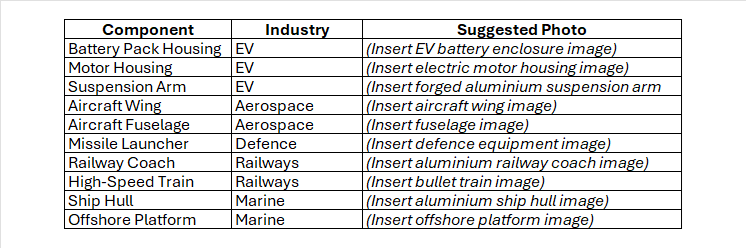
Leading Producing Countries
The production of advanced aluminium alloys is concentrated in countries with mature aluminium industries, advanced R&D capabilities, and strong automotive, aerospace, and defence sectors.
Table 7: Leading Producing Countries
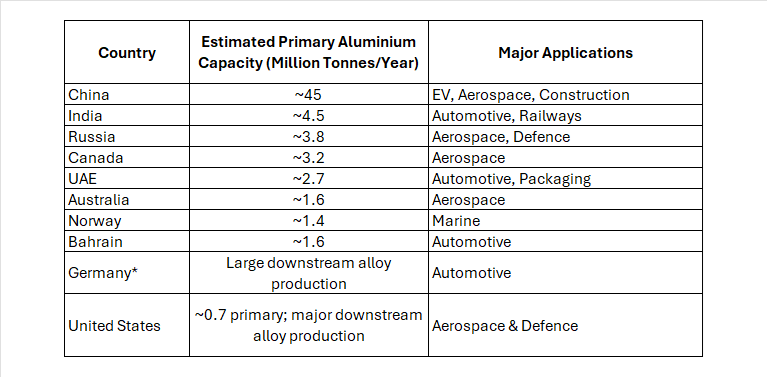 *Germany is a major producer of value-added aluminium alloys rather than primary aluminium.
Table 8: Major Manufacturers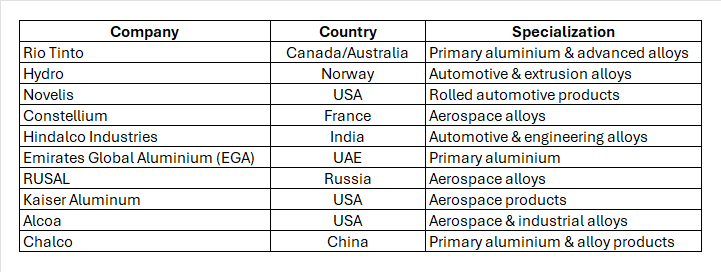 Top 9: Countries Producing Advanced Aluminium Alloys
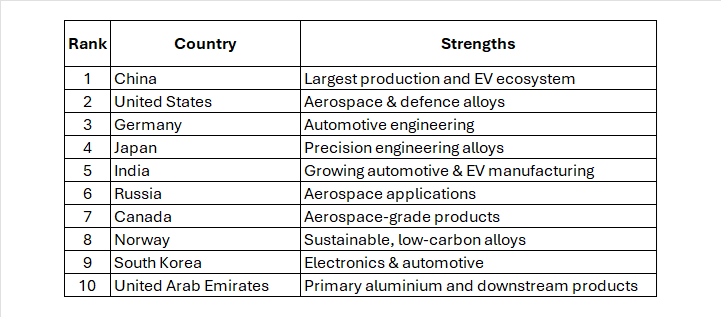 Table 10: Challenges in Developing New Generation Aluminium Alloys
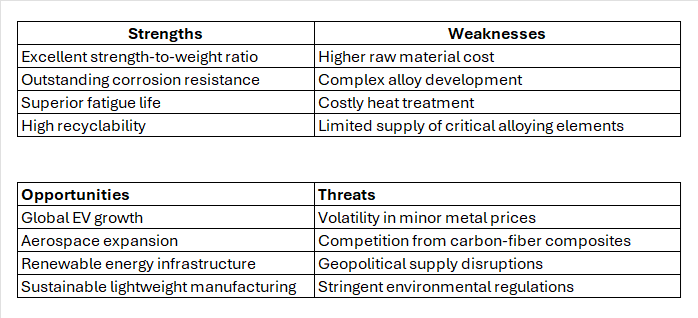
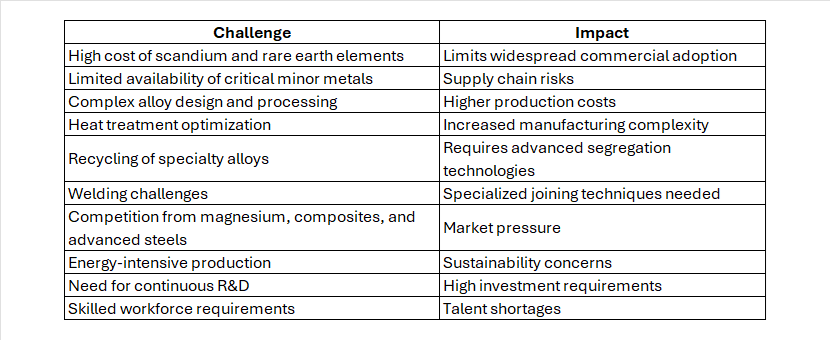 Table 11: SWOT Analysis
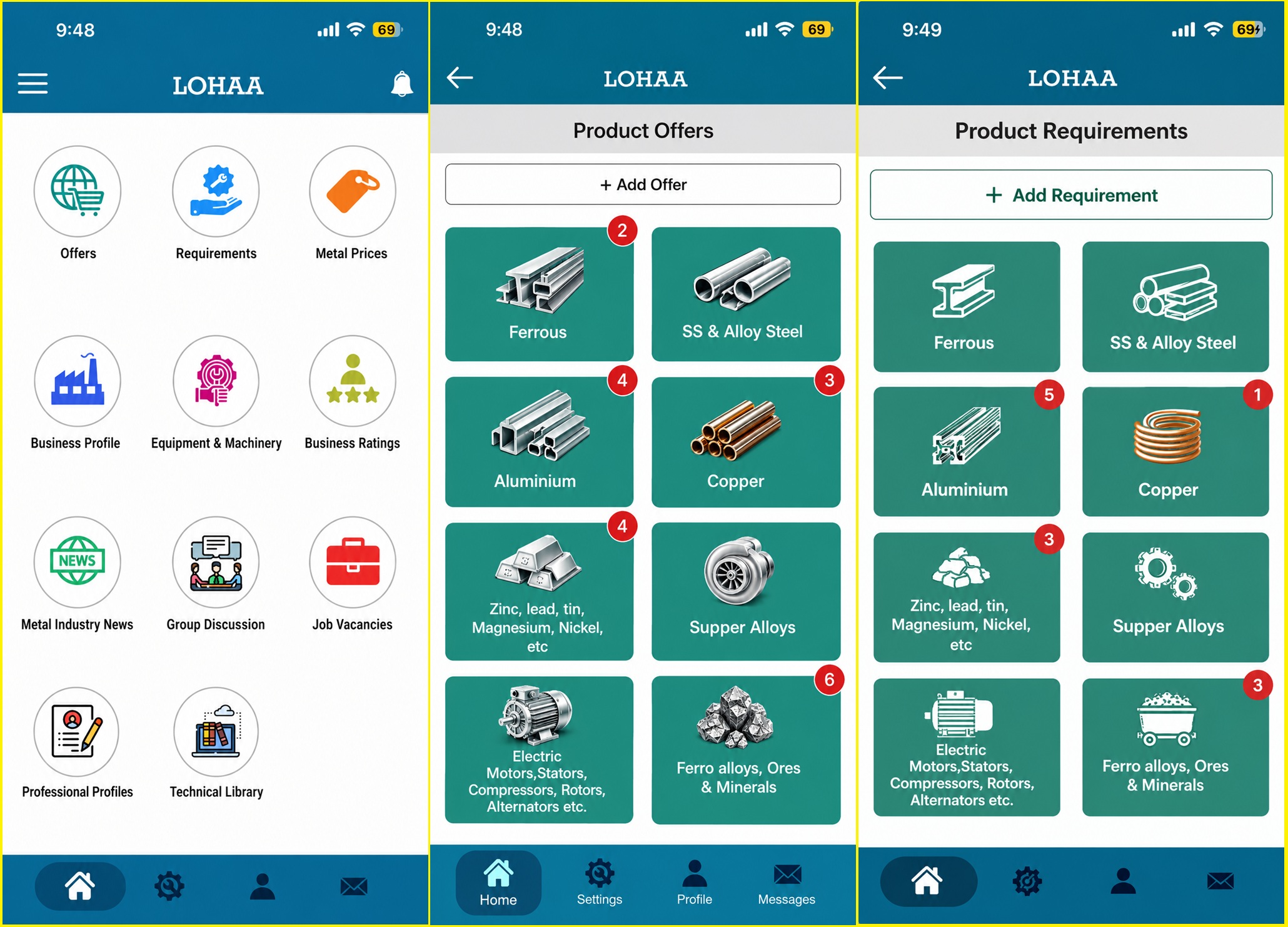
 Usage of LOHAA Mobile Application of Android and iPhone / Portal for Commercial Transactions
The LOHAA Mobile Application is an emerging digital B2B marketplace that connects manufacturers, recyclers, foundries, traders, importers, exporters, and buyers involved in the ferrous and non-ferrous metals industry. As demand for advanced aluminium alloys and critical minor metals grows, digital platforms play an increasingly important role in improving supply chain efficiency.
Key Benefits
• Connects buyers and sellers of aluminium alloys, scrap, and minor metals.
• Facilitates sourcing of alloying elements such as titanium, zirconium, cobalt, vanadium, chromium, manganese, and nickel.
• Supports domestic and international trade through a digital marketplace.
• Enables KYC-verified business networking.
• Publishes buy and sell offers, export opportunities, and procurement requirements.
• Provides daily market news and metal price updates.
• Promotes recycling and circular economy initiatives.
• Helps manufacturers identify new suppliers and customers.
• Reduces procurement lead time through direct business connections.
• Improves transparency and commercial efficiency in the metals value chain.
For manufacturers of advanced aluminium alloys, LOHAA can serve as a platform for sourcing raw materials, marketing finished products, and expanding domestic and global commercial reach.
Conclusion
Next-generation aluminium alloys strengthened with carefully controlled additions of minor metals such as scandium, zirconium, titanium, chromium, vanadium, manganese, cobalt, and erbium are reshaping modern manufacturing. These alloys provide an outstanding combination of lightweight characteristics, high strength, superior fatigue performance, excellent corrosion resistance, and enhanced thermal stability, making them indispensable for electric vehicles, aerospace, defence, railways, marine applications, and advanced engineering industries. As global industries pursue lower carbon emissions and improved energy efficiency, demand for high-performance aluminium alloys is expected to accelerate. Continued investment in alloy development, recycling technologies, and secure supply chains for critical minor metals will be essential to support future growth. At the same time, digital B2B platforms such as the LOHAA Mobile Application can strengthen commercial transactions by connecting verified buyers and sellers, improving supply chain visibility, and facilitating the efficient trade of aluminium alloys, minor metals, and recycled materials across domestic and international markets.
References
1. International Aluminium Institute (IAI) – Global Aluminium Statistics and Sustainability Reports.
2. U.S. Geological Survey (USGS) – Mineral Commodity Summaries: Aluminum, Cobalt, Vanadium, Titanium, Chromium, Manganese, Zirconium, Scandium.
3. ASM International – ASM Handbook, Volume 2: Properties and Selection – Nonferrous Alloys and Special-Purpose Materials.
4. The Aluminum Association – Technical Publications and Automotive Aluminium Design Guides.
5. Norsk Hydro – Technical literature on automotive and extrusion aluminium alloys.
6. Rio Tinto – Low-carbon aluminium and alloy product information.
7. Constellium – Aerospace and automotive aluminium alloy solutions.
8. Novelis – Automotive aluminium applications and sustainability reports.
9. NIST – Materials Data Repository and Standards.
10. SAE International – Aerospace and Automotive Material Specifications.
11. ASTM International – Aluminium Alloy Material Standards (ASTM B209, B221, B308, and related specifications).
12. European Aluminium – Reports on lightweight mobility and recycling.
13. Aluminium: Physical Properties, Characteristics and Alloys (TALAT Lecture Series).
14. Light Metals Conference Proceedings (The Minerals, Metals & Materials Society – TMS).
15. Peer-reviewed journals including Materials Science and Engineering A, Journal of Alloys and Compounds, and Acta Materialia for recent research on Sc-, Zr-, Ti-, and rare-earth-containing aluminium alloys.
By using digital trade platforms like LOHAA Mobile application, you can reach global buyers, source quality material, and strengthen long-term partnerships.
Download the Lohaa Metal Trading App for Android to access live scrap prices and real-time market updates anytime, anywhere.
Download the Lohaa Metal Trading App for iOS to access live scrap prices and real-time market updates anytime, anywhere.
(Notes: market and production volume estimates are synthesized from public market reports and industrial press; exact tonne figures for materials are not centrally published in a single comprehensive public dataset, therefore the numeric projection above is a conservative, documented estimate built from available intelligence and reasonable regional share assumptions.)


