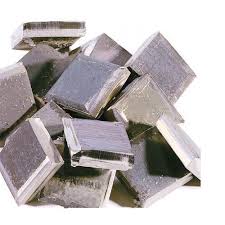
Nickel Price Forecast 2026: Key Trends, Supply Risks & Demand Outlook
Introduction: Nickel Enters 2026 Under Structural Pressure
Nickel enters 2026 as one of the most challenged metals in the global non-ferrous complex. Once considered a cornerstone material for the energy transition—particularly electric vehicles (EVs) and battery technologies—nickel has lost much of its bullish narrative over the past two years. Prices stagnated through 2025, averaging close to US$15,000 per metric ton (MT), and repeatedly failed to sustain rallies despite geopolitical risks, production curtailments outside Asia, and periodic speculative interest.
At the heart of nickel’s malaise lies a structural imbalance between supply and demand, driven primarily by the extraordinary expansion of Indonesian production. While Indonesia’s rise has secured global availability and lowered costs for stainless steel and battery producers, it has also overwhelmed the market, eroded margins, and reshaped global trade flows.
As 2026 approaches, the nickel market faces three defining questions:
- Will Indonesian supply growth finally slow in a meaningful way?
- Can demand recover, particularly from stainless steel and EV batteries?
- Is there any realistic path for nickel prices to return to levels supportive of non-Indonesian producers?
This article examines the top trends shaping nickel prices in 2026, covering supply dynamics, demand headwinds, policy shifts, and realistic price scenarios—providing actionable insight for metal traders, manufacturers, recyclers, and procurement teams, including LOHAA platform participants.
Nickel Price Performance in 2025: A Year of Stagnation
Nickel prices spent most of 2025 locked in a narrow and frustrating range. After briefly touching higher levels early in the year, prices drifted steadily lower, with the London Metal Exchange (LME) cash price spending extended periods near US$15,000/MT and occasionally dipping below US$14,500/MT.
Several factors contributed to this stagnation:
- Persistent oversupply from Indonesia
- Weak sentiment across base metals
- Soft demand from construction and manufacturing
- Slowing momentum in EV battery demand
Despite periodic supply disruptions elsewhere—particularly among higher-cost Western producers—any bullish impulses were quickly absorbed by excess material entering the market.
By late 2025, nickel had become emblematic of a broader trend in industrial metals: abundant availability but insufficient demand growth to absorb it profitably.
Nickel Supply in 2026: Indonesia Remains the Decisive Force
Indonesia’s Dominance Reshapes the Global Nickel Market
The most significant driver of nickel’s performance over the past several years has been Indonesia’s meteoric rise as the world’s dominant producer. What began as a policy-driven effort to move up the value chain has resulted in unprecedented growth in nickel ore mining, smelting, and refining capacity.
According to estimates from the US Geological Survey (USGS), Indonesia produced approximately 2.2 million metric tons of nickel in 2024, a dramatic increase from around 800,000 MT in 2019. This expansion fundamentally altered global supply dynamics, pushing traditional producers in Australia, Canada, Europe, and Russia into a defensive posture.
Quota Changes and Ore Output Expansion
In February 2025, the Indonesian government revised its nickel ore quota system, raising permitted output to 298.5 million wet metric tons (WMT), up from 271 million WMT in 2024. While officials framed the move as targeted and controlled—focused on major production zones—it nonetheless added further pressure to an already saturated market.
The impact was immediate and visible:
- Nickel availability surged
- Prices weakened further
- Exchange inventories ballooned
By November 2025, LME nickel stocks had risen to approximately 254,000 MT, up sharply from around 164,000 MT at the start of the year. These inventory builds underscored the market’s inability to absorb current production volumes.
LME Inventories and Profitability Pressure
The rise in exchange stocks coincided with falling prices, pushing nickel toward the lower end of profitability, even for relatively low-cost Indonesian operations. By late 2025, nickel prices had slipped to around US$14,295/MT, a level that strained margins across the industry.
While Indonesian producers benefit from integrated operations, access to low-cost energy, and government support, prolonged price weakness raises broader concerns:
- Capital discipline deteriorates
- Western producers face closures
- Investment appetite declines
Several non-Indonesian producers curtailed or suspended operations in 2024–2025 when prices failed to justify continued output, highlighting the geographical imbalance in industry viability.
Will Indonesia Cut Supply in 2026?
Proposed Output Reductions: Signal or Substance?
Facing mounting pressure, Indonesian authorities have floated the idea of reducing nickel ore output to approximately 250 million MT in 2026, down from figures exceeding 370 million WMT in earlier plans. If implemented, such cuts would mark a significant policy shift.
However, market participants remain cautious. Discussions over final quotas are ongoing, and past signals of restraint have often been diluted in practice.
According to analysts, any reduction would need to be deep and sustained to materially change global fundamentals.
Surplus Still Expected in 2026
Ewa Manthey, commodities strategist at ING, has cautioned that even with modest cuts, the global nickel market is still expected to remain in surplus:
“The global market is still forecast to remain in surplus — around 260,000 MT in 2026 — so further cuts would need to be significant to alter fundamentals.”
This view is echoed by other institutions, including major producers, which continue to project oversupply well into 2027.
Indonesian Policy Changes: Royalties and Licensing
Beyond quotas, Indonesia introduced several policy changes in 2025 that could influence production behavior over time.
Dynamic Royalty Structure
In April 2025, Indonesia replaced its flat 10 percent royalty with a sliding scale of 14–18 percent, linked to nickel prices. While designed to increase state revenue during price upswings, the policy offers limited relief during downturns and may marginally discourage aggressive output expansion.
Shortened Mining License Validity
In October 2025, the government reduced mining license validity from three years to one, increasing oversight and enabling tighter control over annual production plans.
While these measures suggest a desire for greater discipline, most analysts expect their impact to be incremental rather than transformative in 2026.
Nickel Demand in 2026: Structural Weakness Persists
Stainless Steel: Still the Core Demand Driver
Nickel’s largest end-use remains stainless steel, which accounts for more than 60 percent of global nickel consumption. Unfortunately for the market, stainless demand growth remains constrained—particularly in China.
China’s property sector, a major consumer of stainless steel, has struggled since its collapse in 2020. Despite government efforts to stabilize the market in 2024 and early 2025, the downturn has not been reversed.
Recent data indicates:
- New home sales remain deeply negative
- Construction activity is subdued
- Infrastructure stimulus has limited spillover
As a result, stainless steel producers have been reluctant to expand output aggressively, limiting nickel demand growth.
China’s Property Crisis and Nickel Consumption
China’s housing market weakness continues to cast a long shadow over nickel demand. Sales declines exceeding 30 percent year-on-year at various points in 2025 underscore the depth of the structural adjustment underway.
Even if broader Chinese economic growth stabilizes, property-linked demand for stainless steel—and therefore nickel—is unlikely to return to pre-2020 levels in the near term.
For nickel, this means baseline demand growth remains modest at best.
EV Batteries: Nickel’s Growth Narrative Weakens
Shift Away from Nickel-Rich Chemistries
One of the most consequential developments for nickel has been the shift in EV battery chemistry. Over the past decade, nickel-manganese-cobalt (NMC) batteries were widely viewed as the future, thanks to their high energy density and long driving range.
However, advances in lithium-iron-phosphate (LFP) batteries have changed the equation:
- Comparable driving ranges (700+ km)
- Lower production costs
- Improved safety and stability
- Reduced exposure to volatile metals
Major battery producers, including CATL, have increasingly favored LFP, particularly for mass-market vehicles.
Slower Growth in Nickel Battery Demand
While overall EV sales continue to rise globally, nickel intensity per vehicle is declining. Data from late 2025 suggests:
- Nickel battery demand growth near 1 percent year-on-year
- LFP battery demand growth closer to 7 percent
This divergence indicates that much of nickel’s demand growth is now volume-driven rather than chemistry-driven, limiting upside potential.
Policy Reversals in the US and Europe
Nickel demand from EVs has also been affected by policy shifts in key Western markets.
In the United States, the expiration of the US$7,500 EV tax credit in late 2025 led to a sharp drop in EV sales momentum. Early data shows sales declines exceeding 40 percent quarter-on-quarter, prompting automakers to reassess electrification strategies.
Similarly, the European Union’s decision to soften its 2035 internal combustion engine ban has dampened long-term EV demand expectations.
For nickel, these developments reinforce a bearish narrative: the energy transition is progressing, but more slowly and with less nickel intensity than previously assumed.
Nickel Price Forecast for 2026: Realistic Scenarios
Base Case: Prices Remain Under Pressure
Most analysts expect nickel prices to remain under pressure throughout 2026. ING forecasts average prices around US$15,250/MT, while the World Bank projects approximately US$15,500/MT, rising modestly in 2027.
These forecasts reflect:
Persistent market surplus
Ample inventories
Limited demand acceleration
Upside Risks: Limited but Not Impossible
Upside risks include:
- Unexpected Indonesian supply disruptions
- Geopolitical events affecting major producers
- Faster-than-expected recovery in stainless or EV demand
However, sustained prices above US$19,000–20,000/MT appear unlikely without coordinated and substantial supply restraint.
Bear Case: Prolonged Oversupply
In a downside scenario—where Indonesian output remains high and demand weakens further—prices could remain near the lower end of the cost curve, challenging even low-cost producers.
Implications for Traders, Manufacturers, and Scrap Markets
For nickel traders, 2026 is likely to remain a market defined by range-bound pricing, volatility driven by policy headlines, and limited structural upside.
For manufacturers, continued price weakness offers cost stability but raises concerns about long-term supply diversity.
For scrap processors and recyclers, low prices may compress margins, but regulatory and ESG pressures could support recycled material demand over time.
Conclusion: Nickel’s Recovery Remains Elusive
As 2026 approaches, nickel remains caught in a difficult transition. Oversupply—rooted in Indonesia’s rapid expansion—continues to outweigh demand growth from stainless steel and EV batteries. Policy shifts, technological change, and slowing energy transition momentum further complicate the outlook.
While prices may stabilize, a meaningful recovery appears unlikely without deep, coordinated supply cuts or a dramatic demand resurgence. Until then, nickel is likely to remain one of the most structurally challenged metals in the base metals complex.
For market participants, success in 2026 will depend less on price optimism and more on strategic procurement, risk management, and adaptability to a fundamentally changed nickel landscape.