
Stainless Steel Alloy Price Trends 2026
1. Introduction
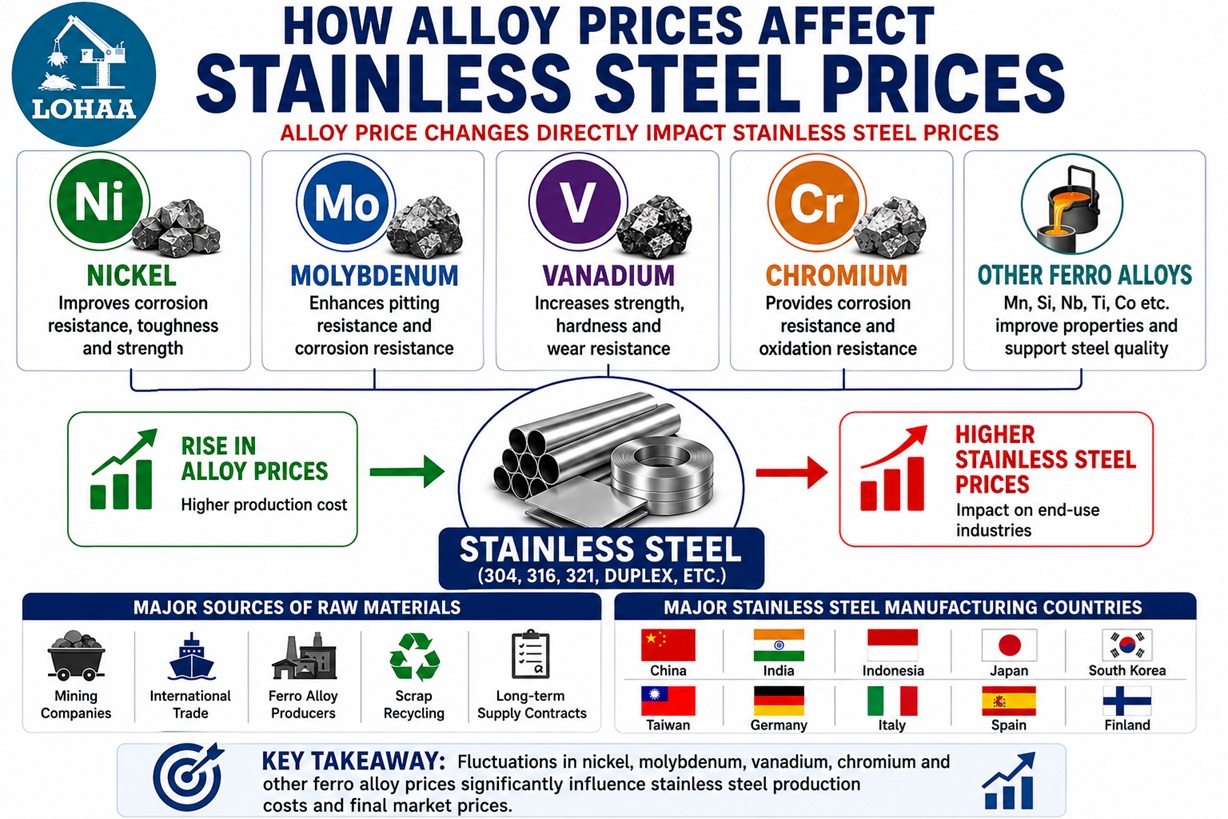
Stainless steel has become one of the world's most important engineering materials because of its excellent corrosion resistance, durability, recyclability, and mechanical strength. It is extensively used in construction, automotive, aerospace, medical, food processing, chemical plants, energy, marine, and household applications. The cost of stainless steel is primarily influenced by fluctuations in alloying elements such as nickel, chromium, molybdenum, vanadium, manganese, and ferro alloys. Changes in mining output, geopolitical events, environmental regulations, energy costs, and international trade policies significantly affect stainless steel production costs worldwide. Understanding these factors helps manufacturers, traders, buyers, and recyclers make informed purchasing and investment decisions.
2. What is Stainless Steel?
Stainless steel is an iron-based alloy containing a minimum of 10.5% chromium. Chromium forms a passive oxide layer that protects the steel from corrosion.
Different grades contain additional alloying elements including:
• Nickel
• Molybdenum
• Vanadium
• Titanium
• Niobium
• Manganese
• Silicon
• Nitrogen
• Copper
Each alloy improves specific properties including:
• Corrosion resistance
• Heat resistance
• Mechanical strength
• Wear resistance
• Weldability
• Toughness
• Formability
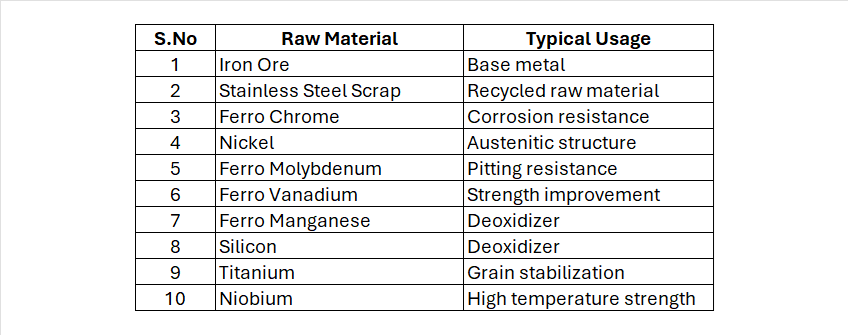
3. Major Raw Materials Used in Stainless Steel Production
4. Effect of Nickel Prices on Stainless Steel Prices
Nickel is the single largest cost contributor in most austenitic stainless steel grades.
Major Nickel Producing Countries
Rank Country
- Indonesia
- Philippines
- Russia
- Canada
- Australia
- New Caledonia
Price Impact
Nickel contributes approximately:
• 35–60% of 304 stainless steel production cost
• 45–65% of 316 stainless steel production cost
Whenever nickel prices increase:
• Stainless steel surcharge rises
• Production costs increase
• Inventory valuation rises
• Stainless scrap prices increase
A 10% increase in nickel prices may increase finished stainless steel prices by approximately 4–8%, depending on the grade.
5. Effect of Chromium & Ferro Chrome Prices
Chromium provides corrosion resistance.
Major Ferro Chrome Producers
- South Africa: Largest producer
- Kazakhstan: High-grade ore
- India: Major exporter
- Turkey: Growing producer
- Zimbabwe: Emerging supplier
Chromium prices depend upon:
• Electricity costs
• Chrome ore availability
• Mining regulations
• Export duties
• Logistics costs
Since ferro chrome constitutes nearly 18–30% of stainless steel composition, any increase directly impacts manufacturing costs.
6. Effect of Molybdenum Prices
Molybdenum significantly improves:
• Chloride resistance
• Pitting resistance
• High temperature strength
Commonly used in:
• Grade 316
• Duplex Stainless Steel
• Super Duplex
• Marine applications
Major Producers Countries
- China
- Chile
- USA
- Peru
- Mexico
Molybdenum prices are highly volatile due to limited production and growing demand from energy, aerospace, and defense industries.
7. Effect of Vanadium Prices
Vanadium enhances:
• Strength
• Fatigue resistance
• Wear resistance
Used in:
• Tool steels
• High-strength stainless steels
• Aerospace alloys
• Nuclear applications
Major Producing Countries
- China
- Russia
- South Africa
- Brazil
Vanadium prices are sensitive to:
• Steel demand
• Battery industry growth
• Mining production
• Export restrictions
8. Effect of Other Alloying Elements
- Titanium: Prevents carbide precipitation
- Niobium High-temperature stability
- Copper Corrosion resistance
- Nitrogen Improves strength
- Silicon Oxidation resistance
- Manganese Improves toughness
Although their consumption is relatively lower than nickel and chromium, sudden price increases affect specialty stainless steel grades.
9. Major Sources of other Ferro Alloys
Ferro Silicon
• China
• Norway
• Russia
• Brazil
Ferro Manganese
• South Africa
• Australia
• India
• Ukraine
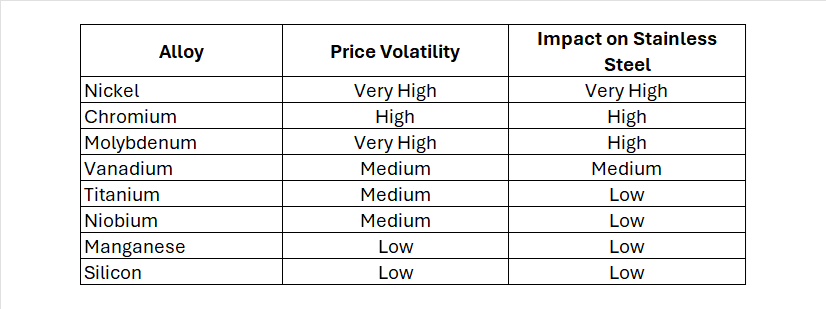
10. Summary of Alloy Price Impact
11. Import & Export Constraints Affecting Stainless Steel Manufacturers
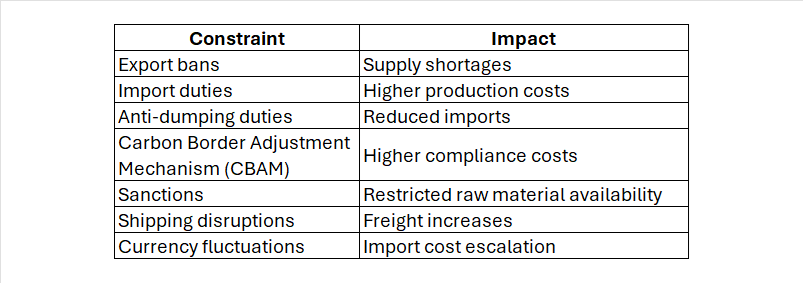
International trade has become increasingly complex due to geopolitical tensions, environmental regulations, and resource nationalism.
Major Constraints
 Examples
• Indonesia controls nickel exports to encourage domestic processing.
• South Africa faces electricity shortages affecting ferro chrome production.
• Russia-related sanctions have disrupted alloy supply chains.
• Environmental regulations in China periodically reduce ferro alloy production.
• EU carbon policies increase compliance costs for exporters.
12. Cost Factors of Various Alloying Elements in Stainless Steel Grades
Approximate alloy contribution: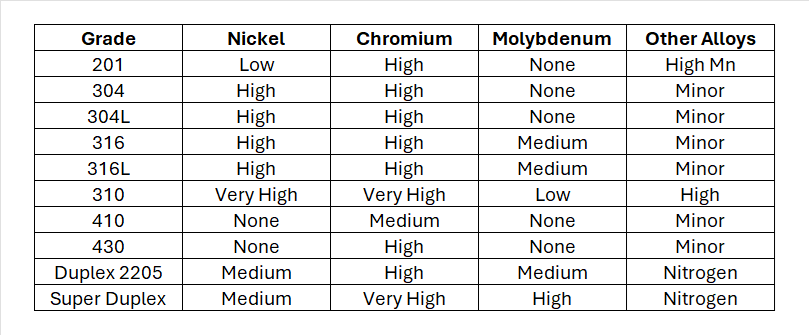 13. Stainless Steel Grades and Major Applications
- 201: Kitchenware
- 304: Food processing
- 304L: Chemical plants
- 316: Marine equipment
- 316L: Pharmaceutical industry
- 310: High-temperature furnaces
- 410: Cutlery
- 420: Surgical instruments
- 430: Automotive trim
- Duplex: Oil & Gas
- Super Duplex: Offshore platforms
14. Role of Stainless Steel Scrap Recycling
Over 60% of stainless steel production worldwide uses recycled scrap.
Benefits include:
• Lower carbon emissions
• Reduced mining dependence
• Lower energy consumption
• Cost savings
• Circular economy
Major scrap sources include:
• Manufacturing scrap
• End-of-life vehicles
• Construction waste
• Industrial equipment
• Household appliances
15. Major Sources of Different Types of Stainless Steel Scrap Generation
Stainless steel scrap is generated from two major sources:
a) Prompt (Industrial) Scrap
- Generated during manufacturing
- Cutting, stamping, machining and fabrication
- High purity
- Easily recyclable
- Represents around 35–40% of total stainless steel scrap supply.
b) Obsolete (End-of-Life) Scrap
- Generated from products reaching end of useful life
- Buildings
- Vehicles
- Household appliances
- Chemical plants
- Oil & gas equipment
- Medical equipment
- Represents around 60–65% of global stainless steel scrap availability.
16. Major Scrap Generating Industries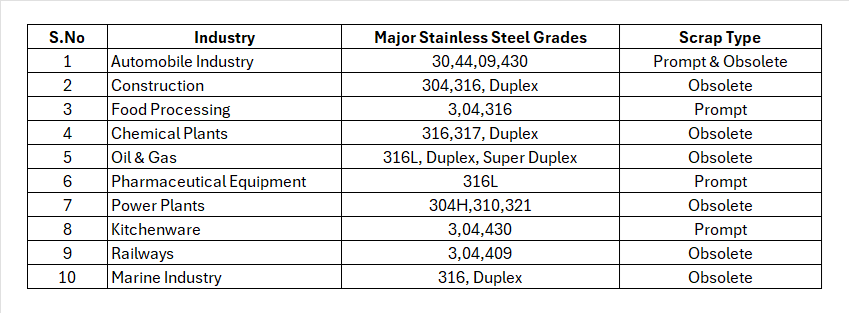
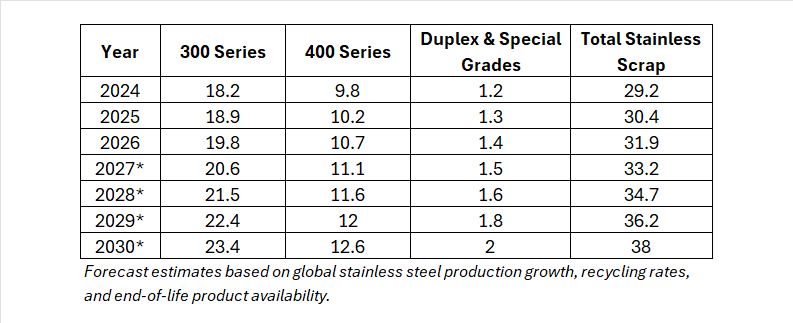
17. Global Stainless Steel Scrap Generation Forecast
(Million Metric Tons)
 18. Major Stainless Steel Scrap Exporting Countries
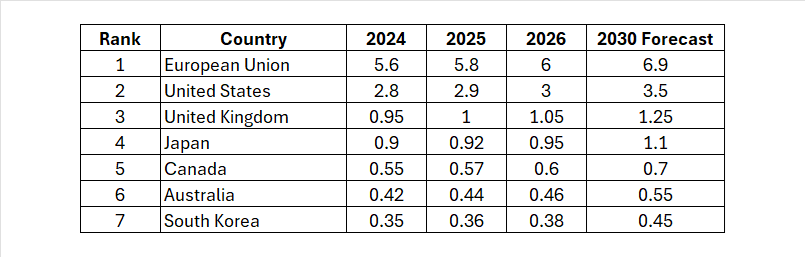 Total Global Exports (Million Tons)
Year
- 2024: 12.8
- 2025: 13.2
- 2026: 13.7
- 2030* : 15.8
*Projections
19. Major Stainless Steel Scrap Importing Countries
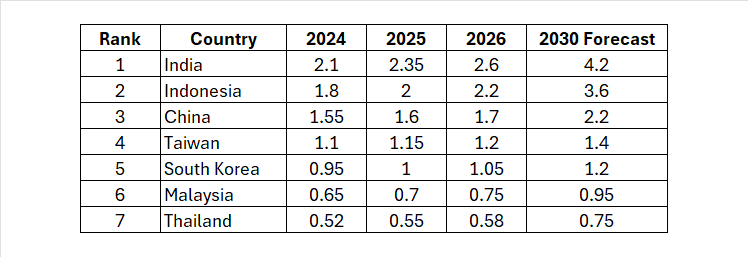 Countries Expected to Face Stainless Steel Scrap Shortage (2026–2030)
- India: High
- Indonesia: High
- China: Medium
- Vietnam: Medium
- Malaysia: Medium
- Middle East: High
20. Reasons Behind the Future Scrap Shortage
a). Rising Stainless Steel Production
Global stainless steel production is expected to exceed 70 million tonnes annually by 2030, increasing demand for recycled feedstock.
b). Expansion of Electric Arc Furnace (EAF) Steelmaking
More stainless steel producers are shifting toward EAF technology, which relies heavily on scrap.
c). Scrap Retention Policies
Many governments are discouraging exports of strategic scrap to secure domestic raw materials.
d). Growing Circular Economy
Countries are prioritizing domestic recycling to reduce carbon emissions and dependence on virgin raw materials.
e). Slower Growth in Obsolete Scrap
Stainless steel products often remain in service for 20–50 years, delaying the availability of end-of-life scrap.
f). Increased Demand from Green Energy
Wind turbines, hydrogen infrastructure, electric vehicles, desalination plants, and battery manufacturing are increasing consumption of stainless steel.
g). Geopolitical Risks
Trade restrictions, sanctions, shipping disruptions, and regional conflicts can interrupt scrap flows.
Effect of CBAM on Stainless Steel Scrap Trade
The European Union's Carbon Border Adjustment Mechanism (CBAM) is reshaping the stainless steel supply chain in several ways:
Positive Effects
- Encourages greater use of recycled stainless steel due to its lower carbon footprint.
- Increases investment in scrap collection and recycling infrastructure.
- Promotes cleaner production technologies and higher recycling rates.
Potential Challenges
- Reduced exports of high-quality stainless steel scrap from the EU as domestic demand rises.
- Increased competition among importing countries such as India and Indonesia for available scrap.
- Higher compliance costs for exporters supplying carbon-intensive stainless steel products to the EU.
- Potential price increases for premium-grade stainless steel scrap due to stronger European demand.
Expected Market Impact (2026–2030)
- EU Scrap Availability: Decrease in exports
- Global Scrap Prices: Moderate to Strong Increase
- Recycling Investments: Increase
- Virgin Alloy: Demand Slight Decline
- Demand for Low-Carbon Stainless Steel: Strong Growth
- Scrap Collection: Efficiency Significant Improvement
Overall Outlook
By 2030, the global stainless steel industry is expected to face a tighter supply of high-quality scrap, particularly 300-series and duplex grades, driven by increasing EAF capacity, stricter environmental regulations, and CBAM-related policies. Countries with limited domestic scrap generation—such as India and Indonesia—are likely to remain dependent on imports, while Europe is expected to retain more of its stainless steel scrap to support low-carbon manufacturing and comply with its circular economy objectives.
21. Top Major Exporters of Various Types of Stainless Steel Scrap (2025–2026)
The global stainless steel scrap trade is dominated by developed economies with mature recycling industries. These countries export different grades of stainless steel scrap based on their industrial base, consumption patterns, and recycling infrastructure.
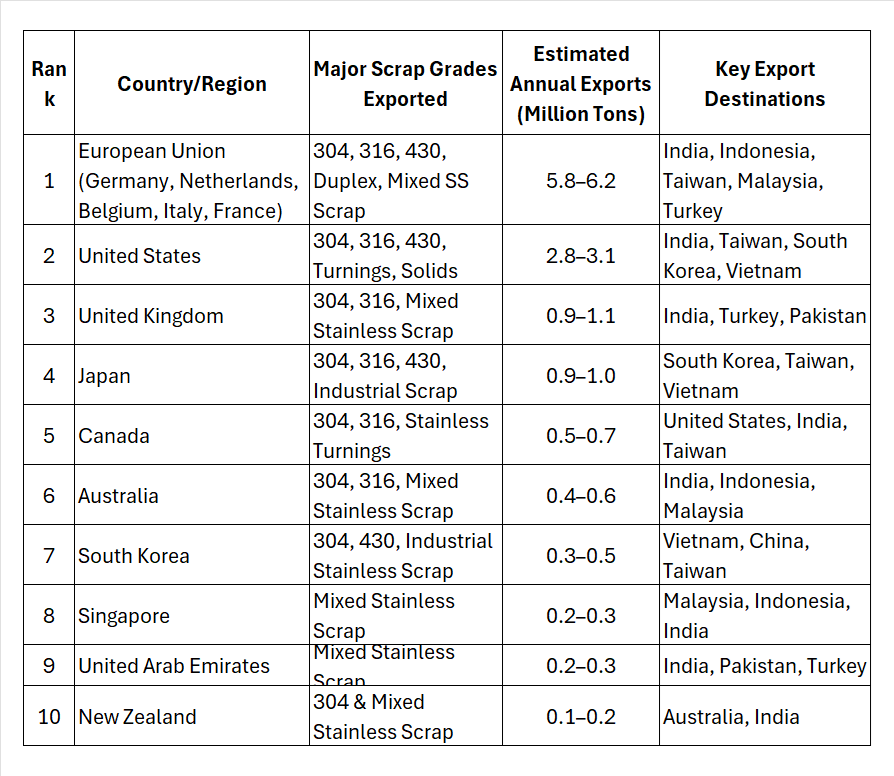 22. Major Exporters by Stainless Steel Scrap Grade
a) 304 Stainless Steel Scrap: European Union, United States, Japan, United Kingdom, Canada
b) 316 Stainless Steel Scrap: European Union, United States, United Kingdom, Australia
c) 430 Stainless Steel Scrap: Japan, European Union, South Korea, United States
d) Duplex Stainless Steel Scrap: Germany, Sweden, Finland, Netherlands, United States
e)Super Duplex Scrap: Norway, Sweden, Finland, Germany
f)Stainless Steel Turning Scrap: United States, Germany, Japan, Canada
g)Industrial Prompt Scrap: Germany, Japan, United States, Italy, South Korea
h)Obsolete Stainless Scrap: European Union, United States, United Kingdom, Canada
23. Countries with the Largest Stainless Steel Scrap Availability
a)European Union: Largest collection and recycling network
b) United States: Large industrial manufacturing base
c) Japan: High-quality prompt scrap generation
d) United Kingdom: Mature recycling industry
e) Canada: Strong industrial and automotive scrap
f) Australia: Mining and construction sector scrap
g) South Korea: Electronics and manufacturing scrap
h) Singapore: Regional trading and redistribution hub
Key Market Insight
- Europe remains the largest supplier of high-quality stainless steel scrap, especially 304, 316, Duplex, and Super Duplex grades.
- The United States is the leading exporter of industrial stainless steel scrap and turnings.
- Japan is renowned for its clean, segregated prompt scrap, which is highly valued by stainless steel mills.
- Due to the EU's Carbon Border Adjustment Mechanism (CBAM) and circular economy policies, exports of premium stainless steel scrap from Europe are expected to gradually decline after 2026 as more material is retained for domestic recycling. This is likely to tighten global supply and support higher prices for high-grade stainless steel scrap.
24. Usage of LOHAA Mobile Application & Portal
Digital platforms are transforming the way the global metal industry conducts business. LOHAA Mobile Application (Android & iPhone) & Portal serves as a dedicated B2B platform connecting buyers, sellers, importers, exporters, manufacturers, recyclers, foundries, and traders across the metal value chain.
Published Stainless Steel offers in LOHAA Mobile Application
Key Features (features & Benifits)
- Buy & Sell Metal Scrap Direct business opportunities
- Publish Offers Reach verified buyers
- Publish Requirements Receive supplier quotations
b. Company Profiles Improve business visibility
c. Daily Market News Stay informed
d. Metal Price Updates Support purchasing decisions
e. Equipment Marketplace Buy and sell machinery
f. Job Portal Industry recruitment
g. Business Networking Connect with global companies
25. Industries Served
- Stainless Steel
- Super alloys
- All types of Steel
- Ferro Alloys
- Aluminium
- Copper
- Brass
- Zinc
- Lead
- Nickel
- Foundries
- Steel Plants
- Recycling Industries
- Importers & Exporters
Advantages
• KYC-verified companies
• Faster procurement
• Better price discovery
• Reduced procurement costs
• Wider supplier network
• International business opportunities
• Improved transparency
For manufacturers dealing with fluctuating alloy prices, LOHAA provides an efficient platform to compare offers, identify suppliers, and monitor market trends, helping optimize procurement strategies.
26. Conclusion
The stainless steel industry is highly dependent on the availability and pricing of critical alloying elements such as nickel, chromium, molybdenum, vanadium, and ferro alloys. Global mining output, energy costs, geopolitical developments, trade policies, and environmental regulations continue to shape raw material supply and pricing. Manufacturers must closely monitor these factors to manage production costs, maintain competitiveness, and ensure stable supply chains. Digital procurement platforms such as the LOHAA Mobile Application & Portal further enhance efficiency by connecting verified buyers and sellers, improving market transparency, and facilitating informed purchasing decisions. As demand for stainless steel continues to grow, strategic sourcing and recycling will remain essential for sustainable industry growth.
References
- World Stainless Association (worldstainless.org)
- International Chromium Development Association (ICDA)
- International Nickel Study Group (INSG)
- International Molybdenum Association (IMOA)
- US Geological Survey (USGS) – Mineral Commodity Summaries
- London Metal Exchange (LME)
- Shanghai Futures Exchange (SHFE)
- International Energy Agency (IEA)
- World Steel Association
- OECD Steel Committee Reports
- UN Comtrade Database
- International Trade Centre (ITC)
- LOHAA Mobile Application & Portal Industry Resources
By using digital trade platforms like LOHAA Mobile application, you can reach global buyers, source quality material, and strengthen long-term partnerships.
Download the Lohaa Metal Trading App for Android to access live scrap prices and real-time market updates anytime, anywhere.
Download the Lohaa Metal Trading App for iOS to access live scrap prices and real-time market updates anytime, anywhere.
(Notes: market and production volume estimates are synthesized from public market reports and industrial press; exact tonne figures for materials are not centrally published in a single comprehensive public dataset, therefore the numeric projection above is a conservative, documented estimate built from available intelligence and reasonable regional share assumptions.)


